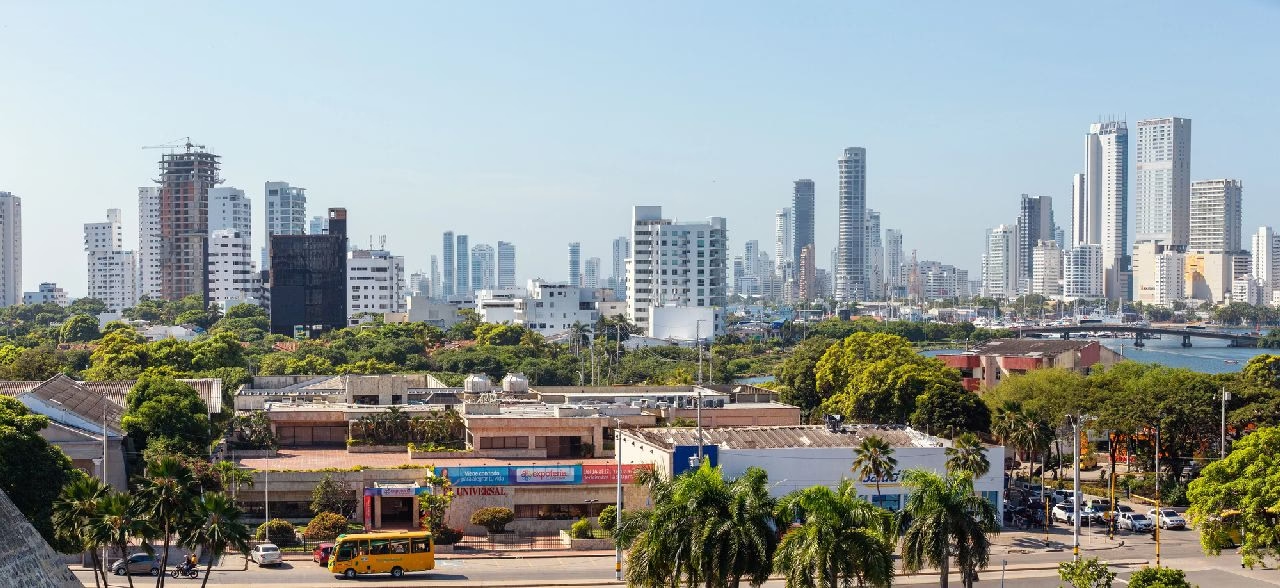
Cartagena is a compact, lively, and picturesque city where most travelers spend their time wandering between the Walled City, Getsemaní, and Bocagrande. But even though it’s walkable, you’ll still rely on taxis, rideshare apps, boats, and occasional buses to reach beaches, the airport, or nearby islands.
This guide explains every transportation option in Cartagena, how to use them safely, typical costs, travel tips, and the best ways to move around the city—perfect for first-time visitors.
1. Is Cartagena Easy to Get Around?
Yes. Cartagena is one of Colombia’s easier cities to navigate:
-
The historic center is compact and walkable.
-
Taxis and rideshare apps are everywhere.
-
It’s cheap and fast to get to/from the airport.
-
Boats are the main way to reach the islands.
The only challenge is traffic, especially in Bocagrande during late afternoons.
2. Walking in Cartagena
Best for: Centro Histórico, Getsemaní, San Diego
Not ideal for: Bocagrande → long distances; some areas outside tourist zones at night
Cartagena’s old town is one of the most walkable and enjoyable areas in Colombia. Most major attractions are within a few minutes of one another.
Tips for walking:
-
Wear breathable clothing — humidity is intense
-
Walk early morning or late afternoon to avoid heat
-
Stay aware of your phone; petty theft can occur
-
Side streets can be dark — avoid at night
3. Taxis in Cartagena
Taxis are plentiful and safe when used correctly, but they do not use meters, which means:
Always negotiate the price before getting in.
Typical taxi prices (2025):
-
Airport → Centro / Getsemaní: 20,000–30,000 COP
-
Centro → Bocagrande: 10,000–15,000 COP
-
Bocagrande → Getsemaní: 12,000–18,000 COP
-
Centro → La Boquilla: 18,000–28,000 COP
Taxi tips:
-
Confirm price upfront
-
Carry small bills
-
Avoid street taxis at night unless necessary
-
If price feels inflated, politely decline
-
Official airport taxis have fixed price boards
4. Uber, InDriver & Didi
Cartagena has several ride-hailing apps, and they’re often safer, cheaper, and more transparent than taxis.
Apps available:
-
Uber (most popular among tourists)
-
InDriver (you propose your fare → drivers accept or counteroffer)
-
Didi (budget-friendly)
Benefits:
✓ GPS tracking
✓ No negotiation needed
✓ Safer for night travel
✓ Often cheaper than taxis
Downside:
Drivers may ask you to sit in the front seat to avoid police fines (ride-hailing legality is “gray” in Colombia). It’s normal and safe.
5. Public Buses (TransCaribe)
Cartagena’s bus system is called TransCaribe.
Pros:
-
Very cheap (2,900 COP per ride)
-
Air-conditioned
-
Good for Bocagrande → Centro → Airport
Cons:
-
Complicated routes for tourists
-
Requires a rechargeable card
-
Can be crowded
-
Not ideal late at night
Most visitors don’t use the buses unless staying long-term.
6. Airport Transportation (Cartagena – CTG)
Cartagena’s airport is extremely close to the city — just 10–15 minutes from the major tourist zones.
Best ways to get to/from the airport:
Taxi (recommended)
-
Fixed prices posted inside the airport
-
Pay at the official kiosk or go to the taxi stand
Uber / InDriver
-
Must meet drivers outside the terminal
-
Usually slightly cheaper
Walking?
Yes, technically possible to walk to Marbella, but not recommended with luggage or mid-day heat.
7. Boats & Ferries (for Islands + Beaches)
Many of Cartagena’s best beaches are only accessible by boat.
Main departure points:
-
Muelle de la Bodeguita (Old Town) → For Rosario Islands
-
Fenix Beach Pier
-
Castillo Grande Pier
-
La Boquilla → Mangrove tours
Costs:
-
Rosario Islands day tours: 180,000–450,000 COP
-
Beach clubs on Tierra Bomba: 60,000–150,000 COP
-
Private boat rental: 1,200,000–2,500,000+ COP
Tips for boats:
-
Bring cash
-
Expect choppy afternoon waters
-
Apply sunscreen before boarding
-
Return trips leave before 3:00 p.m. (mandatory)
8. Renting a Bicycle or E-Bike
Getsemaní and Centro offer a few bike rental options.
Pros:
-
Scenic along the city walls
-
Fun and eco-friendly
-
Good during early hours
Cons:
-
Heat makes it uncomfortable mid-day
-
Not ideal for Bocagrande traffic
Prices: 25,000–50,000 COP per hour.
9. Renting a Scooter or Motorcycle
Not common for tourists.
Reasons to avoid:
-
Heavy traffic
-
Unpredictable drivers
-
High theft risk
-
Expensive deposits
Unless you’re an experienced rider, skip it.
10. Renting a Car
Highly discouraged for Cartagena city travel.
Why?
-
Traffic congestion
-
Scarce parking
-
One-way streets in the old town
-
Police checkpoints
-
Limited need — everything is close
Better option: rent a car only if traveling to Barranquilla, Santa Marta, or Tayrona.
11. Transportation to Popular Areas
Centro Histórico ↔ Getsemaní
-
Walk (5–10 minutes)
Centro ↔ Bocagrande
-
Taxi/Uber: 10 minutes
-
Walk: 30–40 minutes (hot)
Centro ↔ La Boquilla
-
Taxi/Uber: 15–20 minutes
-
Bus: 25–40 minutes
Cartagena ↔ Baru / Playa Blanca
-
Taxi to Baru bridge + moto → 50–90 minutes
-
Boat → 45 minutes
Cartagena ↔ Rosario Islands
-
Boat only → 45–75 minutes
12. Safety Tips for Getting Around
Do:
✓ Use Uber or taxis at night
✓ Keep phones out of sight near traffic
✓ Use crosswalks — traffic can be chaotic
✓ Carry small bills for taxi payments
✓ Confirm price in taxis before entering
Don’t:
✗ Walk alone on dark streets
✗ Ride bicycles in heavy traffic
✗ Accept rides from strangers
✗ Take “unofficial tours” from beach hawkers
13. How Most Tourists Get Around Cartagena (Realistic Summary)
Inside the old town:
🚶 Walking
To/from Getsemaní / Bocagrande:
🚕 Taxi or Uber
To/from airport:
🚕 Taxi or 🛺 Uber/InDriver
To the islands:
⛵ Boat from Muelle de la Bodeguita
To further beaches (La Boquilla, Manzanillo):
🚕 Taxi or 🚘 private driver
You won’t need buses or rental cars unless staying long-term.
Final Tips for Transportation in Cartagena
-
Avoid peak traffic hours (16:30–18:30).
-
Book Rosario Island boats early in the morning.
-
Bring cash for drivers, boat captains, and beach vendors.
-
Always check the weather before booking a boat trip.
-
Uber and InDriver are the safest and easiest options for most trips.

I’m Luciana, a travel writer from Bogotá, Colombia, and yes, I know exactly what it’s like to be a solo female traveler in a country the world still misunderstands.
I’ve been travelling independently for 10 years, completing 50+ solo trips across Colombia, Mexico, Central America, Argentina, Peru and the United States. I write in both English and Spanish, and I also contribute to allaboutcolombia.com where I cover my home country in depth — from the coffee region to the Caribbean coast to the Andes.
My speciality is Latin America: the neighbourhoods the guidebooks skip, the buses that are actually fine to take, the hostels that feel like home, and the restaurants where locals actually eat. I’ve hitchhiked across Patagonia, navigated Medellín’s metro system at rush hour, and camped solo in the Sierra Nevada de Santa Marta. I know this region the way you only can when it’s yours.
I also cover the US for solo travelers, having spent time road-tripping through the Southwest, the Pacific Coast and the Deep South.