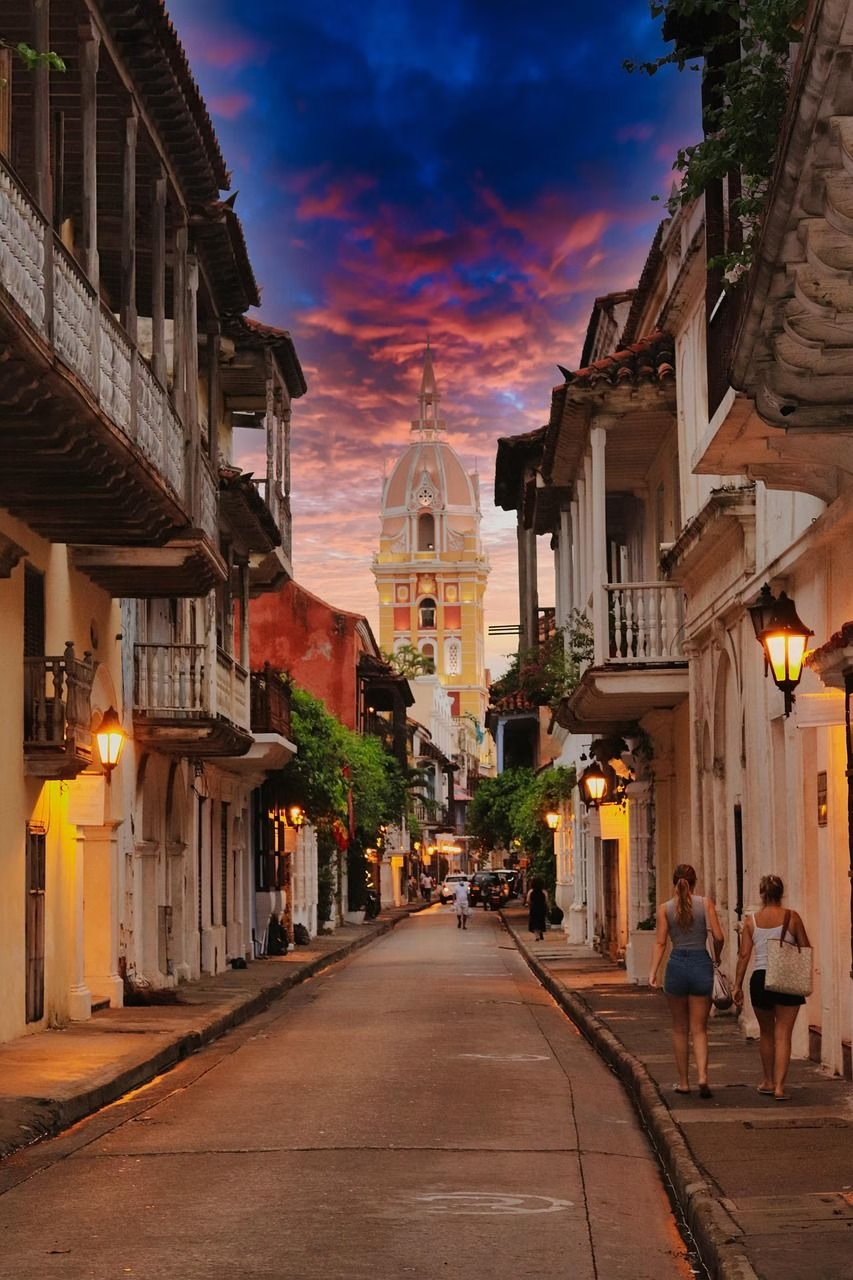
Cartagena is one of the most beautiful and vibrant destinations in Colombia—famous for its colorful colonial streets, Caribbean beaches, island trips, and unforgettable nightlife. And while the city is generally safe for tourists, like any popular destination, it comes with a handful of tourist-focused scams you should be aware of.
This guide breaks down the most common scams in Cartagena, how they work, and exactly how to avoid them so you can enjoy a smooth, stress-free trip.
⭐ Quick Safety Summary
-
Cartagena is safer than many travelers expect — especially in tourist areas.
-
The majority of issues involve minor scams and overcharging, not violent crime.
-
The main hotspots for scams include:
-
The Walled City (Centro Histórico)
-
Getsemaní
-
Beaches in Bocagrande, La Boquilla, and Playa Blanca
-
The Rosario Islands
-
Tourist nightlife areas
-
-
Knowing the tricks ahead of time will save you money and frustration.
🔥 Most Common Scams in Cartagena (and How to Avoid Them)
1. The “Free” Bracelet / “Free Gift” Scam
Where: Centro Histórico, especially Plaza Santo Domingo.
How it works:
Vendors place a bracelet or trinket in your hand, or tie it on your wrist “as a gift” — then aggressively demand payment.
How to avoid it:
-
Don’t accept items handed to you.
-
Pull your hand back and keep walking.
-
Say a firm “No, gracias.”
-
Never let anyone put anything on your wrist.
2. Beach Massage Trap
Where: Bocagrande and La Boquilla beaches.
How it works:
Women approach offering a “free sample” massage. Once they start rubbing your shoulders, they’ll charge €20–€40 for 30 seconds of touching.
How to avoid it:
-
Never allow a “sample.”
-
Decline instantly and don’t sit up or present your shoulders to them.
-
Book massages only through your hotel or reputable beach clubs.
3. Surprise Beach Food Orders
Where: Beach vendors, especially La Boquilla & Playa Blanca.
How it works:
A vendor gives prices verbally (always low), but once the food is served, you get a bill 5–10 times higher.
How to avoid it:
-
Never order without written prices.
-
Ask “¿Cuánto cuesta?” for everything upfront.
-
Walk away if they refuse to show a menu.
4. The Inflated Bill Scam (Restaurants & Bars)
Where: Walled City, Getsemaní, nightlife zones.
How it works:
A restaurant adds extra charges, “taxes,” desserts you didn’t order, or higher prices than the menu.
How to avoid it:
-
Check menu prices carefully.
-
Ask if 10% service is already included.
-
Compare your bill to the menu before paying.
-
Politely request corrections.
5. Taxi Overcharging / Fake Fixed Prices
Where: The entire city, but especially the airport & Walled City.
How it works:
Drivers claim there is a “fixed tourist price,” or they refuse to turn on the meter, charging 2–5x normal.
How to avoid it:
-
Always use apps: InDriver, Uber, DIDI, Cabify.
-
If hailing a taxi:
-
Ask: “¿Cuánto hasta ___?” before getting in.
-
If they won’t give a price, choose another.
-
Typical taxi prices:
-
Airport → Centro: €4–€7
-
Centro → Bocagrande: €2–€4
6. Nightlife Bar Scams (Overcharging & Forced Bills)
Where: Clubs in Getsemaní and Centro.
How it works:
Unsuspecting visitors are seated and suddenly handed a huge mandatory bottle-service bill — even if they didn’t order anything.
How to avoid it:
-
Avoid empty bars.
-
Don’t sit until you see a menu with prices.
-
Stick to well-known venues like Alquímico, Café del Mar, Casa Cruxada.
7. ATM Payment Interference
Where: Tourist-heavy areas.
How it works:
Someone “helpful” offers to assist you at an ATM, trying to see your PIN or skim your card.
How to avoid it:
-
Use ATMs inside banks or malls.
-
Never let anyone approach you.
-
Cover the keypad fully.
8. Fake Tour Agencies
Where: Walled City & Getsemaní.
How it works:
Street sellers offer “cheap tours” to Playa Blanca or Rosario Islands. You pay — but the tour never happens or is low quality.
How to avoid it:
Book only through:
-
Your hotel
-
Reputable agencies
-
Websites with real reviews
Avoid cash-only vendors without a physical office.
9. Bar “Hostess” Scam
Where: Nightlife districts.
How it works:
A woman joins you, encourages you to buy drinks for both of you — which are charged at inflated prices. She gets a cut.
How to avoid it:
-
Don’t accept drinks for strangers.
-
Ask for the menu every time.
-
Stick to reputable venues.
10. Fake “Tourist Helpers” at the Airport
Where: CTG Airport
How it works:
People pose as staff to guide you, then demand a tip.
How to avoid it:
-
Ignore unsolicited help.
-
Only ask uniformed airport employees.
🛡️ General Safety Tips for Cartagena
1. Don’t wear flashy jewelry.
Cartagena is safe, but pickpocketing can happen.
2. Keep your phone in your hand only when needed.
Avoid using it on quiet streets.
3. Stay in safe areas at night.
Centro, Getsemaní, Bocagrande = generally safe
La Boquilla, Marbella, and outskirts = caution
4. In clubs, watch your drink.
Common sense everywhere.
5. Use transport apps at night.
💰 How Much Should You Pay for Common Services?
-
Beer: €1.50–€3
-
Cocktail: €5–€12
-
Taxi ride (most areas): €2–€5
-
Street food: €1–€2
-
Island day trip: €25–€70
-
Beach chair + shade: €5–€10
If the price feels wildly above these ranges, walk away.
✔️ Final Thoughts: Is Cartagena Safe from Scams?
Cartagena is an incredible, vibrant, and tourist-friendly destination.
And while scams exist, most are easy to avoid with a bit of awareness.
Stick to the main tourist areas, double-check prices, and always book reputable services — and you’ll have a smooth, unforgettable trip.

I’m Luciana, a travel writer from Bogotá, Colombia, and yes, I know exactly what it’s like to be a solo female traveler in a country the world still misunderstands.
I’ve been travelling independently for 10 years, completing 50+ solo trips across Colombia, Mexico, Central America, Argentina, Peru and the United States. I write in both English and Spanish, and I also contribute to allaboutcolombia.com where I cover my home country in depth — from the coffee region to the Caribbean coast to the Andes.
My speciality is Latin America: the neighbourhoods the guidebooks skip, the buses that are actually fine to take, the hostels that feel like home, and the restaurants where locals actually eat. I’ve hitchhiked across Patagonia, navigated Medellín’s metro system at rush hour, and camped solo in the Sierra Nevada de Santa Marta. I know this region the way you only can when it’s yours.
I also cover the US for solo travelers, having spent time road-tripping through the Southwest, the Pacific Coast and the Deep South.