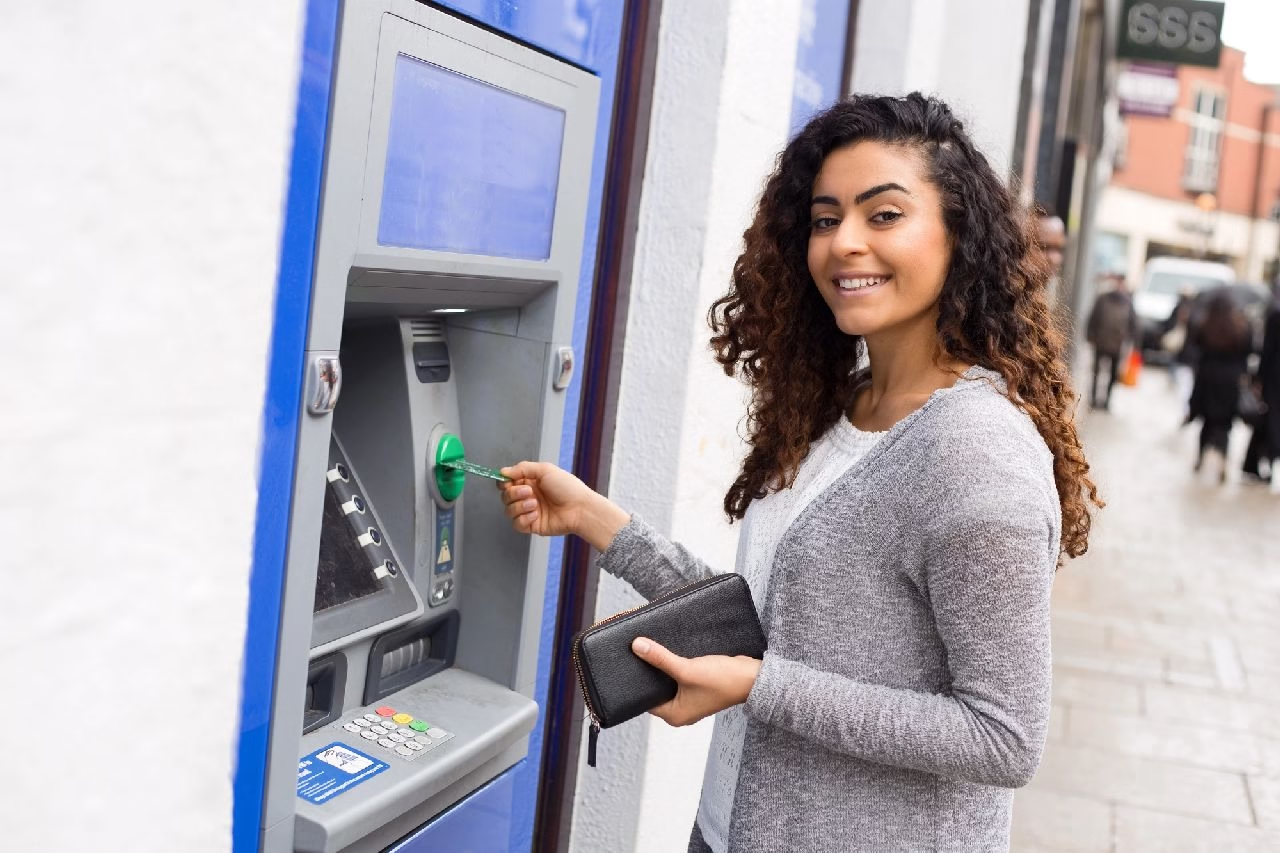
Many individuals relocating to Colombia or planning an extended stay find it necessary to open a bank account to manage their finances. The process can be straightforward if you are prepared with the right documentation and understand the local banking system.
To open a bank account, you will typically need to provide certain documents. These often include your valid passport, a visa or a copy of your residency card, and a proof of address (such as a utility bill or rental agreement). Some banks may also ask for an employment letter or a local phone number. Always check with your chosen bank for their specific requirements, as these can vary.
Once you have gathered the necessary documentation, you can select a bank. Popular banking institutions in Colombia include Bancolombia, Davivienda, and Banco de Bogotá. Research different banks to find the one that offers services best suited to your needs, such as online banking, ATM accessibility, and account fees.
When you visit the bank to open your account, you will fill out an application form where you will need to provide your personal information. You may also be required to choose an account type, such as a savings account or a checking account. Each type has its own features, fees, and benefits, so evaluate which fits your financial habits the best.
After your account is set up, you will receive a debit card and access to online banking services. It is advisable to enable online banking to facilitate transactions and payments. Many banks in Colombia offer mobile applications, which you can download to manage your account from your smartphone.
Using banking services in Colombia can be efficient, but you should be aware of potential fees associated with your account. These may include monthly maintenance fees, ATM withdrawal fees, and currency conversion charges. Make sure to read your account agreement carefully to understand all associated costs.
External banking services are also available to facilitate your financial transactions. Services such as international wire transfers can help you send money abroad. Be mindful of the fees and exchange rates that may apply. Additionally, familiarize yourself with how local ATMs function and the limitations they may impose on withdrawals.
Finally, consider local financial regulations to ensure compliance and smooth banking experiences. Some activities may require additional documentation or personal identification for larger transactions.
In short, opening a bank account in Colombia involves selecting a suitable bank, preparing necessary documentation, and understanding the available banking services. Be proactive in managing your finances and stay informed about the fees and regulations to make the most of your banking experience in Colombia.

I’m Luciana, a travel writer from Bogotá, Colombia, and yes, I know exactly what it’s like to be a solo female traveler in a country the world still misunderstands.
I’ve been travelling independently for 10 years, completing 50+ solo trips across Colombia, Mexico, Central America, Argentina, Peru and the United States. I write in both English and Spanish, and I also contribute to allaboutcolombia.com where I cover my home country in depth — from the coffee region to the Caribbean coast to the Andes.
My speciality is Latin America: the neighbourhoods the guidebooks skip, the buses that are actually fine to take, the hostels that feel like home, and the restaurants where locals actually eat. I’ve hitchhiked across Patagonia, navigated Medellín’s metro system at rush hour, and camped solo in the Sierra Nevada de Santa Marta. I know this region the way you only can when it’s yours.
I also cover the US for solo travelers, having spent time road-tripping through the Southwest, the Pacific Coast and the Deep South.