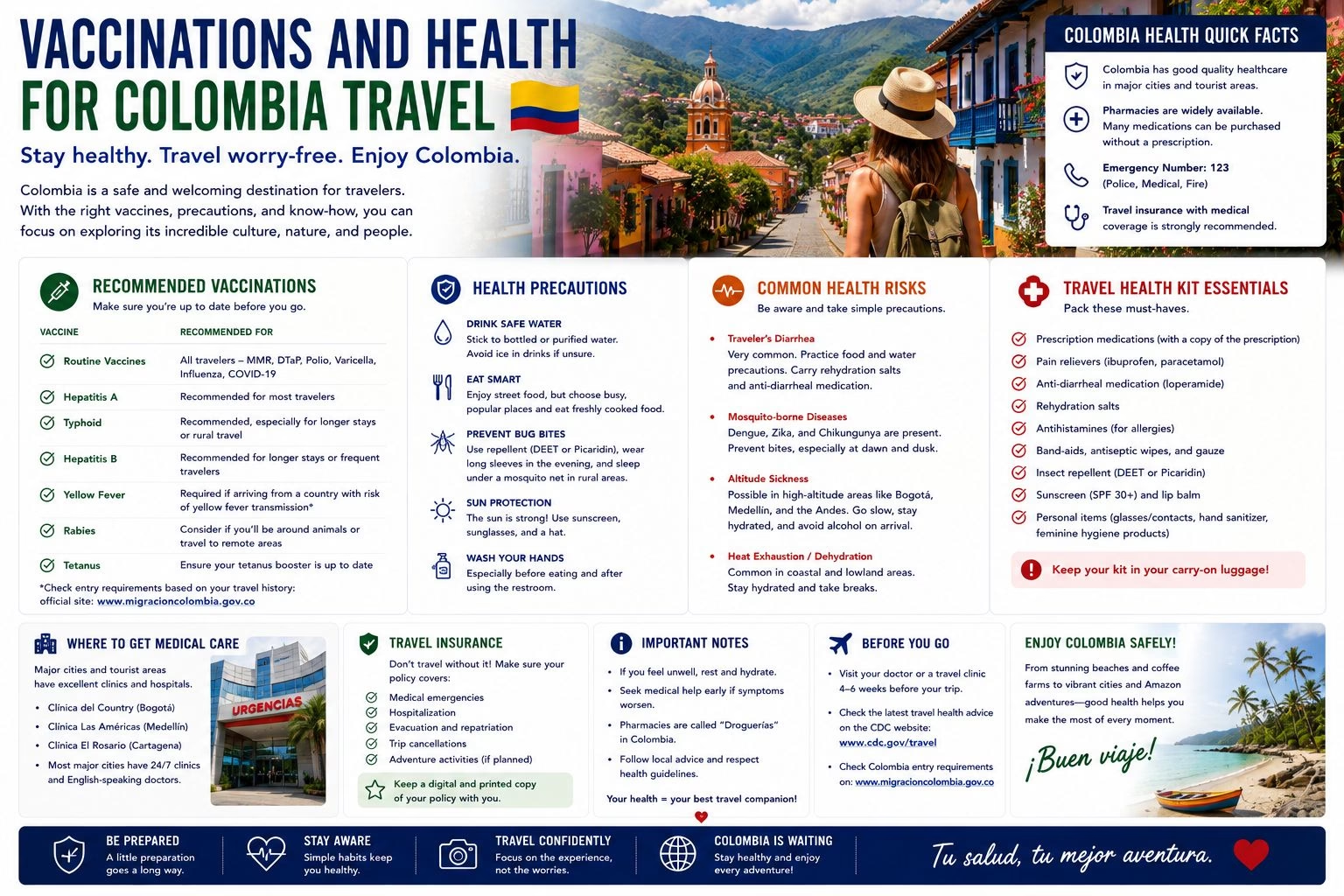
Colombia spans tropical lowlands, Andean highlands, and Pacific rainforest, each carrying different health considerations. Understanding what is required, what is recommended, and what is genuinely relevant to the specific areas you are visiting is more useful than a generic tropical travel checklist. This guide covers the key health preparation for Colombia travel.
Before Anything Else: See a Travel Health Clinic
The specific health preparation appropriate for your Colombia trip depends on your personal medical history, your vaccination record, and the specific regions you are visiting. A travel health consultation at a clinic or GP with travel health expertise, ideally 6 to 8 weeks before departure, is the best starting point. This guide provides general information to help you understand the landscape before that appointment; it is not a substitute for personalised medical advice.
Yellow Fever: The Most Important Consideration
Yellow fever is the vaccination that requires the most attention for Colombia travel.
Where it is required: Some national parks and nature reserves in Colombia require proof of yellow fever vaccination for entry. The specific requirements change; check current requirements for any parks you plan to visit.
Where it is strongly recommended: The Amazon basin, the Orinoco/Llanos region, and tropical lowland areas east of the Andes. Medellín, Bogotá, the Coffee Region, and the Caribbean coast (including Cartagena) are not at risk; yellow fever vaccination is not specifically required or recommended for a trip confined to these areas.
The vaccine: The yellow fever vaccine is a live attenuated vaccine, typically given as a single dose. It requires a lead time: the vaccine takes 10 days to provide protection, and the vaccination record (the yellow card, Carte Jaune, or now increasingly digital records) may be required at the border or park entry. Ensure you have valid documentation.
Important: The yellow fever vaccine is contraindicated for some groups including pregnant women, immunocompromised individuals, and those over 60 years old who have never received the vaccine. Discuss this specifically with a healthcare provider if any of these apply to you.
Malaria: Region-Specific Risk
Colombia has malaria transmission in specific regions, primarily:
- The Pacific coast (including Chocó department and surrounding areas)
- The Amazon basin
- Some rural and forested areas of the Orinoco region
- Rural areas in some northern departments
Malaria risk is not present in the main tourist destinations: Medellín, Bogotá, the Coffee Region (Salento, Filandia), Cartagena and the Caribbean coast resort areas, and the Andean highland areas generally.
If your itinerary includes any of the at-risk areas listed above, malaria prophylaxis should be discussed with a healthcare provider. The appropriate choice of prophylactic medication depends on the specific region, the duration of exposure, and personal health factors.
Routine Vaccinations to Be Current On
Before any international travel, ensure you are current on:
Hepatitis A: Recommended for all travellers to Colombia. Transmitted through contaminated food and water; vaccination provides effective long-term protection.
Typhoid: Recommended for Colombia, particularly for travellers who will be eating at local restaurants and street food stalls in areas with variable water quality.
Hepatitis B: Recommended for all travellers who may have any medical procedures, tattoos, or other potential blood exposure.
Tetanus/diphtheria/pertussis (Tdap): Ensure this is current (within 10 years).
Measles, mumps, rubella (MMR): Ensure you are immunised.
COVID-19: Current requirements for Colombia and your home country, if any, at the time of travel.
Dengue Fever: Awareness and Prevention
Dengue fever is endemic throughout tropical Colombia, including in Cartagena, Santa Marta, and the Caribbean coast. There is a dengue vaccine (Dengvaxia), but it is only appropriate for those with a prior confirmed dengue infection. For most travellers, dengue prevention is about avoiding mosquito bites:
Use a DEET-based insect repellent on exposed skin throughout the day, not just at dusk. Dengue mosquitoes (Aedes aegypti) are day-biters, unlike the malaria-transmitting mosquitoes that primarily bite at night.
Wear long sleeves and trousers in areas with high mosquito activity, particularly during the day in coastal and lowland areas.
Use air-conditioned accommodation where available in the lowlands; use insecticide-treated bed nets where it is not.
Zika Virus
Zika virus transmission exists in parts of Colombia. The primary concern is for pregnant travellers or those trying to conceive, as Zika infection during pregnancy is associated with serious fetal complications. Pregnant travellers should carefully discuss Colombia travel with their healthcare provider.
For non-pregnant travellers, Zika presents as a mild, self-limiting illness in most cases. Prevention is the same as for dengue: mosquito avoidance.
Food and Water Safety
Tap water in the main Colombian cities (Bogotá, Medellín) is generally safe to drink by the standards of urban Latin America; many locals drink it. In smaller towns, rural areas, and coastal regions, boiled or bottled water is advisable.
Street food in Colombia is generally safe and an excellent way to eat well and cheaply; the combination of fresh ingredients and rapid turnover at busy stalls minimises risk. The main areas of caution are raw seafood in areas without strong cold chains, and fruits or vegetables washed in untreated water.
Traveller’s diarrhoea is the most common travel health issue in Colombia, as in most Latin American destinations. The standard treatment (oral rehydration, rest, and antibiotics only if severe or prolonged) should be prepared for; carrying oral rehydration salts and knowing when to seek medical care are appropriate precautions.
Medical Care in Colombia
Medical care in Colombia ranges from excellent to adequate depending on where you are. The main cities have good private hospitals and clinics that meet international standards. The EPS (public health insurance) system provides free care to residents; travellers should use private facilities. Travel insurance with medical cover and medical evacuation is strongly recommended.
For minor illnesses, Colombian pharmacies (droguerías) can dispense many medications without a prescription and offer good initial advice.
Related: Plan Your Trip | Safety | Budget | Packing
Health Preparation Timeline
The vaccination preparation for Colombia travel is one of the areas where lead time matters most. Working backward from your departure date:
8 to 10 weeks before departure: Start the process if yellow fever vaccination is relevant to your itinerary. The vaccine takes 10 days to provide full protection and the documentation (the yellow card) needs to be in hand before entering protected areas.
6 to 8 weeks before departure: Hepatitis A (if not previously vaccinated; the full two-dose course takes 6 to 12 months for full protection, but even one dose before travel provides substantial protection). Typhoid injection if using the injection form rather than the oral course.
4 to 6 weeks before departure: Complete any remaining vaccinations; review malaria prophylaxis options with a healthcare provider if applicable. Purchase and start any prophylaxis medications that require a lead-in period (doxycycline requires 2 days before exposure; atovaquone-proguanil requires 1 to 2 days).
1 to 2 weeks before departure: Ensure all required documentation (yellow card) is in order. Fill any prescriptions for travel medications (oral rehydration salts, antibiotic for traveller’s diarrhoea if prescribed, antimalarials).
Health Insurance and Medical Documentation
For any visitor with pre-existing conditions: carry a complete medication list (generic names, not just brand names) and, for controlled medications, documentation from your prescribing doctor. Colombian customs and pharmacies can sometimes be navigated more easily with documentation of medical necessity.
Travel insurance with medical coverage and specifically with medical evacuation coverage is particularly important for Colombia given that the most severe medical situations (requiring evacuation from remote areas or specialist treatment beyond the capacity of local hospitals) produce costs that are very high without insurance and very manageable with it.