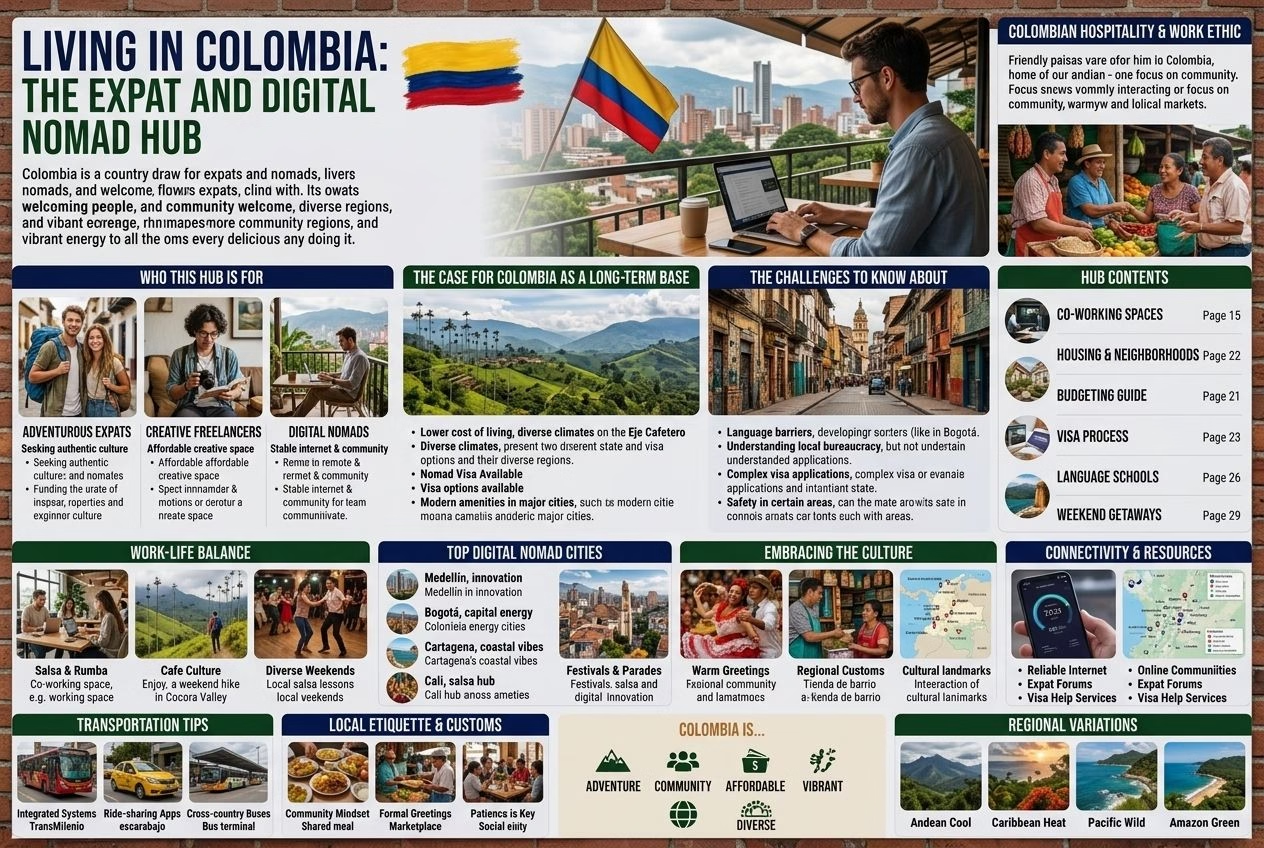
Colombia has become one of the most popular destinations in South America for long-term visitors, digital nomads, retirees, and people considering a genuine relocation. Medellín in particular has developed one of the largest English-speaking expat and nomad communities in Latin America; the combination of low cost of living, high quality of life, a genuinely interesting urban environment, and an increasingly developed infrastructure for remote workers has made it a reference destination in the global nomad conversation.
This hub covers everything for people who want to stay longer than a tourist visit: the visa options, the cost of living, the banking system, the healthcare choices, and the city-by-city assessment of where different types of long-stay visitors tend to thrive.
Who This Hub Is For
Digital nomads and remote workers staying for 1 to 6 months or more, working for companies or clients outside Colombia, primarily interested in practical infrastructure (internet, coworking, accommodation) and the city-by-city quality-of-life comparison.
Longer-term expats considering a year or more, potentially pursuing Colombian residency, interested in the full practical picture of living here: the visa system, the banking challenges, the healthcare options, and the experience of actually building a life rather than just visiting.
Retirees considering Colombia’s pensionado visa and the cost-of-living advantages of specific Colombian cities for a comfortable retirement on a fixed foreign income.
The Case for Colombia as a Long-Term Base
Cost of living: Colombia is significantly cheaper than most Western countries for comparable quality of life. A comfortable independent monthly life in Medellín, with a good apartment, regular restaurant dining, cultural activities, and transportation, costs USD 1,200 to 2,000 per month depending on lifestyle. The equivalent in Western Europe or North America would cost three to five times more.
Quality of life: The food, the climate (Medellín’s eternal spring, Cartagena’s Caribbean warmth), the social culture’s warmth toward foreigners, the access to Colombia’s extraordinary natural landscapes for weekend travel, and the cultural richness of the cities all contribute to a quality of life that surprises visitors who had lower expectations.
Community: The expat and nomad community in Medellín is one of the largest and most active in Latin America. Arriving without a single local contact and building a meaningful social network within two weeks is entirely realistic. The community is helpful, experienced, and generous with practical knowledge.
The digital nomad infrastructure: The coworking scene in El Poblado and the internet infrastructure of the main Colombian cities have developed specifically to serve the growing remote-work population. Good coworking spaces, fast internet in most accommodation, and the urban amenities of a major city make Colombia’s main cities genuinely productive places to work.
The Challenges to Know About
The security situation: The specific Colombia risks (scopolamine, unofficial taxis, urban petty crime) require active management. For long-term residents who have established routines and local knowledge, these risks become familiar and manageable; for arrivals, the first few weeks require specific attention. The safety hub covers the specifics.
Bureaucratic complexity: The Colombian visa system, the banking system (opening an account is difficult for foreigners without the right documentation), and the general administrative infrastructure require patience and, ideally, local guidance. A reliable Colombian gestor (administrative agent) or a well-connected local friend is worth their weight in many situations.
Language: Spanish fluency significantly changes the experience of long-term living in Colombia. El Poblado in Medellín functions adequately with English; the rest of Colombia does not. Those planning extended stays outside the main expat hubs benefit significantly from functional Spanish.
Hub Contents
- Digital nomad guide to Colombia: the complete practical guide for remote workers
- Cost of living in Colombia: monthly budget benchmarks by city and lifestyle
- Visa and residency for expats: the pathways from tourist entry to permanent residence
- Best cities for expats: Medellín vs Bogotá vs Cartagena and the others
- Medellín expat guide: the most popular expat city in Colombia
- Cartagena expat guide: living on the Caribbean coast
- Bogotá expat guide: life in the capital
- Cali expat guide: salsa, warm weather and a less-crowded base
- Coffee Region expat guide: Pereira, Manizales and Armenia
- Coworking spaces in Colombia: the best work infrastructure by city
- Healthcare for expats: private insurance, public systems, and finding English-speaking doctors
- Banking and finance for expats: the banking challenge and the practical solutions
All Expat Guides by Topic
Visas, Residency and Paperwork
- Colombia visa types and how to apply
- Getting and renewing residency
- Colombian citizenship and dual nationality
- Navigating bureaucracy: cédula, RUT and documents
Money, Banking and Taxes
- Opening a bank account
- Banking and building local credit
- International payments and transfers
- Expat taxes: filing and double taxation
- Cost of living by city and lifestyle
Housing, Utilities and Connectivity
- Long-term rentals: contracts and deposits
- Buying property: process and rules
- Neighborhood guides for major and smaller cities
- Utilities setup
- Internet, mobile data and SIM cards
- Coliving and nomad housing
- Cartagena for digital nomads
Health and Wellbeing
- The healthcare system: public vs private
- Health insurance: local vs international
- Finding doctors, dentists and specialists
- Mental health and wellness resources
Work and Business
- Working in Colombia: permits and employment
- Starting a business or freelancing
- Running a Colombian business: taxes and registrations
- Labor laws and employee rights
Daily Life: Language, Transport and Moving
- Practical Spanish for expats
- Transportation: buses, taxis and flights
- Driving: licenses, ownership and insurance
- Shipping household goods and customs
Family, Schools and Pets
Retirement
Community, Safety and Legal Help
- Networking and expat communities
- Women expats: safety and social life
- Police reports, emergency services and legal help
- Lawyers, notaries and translators
Related: Safety Hub | Destinations | Plan Your Trip | Food and Culture