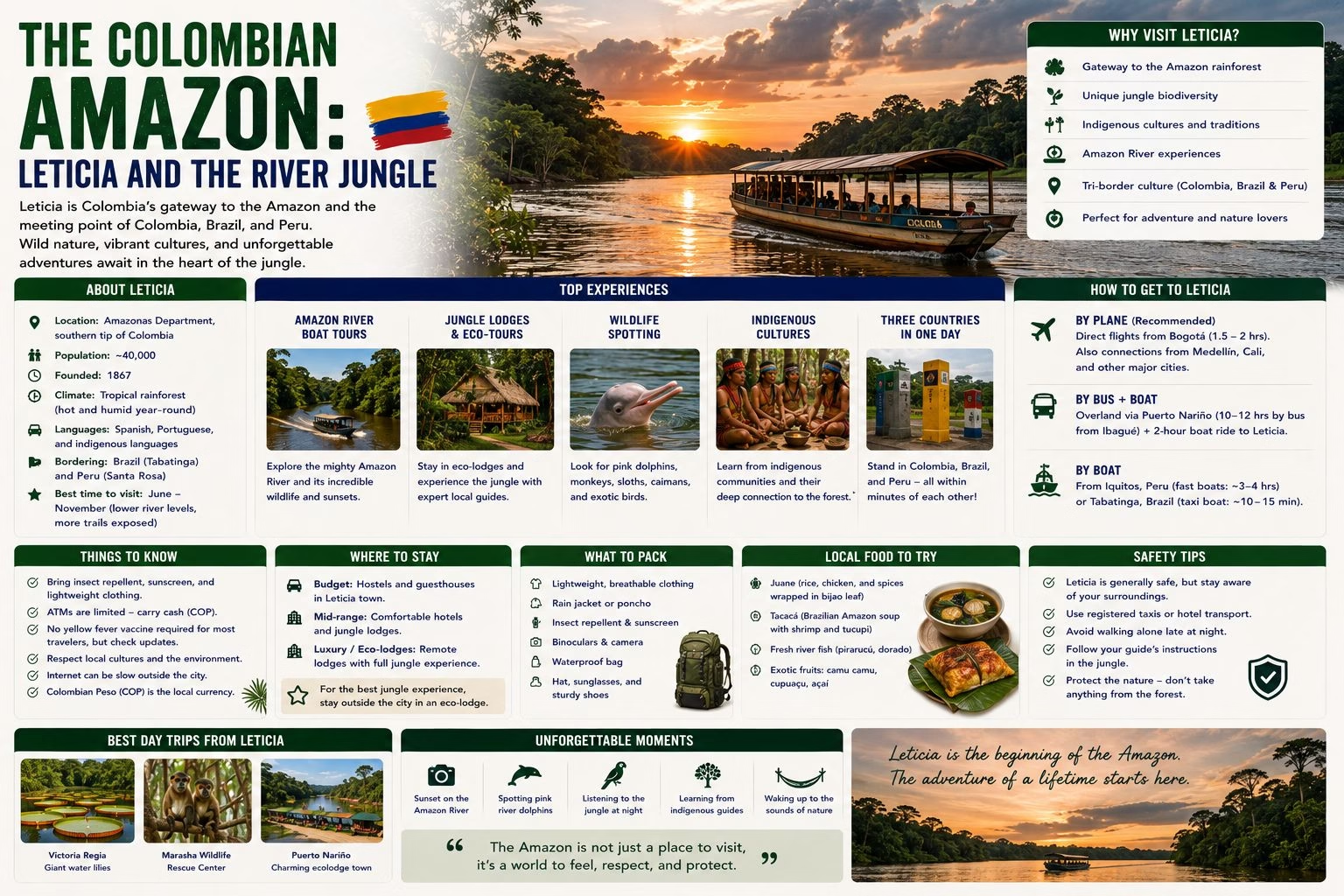
The Colombian Amazon region, centred on the town of Leticia in the southernmost tip of the country, is geographically accessible (a 90-minute flight from Bogotá) and experientially remote. The town of 40,000 people where Colombia, Peru, and Brazil meet on the banks of the Amazon River is the entry point to one of the world’s great wilderness areas, a landscape where the scale and density of living things produce an experience that is genuinely unlike anything in the Andes or on Colombia’s coasts.
Leticia: The Departure Point
Leticia is a straightforward frontier town: three-country meeting point, river port, and the base for all excursions into the Colombian Amazon. The town itself has a pleasant character; the Malecón (riverfront promenade) is where local life concentrates in the evenings, and the Monday market has produce from the river communities as well as the Brazilian town of Tabatinga immediately adjacent.
Leticia is connected to the Colombian side only by air; there are no roads. Flights from Bogotá (El Dorado) take approximately 90 minutes; fares range from USD 80 to 200 depending on advance booking. The Avianca service has been the most reliable; check current carriers before booking.
What to Do in the Colombian Amazon
River excursions: The fundamental Amazon experience. Whether by small motorised canoe or larger boat, river excursions reach communities along the Amazon and its tributaries that are inaccessible by any other means. A standard full-day river excursion typically includes: a visit to an indigenous community (Tikuna, Huitoto, or other nationalities, depending on the location); a jungle walk with a local guide explaining the ecosystem; fishing for piranhas (and usually releasing them); and river swimming, if conditions allow.
Jungle walks: A guided jungle walk with an experienced local guide is the most direct way to understand the Amazon ecosystem: the medicinal plants, the insect diversity, the bird life, and the specific relationships between species that sustain the forest. Allow a full day for a meaningful jungle walk; half-day versions exist but do not reach far enough into the forest.
Piranha fishing: Offered on virtually every Amazon excursion; fish with a simple handline from a canoe, using raw meat as bait. Piranhas bite readily. The activity is part fishing, part education about the river ecosystem, part photo opportunity.
The pink dolphin (boto): Amazon river dolphins (Inia geoffrensis) live in the Colombian Amazon and are visible on boat excursions, particularly in the morning. They are pink in colour (more pronounced in older individuals) and are genuinely extraordinary to see in their natural habitat.
Parque Nacional Natural Amacayacu: A large protected area accessible by boat from Leticia (approximately 90 minutes upriver). The park has a research station, trails into the primary jungle, and excellent opportunities to see wildlife. Entry requires advance registration.
Indigenous Communities
Several Tikuna community villages are accessible by boat from Leticia and accept visitors who come respectfully for cultural exchange and artisan purchases. The Tikuna are one of the most numerous indigenous groups in the Amazon and have preserved significant cultural practices despite centuries of contact with the colonial and national society.
Visiting an indigenous community in the Amazon should be done with a tour operator who has an established relationship with the community and who operates in a way that benefits rather than exploits the hosts. Several Leticia-based operators specialise in this; ask specifically about how visits are structured and how the community benefits before booking.
Practical Considerations
Health: The Colombian Amazon is a malaria zone; prophylaxis is strongly recommended for visits beyond Leticia itself. Yellow fever vaccination is required for park entry. Dengue is also present; insect repellent and protective clothing are essential throughout. See the vaccinations guide for the full picture before booking.
Season: The Amazon has two seasons: high water (December to June) and low water (July to November). During high water, some areas are flooded and accessible by boat that are otherwise unreachable; during low water, beaches and sand banks appear and wildlife (including pink dolphins, caimans, and birds) concentrates around the reduced water bodies. Both seasons have their advantages.
Tour operators: Using a licensed local tour operator for Amazon excursions is strongly recommended; the jungle is genuinely confusing for those without local knowledge, and the logistics of river travel require experience. Prices for a full-day excursion run from USD 50 to 100 per person including transport, guide, and lunch.
Border area note: Leticia sits at the Colombia-Peru-Brazil border. Crossing into Tabatinga (Brazil) requires only a document check; crossing further into Brazilian territory may require a visa depending on your nationality. The area overall is considered safe for tourists; exercise the same awareness you would in any border town. See the Safety hub for the wider country picture.
Related: Destinations Hub | Plan Your Trip | Vaccinations
Setting Expectations Correctly for an Amazon Visit
The Colombian Amazon is extraordinary and different from almost everything else in Colombia. It is also genuinely remote, logistically complex, and requires specific preparation that other Colombian destinations do not. Setting expectations correctly before departure prevents the frustration of arriving with the wrong assumptions.
The wildlife, while genuinely abundant by global standards, is not always easily visible. The jungle is dense; most animals are heard more than seen, except by experienced guides who know where to look. Pink dolphins are reliably visible on the river; caimans are visible with patience; specific bird species are extraordinary but require early morning effort. The expectation of seeing a jaguar or anaconda on a standard 3-day visit is unrealistic; the expectation of experiencing a genuinely wild river ecosystem in a way that changes your understanding of biological diversity is entirely realistic.
The physical environment of the Amazon requires preparation: heat (consistently 30 to 35°C with high humidity), insects (high-DEET repellent is not optional), and the distances involved in river travel (a 2-hour boat journey each way to reach a community that is an hour’s walk into the jungle covers a full day). Building realistic time expectations into the Amazon itinerary, rather than trying to see everything in a 3-day visit, produces a better experience of what the Amazon actually is.