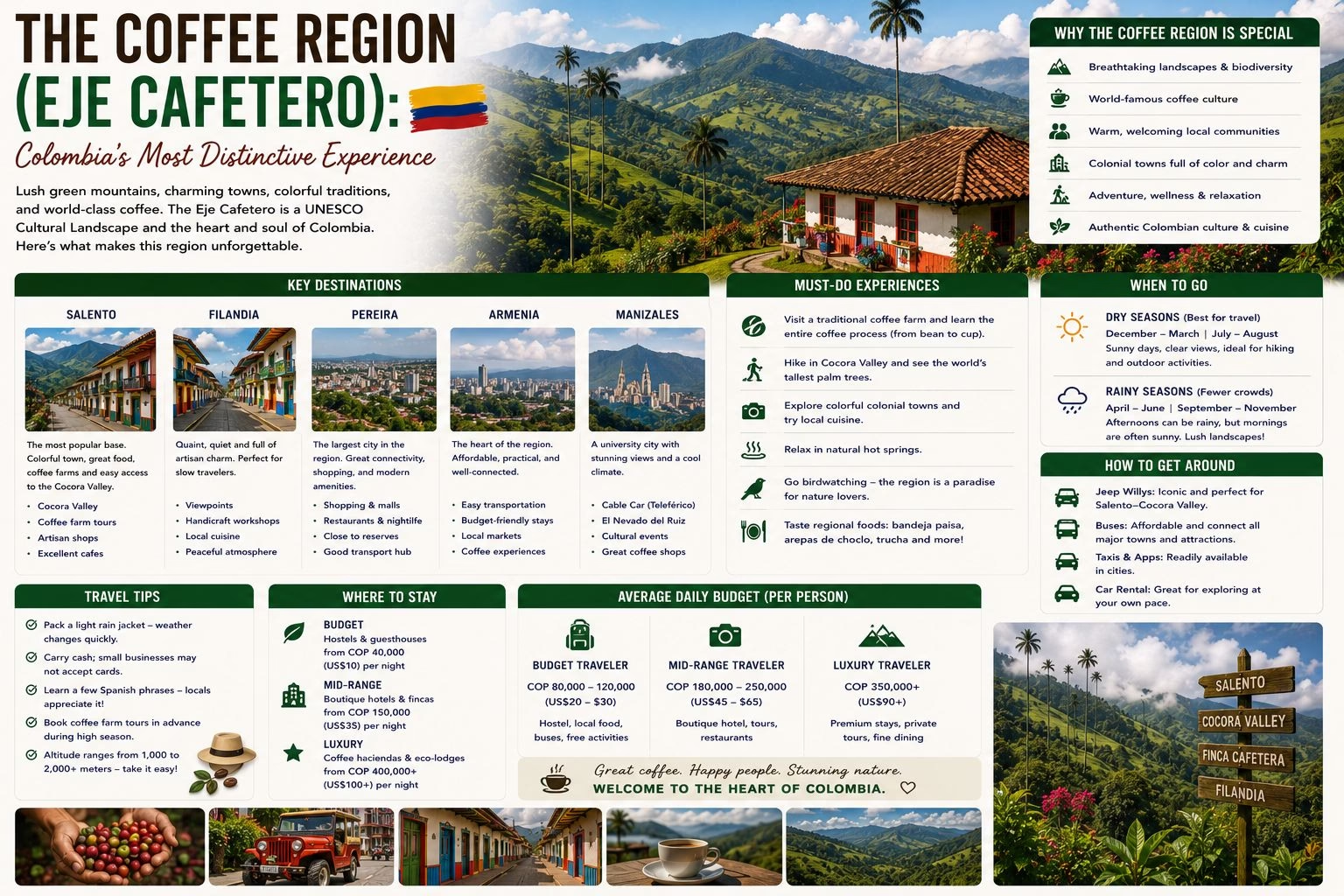
The Eje Cafetero, or Coffee Cultural Landscape of Colombia, is a UNESCO World Heritage Site, a working agricultural region, a landscape of extraordinary beauty, and one of the most genuinely distinctive travel experiences in South America. Visitors who travel specifically for the Coffee Region consistently describe it as the highlight of their Colombia trip; visitors who add it to a circuit of Colombian cities consistently describe it as the part they wish they had spent more time in.
The region covers the departments of Caldas, Risaralda, and Quindío, in the central Andean zone of Colombia, roughly between Medellín to the north and Cali to the south. The three departmental capitals are Manizales, Pereira, and Armenia respectively; the small towns of Salento, Filandia, and Jardín are the places that most visitors actually spend time in.
Why the Coffee Region Is Remarkable
The landscape: The steep green hills covered in coffee plants and wax palms, the bahareque architecture of the towns, the rivers and waterfalls of the Andean foothills, and the light that falls differently here than anywhere else in Colombia combine into something that is visually extraordinary. The Cocora Valley, with its wax palms rising 40 to 60 metres from the misty hillsides, is genuinely unlike any landscape on earth.
The coffee culture: Colombia produces some of the world’s most sought-after coffee; the Coffee Region grows a significant portion of it. Visiting a working finca (coffee farm) to understand the full production process, from the coffee plant and its cherries through picking, processing, drying, and roasting, connects the drink you consume in a café to the agricultural and human reality behind it in a way that no amount of reading can. The best finca experiences are genuinely educational and genuinely moving.
The small towns: Salento, Filandia, Jardín, Salamina, and Aguadas each have their own character while sharing the specific aesthetic of the Coffee Region: colourful facades, carved wooden balconies, central plazas with a specific quality of unhurried social life, and the warmth of towns that have not yet been overwhelmed by tourism.
The biodiversity: The Coffee Region sits in one of the world’s biodiversity hotspots. The transition between Andean cloud forest and the lower altitude coffee-growing zones creates an enormous range of ecological niches; the bird life alone is extraordinary, with over 600 species recorded in the region.
The Main Towns
Salento: The most visited and most easily accessible town in the Coffee Region, 30 kilometres northeast of Armenia. The main street (Calle Real) is the most photographed street in the region; the central square is the departure point for the jeep willys that serve the surrounding countryside. Salento has the best concentration of guesthouses, restaurants, and tour operators in the Coffee Region. See the Salento guide.
Filandia: 25 kilometres from Salento and often done as a half-day or day trip from there. Smaller, quieter, and in some ways more authentically representative of Coffee Region town life than Salento. The artisan market, the viewpoint over the valley, and the specific quality of its light on late afternoon are the draws. See the Filandia guide.
Jardín: South of the main Coffee Region axis, 4 hours from Medellín and approached from the north rather than from Armenia or Pereira. Jardín is considered by many to be the most beautiful town in Antioquia: an extraordinary church, a main square of exceptional quality, hills covered in coffee and banana plants, and the Jardín cable car providing views over the valley. Worth the extra travel time.
Manizales: The departmental capital of Caldas, at 2,150 metres and significantly cooler than the other Coffee Region towns. Less visited by tourists but worth a stop for the cable car, the view of the Nevado del Ruiz (Colombia’s most active volcano, visible from Manizales on clear days), and the city’s cathedral.
Getting to the Coffee Region
From Medellín: Bus from the Terminal del Norte to Pereira (3 to 4 hours) or Armenia (4 to 5 hours), then local transport to Salento (45 minutes from Armenia; 60 to 75 minutes from Pereira). Alternatively, Medellín to Jardín by bus (4 hours direct). Domestic flights from Medellín to Pereira are available (under 1 hour, USD 30 to 60).
From Bogotá: Bus from Bogotá to Armenia (8 to 9 hours) or Pereira (9 to 10 hours). Alternatively, fly from Bogotá to Pereira (1 hour, USD 40 to 70). This is usually the better option given the time involved in the bus journey.
From Cali: Bus to Armenia (3 to 4 hours) is the standard route. The scenery on this route, climbing from the Cauca valley through coffee-growing hillsides into the Quindío highlands, is excellent.
Full transport details in the getting to the Coffee Region guide.
When to Visit
The main coffee harvest (cosecha principal) runs from October to December in most of the region; this is when the coffee cherries are most abundantly red, the fincas are at peak activity, and the experience of visiting a working farm is at its most vivid.
The secondary harvest (mitaca) runs from April to June in some areas, providing a smaller but still active farming period.
For hiking conditions in the Cocora Valley and the surrounding trails, the drier months (December to February and June to August) produce the best trail conditions. The valley is walkable year-round but can be very muddy in October and November.
How many days to allow: Most visitors base themselves in Salento for two to three nights, which is enough time for the Cocora Valley hike, one finca visit, and a half-day trip to Filandia without rushing. Travellers who want to add Manizales or Jardín, or who are visiting during a busy weekend and prefer to shift the Cocora Valley hike to a quieter weekday, should allow four nights instead.
Hub Pages for the Coffee Region
- Salento: the complete guide
- Filandia guide
- Coffee farm visits and finca stays
- Cocora Valley hiking guide
- Getting to the Coffee Region
The Coffee Region for Non-Coffee-Drinkers
The Coffee Region is sometimes assumed to be primarily for people who are passionate about coffee. This underestimates what the region offers to visitors regardless of their coffee interest. The landscape of the Cocora Valley, with its extraordinary wax palms, is one of the most distinctive natural landscapes in the Americas and has nothing to do with coffee appreciation. The small-town character of Salento and Filandia, the quality of the light, the pace of life, and the specific warmth of Antioquian and Quindío hospitality are all appealing on their own terms. The bird life, with over 600 species in the region, makes the Coffee Region one of the best birdwatching destinations in Colombia.
Coffee is the frame through which the region is known internationally; it is not the only reason to visit. Visitors who have never thought about specialty coffee, who prefer tea, or who simply do not care about the production process can have an extraordinary Coffee Region experience built entirely around the landscape, the towns, and the outdoor activities. The finca visits are optional; the Cocora Valley is not.
This hub sits within the site’s wider Destinations section, alongside guides to Safety, Food and Culture, trip planning, and expat and nomad life in Colombia. For corrections or updates to this guide: contact@allaboutcolombia.com.