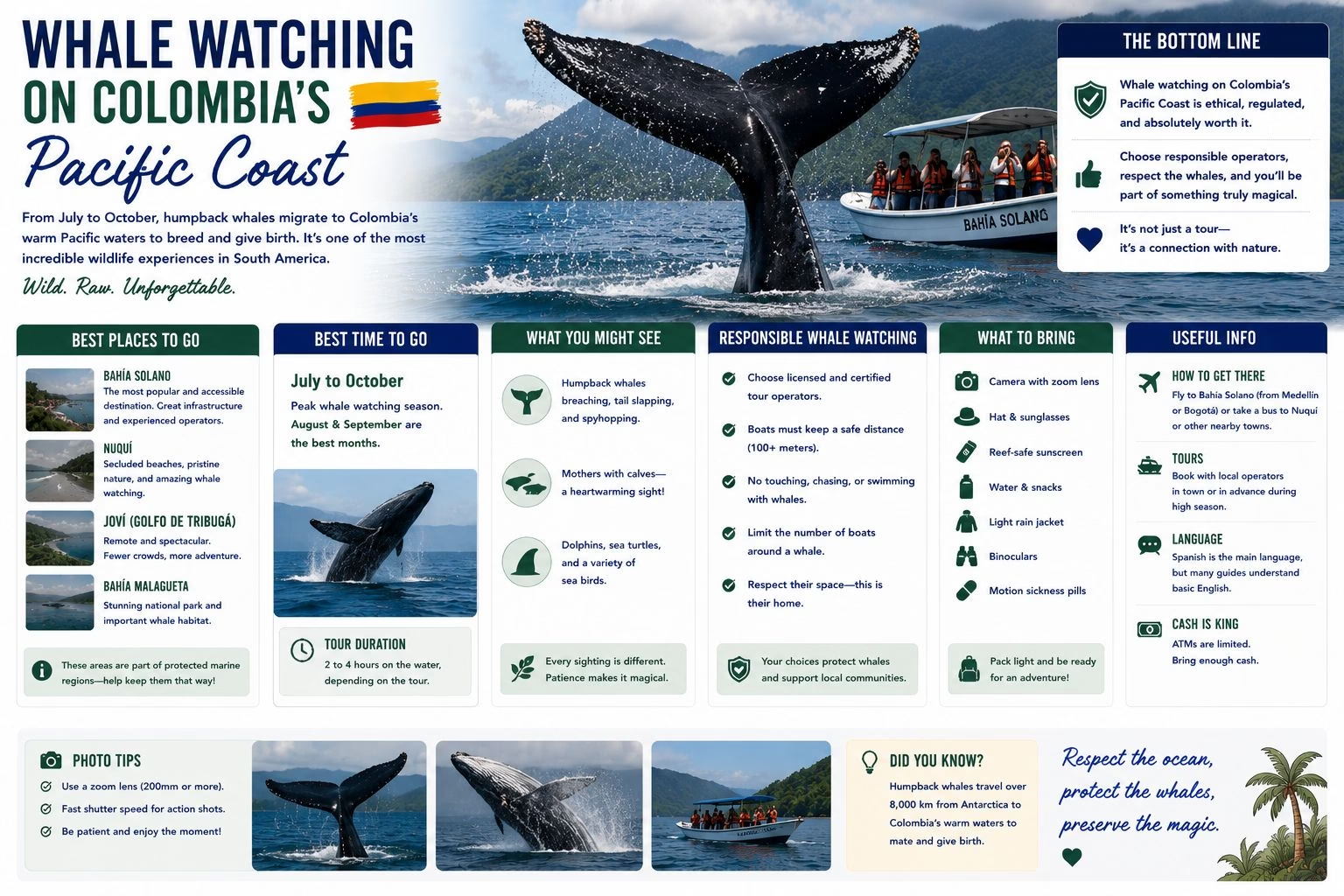
Every year between June and October, humpback whales migrate roughly 8,500 kilometres from Antarctic waters to the warm, calm bays of Colombia’s Pacific coast to breed and give birth. For this four-month window, the remote coastal towns of Nuquí and Bahía Solano, in the Chocó department, become one of the most reliable and accessible places in the world to see humpback whales at close range, including mothers with newborn calves and the dramatic breaching displays that make humpbacks a favourite whale-watching species worldwide.
Why Colombia’s Pacific Coast
The Pacific coast of Chocó has a specific combination of features that makes it exceptional whale-watching territory: warm, sheltered, shallow bays that provide safe conditions for mothers to give birth and nurse calves, a short distance from deep water where the whales feed, and comparatively low boat traffic compared to more developed whale-watching destinations elsewhere in the world. Sightings during peak season are close to guaranteed on boat tours, and whales are sometimes visible from the shore itself in Nuquí and the surrounding beaches.
Nuquí vs Bahía Solano
Nuquí: The more established of the two towns for tourism, with a better range of eco-lodges (many accessible only by boat along the coast) and a slightly more developed tourism infrastructure. Most visitors’ first choice.
Bahía Solano: Slightly larger as a town, with its own airport and a marginally more built-up feel; a reasonable alternative or addition for visitors wanting to combine whale watching with more general beach time in a town with more services.
Both towns are on the same stretch of coast and offer essentially comparable whale-watching boat trips; the choice between them is more about accommodation style and personal preference than a meaningful difference in whale sighting quality.
When to Go
Peak season (August to September): The highest concentration of whales and the most reliable sightings, including the greatest number of mother-and-calf pairs. Also the busiest period for tourism in the region.
Shoulder season (June to July, and October): Still very good whale-watching, with fewer other tourists and often lower prices for lodges and tours.
Outside June to October, whales are largely absent from the coast; visiting for whale watching specifically outside this window is not worthwhile.
Getting There
Nuquí and Bahía Solano are both accessible almost exclusively by small aircraft: regular flights run from Medellín (approximately 45 minutes) to both towns, operated by small regional airlines using propeller aircraft. There is no practical road access; the region is separated from the rest of Colombia by dense, roadless jungle and the Western Andes. Flights should be booked well in advance during peak season, as capacity on these small aircraft is limited and demand is high.
What a Whale-Watching Trip Involves
Most lodges include boat-based whale-watching excursions as part of a multi-day package, typically departing early morning when sea conditions are calmest. Trips generally last 2 to 4 hours, with experienced local boat captains who read whale behaviour and position the boat for good viewing without approaching too closely (responsible operators maintain a respectful distance, particularly around mothers and calves). Multi-day packages, rather than single-day trips, are the norm, since Nuquí and Bahía Solano are not practical to visit as a day trip from anywhere.
Beyond Whale Watching
The same remote, undeveloped coastline that makes this region good for whales also makes it good for a broader nature-and-relaxation trip: pristine, largely empty beaches, jungle immediately behind the coast with genuine biodiversity, surfing at a handful of specific breaks, and a level of disconnection from standard tourist infrastructure that appeals to visitors specifically seeking that. Most eco-lodges are solar or generator-powered with limited or no wifi, which is a deliberate part of the appeal for many visitors rather than a drawback.
Practical Considerations
This is a genuinely remote part of Colombia with limited infrastructure: bring cash (there are essentially no ATMs), expect basic but comfortable accommodation rather than luxury, and book through an established lodge or tour operator rather than arranging things informally on arrival. The region has a tropical rainforest climate with high rainfall year-round, so waterproof gear is essential regardless of season. See the packing guide for the wider picture.
Safety
The Chocó department has historically had security concerns in some inland and border areas related to armed groups and drug trafficking routes; the coastal tourism towns of Nuquí and Bahía Solano themselves are not part of that picture and are considered safe for visitors who arrive through established tourism channels (flights and registered lodges) rather than overland travel through the wider department. See the Is Colombia Safe guide for the national picture.
Related: Best Time to Visit | Scuba Diving in Colombia | Packing Guide
For corrections or updates to this guide: contact@allaboutcolombia.com.