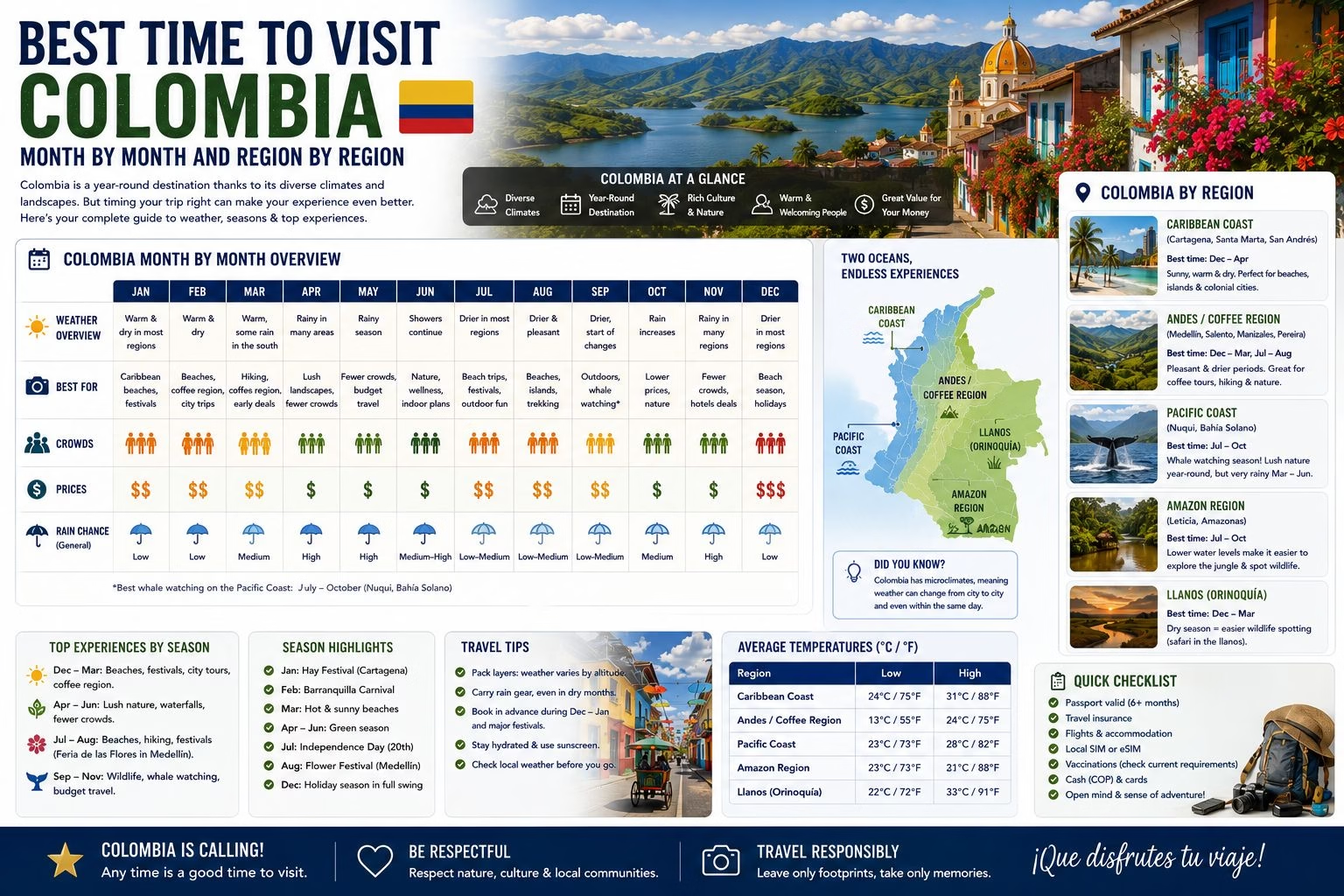
Colombia does not have one best season. The country’s extraordinary geographical range, from the Caribbean coast at sea level to the Andean peaks at 5,000 metres and beyond, from the Pacific rainforest to the Amazon basin, means that climate varies enormously by region and that the best time to visit depends heavily on which part of Colombia you are planning to visit. This guide covers the country’s main climate patterns and tells you when to visit each major destination.
Colombia’s Climate Fundamentals
Colombia is crossed by the equator in its southern reaches and sits between 4°N and 12°N latitude for most of its territory. This position close to the equator means that temperature varies more by altitude than by season: the coast is hot year-round, the Andean highlands are mild, and the high mountains are cold. The seasonal variation that exists is primarily in rainfall rather than temperature.
The two main dry seasons in the Andean interior, including Medellín and Bogotá, are December to March and June to August. The two rainy seasons are April to May and September to November. This pattern is inverted in some coastal regions and does not apply at all in the Pacific, which is one of the wettest places on earth throughout the year.
What “rainy season” actually means in practice: In the Colombian Andes, rain typically falls in the afternoon and evening, with mornings often clear. A visit in October, one of the rainiest months, usually allows full days of outdoor activity with rain arriving in the late afternoon. The rainy season is not the obstacle it sounds; it is more of an inconvenience than a barrier.
The Andean Interior: Medellín and Bogotá
December to March (dry season): The most reliably dry period for the Andean cities. Medellín‘s famous climate is at its best: mild, clear days with temperatures around 22 to 26°C. Bogotá, at 2,640 metres, can be cold by day (12 to 18°C) but is clear and dry. This is peak tourist season, particularly around the Christmas and Carnival period in early February; accommodation prices rise.
April to May (short rainy season): Afternoon rains become frequent. The landscape turns intensely green. Prices moderate slightly and the crowds of December and January thin out. Still an excellent time to visit; the rain is usually manageable.
June to August (second dry season): A second good window, particularly for the Coffee Region, where June and August see the smaller harvest (mitaca). Medellín hosts the Feria de las Flores in August, one of the country’s most spectacular festivals; accommodation in Medellín books up for this period. Bogotá is dry and clear.
September to November (main rainy season): The heaviest rains of the year in the Andean region. The landscape is exceptionally green and lush; waterfalls are at their most dramatic. This is the lowest tourist season and the best time to find accommodation deals. Flying is reliable; road conditions in some rural areas can be affected by the heaviest rains.
Cartagena and the Caribbean Coast
The Caribbean coast has a different climate pattern from the Andean interior. The dry season runs from December to April; the wet season from May to November. December to March is the most pleasant period: hot (30 to 35°C) but dry, with sea breezes making the heat bearable. November, October, and September are the wettest months. See the Cartagena guide for the destination picture.
Best time for Cartagena: December to March for the most reliable weather. April and November are transitional months. The Carnaval de Barranquilla, one of the world’s great carnival celebrations, takes place in February; if this is your reason for visiting, plan around it and book accommodation months in advance.
Off-season: May through October, particularly the wetter months. Cartagena receives heat and humidity in abundance throughout the year; the rainy season adds afternoon downpours. The city does not shut down in the wet season, and accommodation is cheaper.
The Coffee Region (Eje Cafetero)
The Coffee Region‘s climate is the most variable and the most important to understand, because the coffee harvest calendar affects the experience significantly.
The main harvest (cosecha principal) runs from October to December in the Quindío and Risaralda departments. During this period, the fincas are at peak activity: the coffee cherries are at their most vibrant red, the harvesting process is visible, and the energy on working farms is at its most intense. This is the best time to visit a working finca.
The secondary harvest (mitaca) runs from April to June in some zones. This is a smaller harvest but the farms are still active and the landscape is green and lush.
January to March and July to September are the driest periods in most of the region, making them easier for hiking the Cocora Valley and exploring the towns without daily afternoon rain.
Best overall: October to December for the full coffee experience; January to March for the best hiking conditions and clearest weather.
Santa Marta, Tayrona, and the Sierra Nevada
The dry season on the Caribbean coast around Santa Marta runs December to April, which is also the best time for Tayrona National Park: dry paths, clear ocean visibility for snorkelling, and the park at its most accessible. Some sections of Tayrona close for a mandatory rest period in February; check current opening status before planning.
The wet season, May through November, brings afternoon rain and humid conditions. Tayrona can be very muddy on its hiking trails in the wettest months. The ocean visibility for snorkelling and diving is also affected by the rains washing sediment into the sea.
Cali and the Pacific Perspective
Cali has a climate similar to Medellín: mild and warm (around 26 to 28°C) year-round with two rainy and two dry seasons. The most important event for timing a Cali visit is the Feria de Cali, held in the last week of December: a week of salsa, music, and celebration that is the city’s defining annual event and one of the most joyful experiences in Colombia. Book accommodation months in advance for the Feria period.
The Pacific coast around Nuquí and Bahía Solano has one of the most specific best-season windows in Colombia: humpback whale watching, which runs from July to October, is the primary draw for most visitors. Outside this window, the Pacific coast is not significantly different from the rest of the year, and is genuinely wet throughout.
Key Events Worth Planning Around
Carnaval de Barranquilla (February, four days before Ash Wednesday): UNESCO cultural heritage, one of Latin America’s great carnival celebrations. See the complete Carnaval guide. Book months in advance.
Feria de Cali (late December): The salsa capital’s defining week-long festival. Accommodation fills completely.
Feria de las Flores, Medellín (August): Flower festival and parade; Medellín at its most festive and most crowded.
Pacific Whale Season (July to October): Humpback whales on the Pacific coast; the Nuquí and Bahía Solano area.
Coffee Region harvest (October to December, main; April to June, secondary): Best time for finca experiences.
Related: Plan Your Trip | How Many Days | Travel Costs | Destinations
Building the Climate Into Your Itinerary
For visitors covering multiple Colombian regions in a single trip, the climate considerations across regions interact. A circuit covering Medellín, the Coffee Region, and Cartagena in December is straightforward: the Andean cities are in their dry season, the Coffee Region is in the main harvest (best for finca visits), and Cartagena is approaching its dry season with the heat becoming more manageable.
The same circuit in October presents a different picture: the Andean cities are in the main rainy season (afternoons wet, but mornings generally fine), the Coffee Region trails are muddy, and Cartagena is in its wettest month. This does not make October a bad time to visit, but it means adjusting expectations and plans accordingly: building morning activities into the itinerary in the highlands, bringing rain gear, and knowing that the Cocora Valley hike will be muddier and more physically demanding than in the dry season.
For first-time visitors with any flexibility on timing: the period from late November through January, and June through mid-August, offers the most reliably good conditions across the main tourist destinations simultaneously.
Colombia’s High Season and What It Means Practically
Colombian “high season” operates somewhat differently from European beach season. The main Colombian holiday periods, when domestic tourism peaks and accommodation prices rise, are:
December 15 to January 15 (Christmas and New Year): the highest-demand period of the year. Medellín and Cartagena prices increase significantly; the Feria de Cali (late December) makes Cali completely full.
Semana Santa (Holy Week, March or April): a major Colombian holiday; accommodation in popular destinations books out. Cartagena specifically is extremely crowded.
Mid-June to July: the Colombian school winter holiday period; beach destinations and the Coffee Region see increased domestic tourism.
For international visitors, these periods are worth either specifically targeting (for the festival experiences that coincide) or specifically avoiding (for the lower prices and less crowded destinations that the shoulder periods provide).