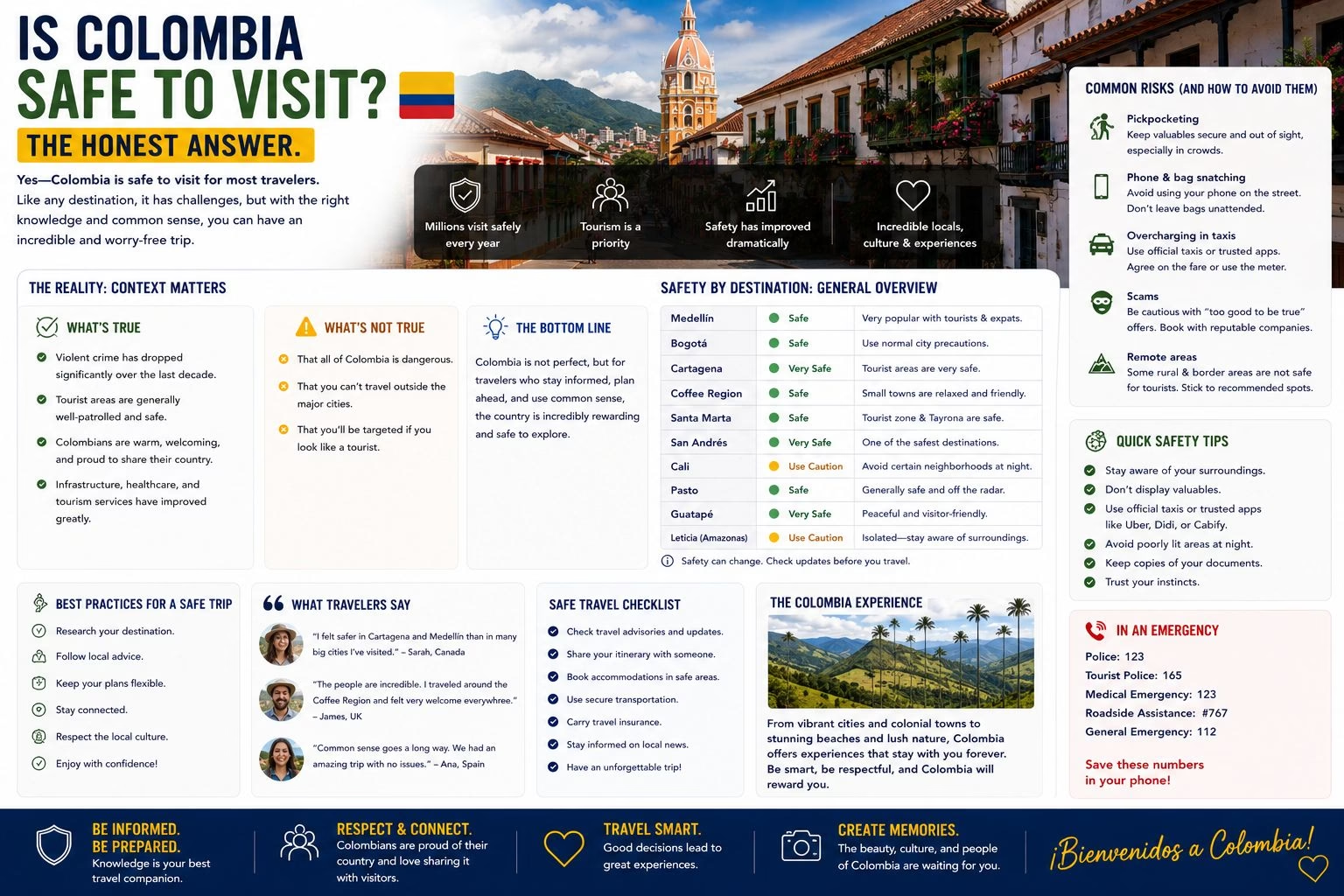
The honest answer is: yes, for most tourist purposes, in the areas where tourists go. The more complete answer requires the nuance that “Colombia” covers an enormous range of situations, from the generally-safe tourist neighbourhoods of El Poblado in Medellín to the genuinely dangerous rural areas controlled by armed groups. This guide gives you the specific picture you need to make informed decisions about your trip.
The Transformation Is Real
Colombia today is fundamentally different from Colombia in 2000. The factors that drove the transformation:
The dismantling of the Medellín and Cali drug cartels in the 1990s removed the most powerful criminal organisations from the landscape. The FARC peace agreement of 2016 demobilised the largest guerrilla force in the Americas and opened significant areas of the country to tourism and development that had been effectively closed for decades. The expansion of the Colombian National Police and military presence in tourist areas has produced genuinely safer conditions in the cities that tourists visit. The economic success of the tourism sector has created strong incentives at every level of government and civil society to maintain safe conditions in tourist areas.
The result is a situation where the major tourist destinations (Medellín, Cartagena, Bogotá, Santa Marta, the Coffee Region) are broadly safe by the standards of Latin American travel, and where visitors who exercise standard urban awareness have experiences that are positive and safe.
The Risks That Remain Real
Rural areas with armed group presence: The ELN (National Liberation Army) and several post-FARC criminal organisations (known as disidencias) continue to operate in significant areas of Colombia’s countryside. The departments of Arauca, Norte de Santander, parts of Nariño and Cauca, and several Amazon and Pacific coastal areas have ongoing security challenges. The government travel advisories from the FCDO, State Department, and other national authorities are generally accurate about these areas; follow them.
Urban crime in tourist areas: Petty theft, phone snatching, and scopolamine-facilitated robbery are the primary risks in the tourist areas of all major Colombian cities. These are not unique to Colombia but are more prevalent than in equivalent tourist areas in Europe or North America. The specific awareness practices that reduce exposure to these risks are covered in the city-specific guides.
Tourist fraud and overcharging: The tourist economy in the main Colombian cities, particularly Cartagena, involves systematic overcharging and some fraudulent practices. Knowing prices before committing, checking itemised bills, and being aware of the common fraud schemes reduces financial exposure.
The Scopolamine Risk: Colombia-Specific
The use of scopolamine (burundanga, devil’s breath) in robbery and assault is more prevalent in Colombia than in most other tourist destinations. The drug, derived from the Brugmansia plant, causes temporary amnesia and impaired decision-making; victims do not know what happened to them until the drug wears off.
The situations of highest risk:
- Accepting drinks from strangers in bars or clubs (the drug can be slipped into a drink).
- Engaging with strangers who seem unusually interested in befriending you, particularly in contexts that end in accompanying them somewhere.
- Getting into vehicles with strangers.
- Romantic or social encounters initiated by someone you met very recently in a bar or club.
The scams guide covers the specific scenarios and precautions in detail. This is the most important Colombia-specific safety preparation for first-time visitors.
Official Travel Advisories
The FCDO (UK), State Department (US), and equivalent authorities from other countries issue regular travel advisories for Colombia. These advisories are available on the respective government websites and are more current and more specific than any guide written in advance. Check them before travel and update your understanding within 2 to 4 weeks of departure.
The advisories typically distinguish between:
- Areas where travel is possible with appropriate precautions (the tourist cities and main travel routes)
- Areas where only essential travel is advised (some rural departments with ongoing security issues)
- Areas where travel is advised against (specific conflict zones)
Following the advisory categories for your nationality’s government is the most important single safety decision you can make in planning a Colombia trip.
The Safety Picture by Region
Medellín (El Poblado, Laureles): Safe by the standards of any Latin American city. Standard urban awareness applies. The specific risks are phone theft and scopolamine crime. The is Medellín safe guide covers the neighbourhood-level picture.
Cartagena (Walled City, Getsemaní, Bocagrande): The tourist areas are safe with standard awareness. The specific risks are overcharging, tourist fraud, and petty theft in crowded areas. The is Cartagena safe guide covers the specifics.
Bogotá (Chapinero, Zona Rosa, La Candelaria by day): More complex than Medellín or Cartagena; express kidnapping via unofficial taxis is more documented here than in other Colombian cities. Using app-based ride services is particularly important in Bogotá. The is Bogotá safe guide covers the specifics.
The Coffee Region (Salento, Filandia): Very safe by any standard. The main risks are minor theft and occasional road safety issues on the winding mountain roads. No significant security concerns in the tourist areas. See the Coffee Region hub for the destination picture.
Santa Marta and Tayrona: Safe in the town and at the park. The specific risks in Tayrona are not crime-related but natural: strong currents at ocean beaches, wildlife encounters, and the heat and exertion of hiking in humid conditions. See the Santa Marta guide for the destination picture.
Cali (Barrio Granada, El Peñón): Requires more active awareness than Medellín or Cartagena’s tourist areas; Cali has had periods of significant violence tied to the drug trade and paramilitary activity, and present-day crime levels are higher than in the other major tourist cities. The neighbourhoods visitors actually frequent are manageable with standard urban awareness, but a dedicated Cali safety guide is not yet published on this site; the Cali destination guide covers the current picture in the meantime.
The Bottom Line
Colombia rewards visitors who arrive with accurate information and appropriate practices. The accurate information is this: the tourist areas of Colombia’s main destinations are broadly safe for visitors who exercise standard urban awareness, use app-based ride services, do not accept drinks from strangers, keep their phones out of sight on the street, and follow government advisories about restricted areas.
The standard urban awareness that makes you safer in any large city (awareness of your surroundings, keeping valuables secure, not displaying expensive items unnecessarily, using trusted transport) is what keeps you safe in Colombia. It is not significantly more demanding than being a tourist in any large Latin American city; it is more demanding than being a tourist in most of Western Europe.
Related: Is Medellín Safe? | Is Cartagena Safe? | Is Bogotá Safe? | Common Scams | Safety Hub