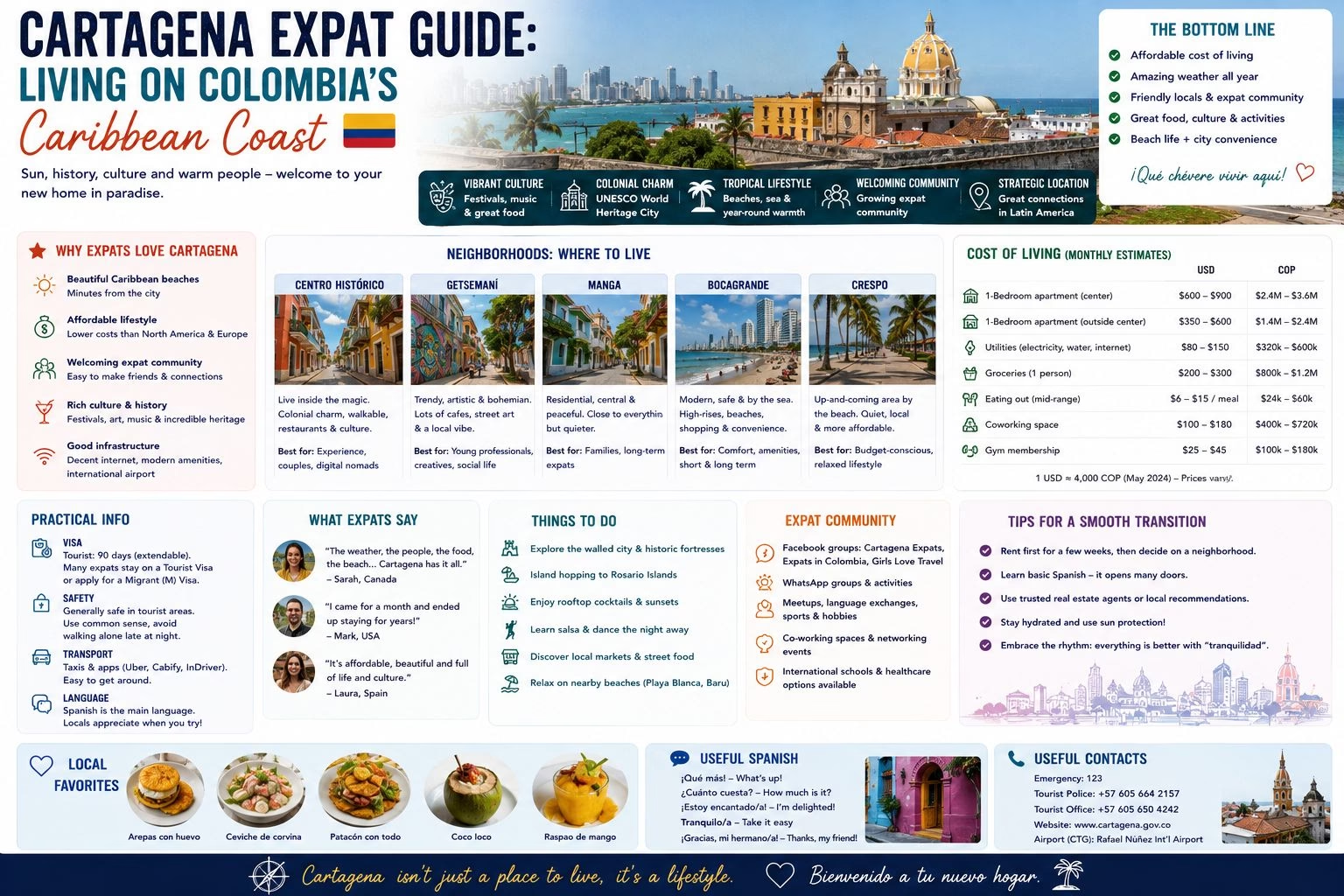
Cartagena is the most expensive Colombian city for expats and the one with the least developed long-term resident infrastructure outside the tourist economy. It is also, for specific types of expat, the most compelling: the extraordinary beauty of the Walled City, the Caribbean climate, the sailing community, and the specific quality of life on Colombia’s Caribbean coast attract people who are specifically seeking what only Cartagena offers. This guide covers the realistic picture of long-term living here; see the Cartagena city guide for the visitor-facing picture.
Who Cartagena Is Right For
The expats who thrive in Cartagena long-term tend to have one or more of these in common:
They specifically want a Caribbean lifestyle: warmth, the sea, the colonial aesthetic, outdoor living.
They are retirees with a fixed foreign income who can absorb the higher cost and want the beauty and warmth of the coast.
They are connected to the sailing community: Cartagena is Colombia’s primary sailing hub, and the marina-based international sailing community has a specific social world with its own infrastructure.
They work in tourism or hospitality: several expats have built businesses in Cartagena’s hotel, restaurant, and tour operator economy.
They have Colombian partners or family connections that make Cartagena specifically the right place regardless of other factors.
The Cost Reality
Cartagena is the most expensive city in Colombia for accommodation. The Walled City and Bocagrande have hotel and apartment prices that approach Latin American resort levels; finding a good furnished apartment in the Walled City for under USD 1,500 per month is increasingly difficult. The tourist economy has inflated accommodation prices well above what the local economy would otherwise sustain.
More affordable options for long-term residents: Getsemaní has lower prices than the Walled City and is genuinely interesting as a neighbourhood (see the Cartagena city guide for more on Getsemaní); the mainland areas of La Boquilla (a beach community 10 kilometres north of the city) and the barrios outside the tourist circuit have local-market rents that are significantly lower than the tourist zones.
For a one-bedroom apartment in a good location: expect USD 800 to 1,400/month in Getsemaní; USD 1,200 to 2,000 in the Walled City; USD 600 to 1,000 in Bocagrande; and USD 400 to 700 in less central areas.
The Climate Challenge
Cartagena is hot. The temperature ranges from 28 to 35°C year-round with high humidity; there is no cool season, no escape to the mountains for a break (unlike Medellín, where the surrounding Andes provide temperature variety within an hour’s drive). For most of the year, moving between air-conditioned environments is the standard adaptive strategy.
The practical implication for accommodation: reliable, effective air conditioning in the bedroom is not optional for long-term residents in Cartagena. Electricity costs are higher here than in the Andean cities specifically because of air conditioning load.
The Digital Nomad Reality
Cartagena is a popular digital nomad destination, primarily among those who prioritise lifestyle over work infrastructure. The internet situation is more variable than in Medellín or Bogotá: older colonial buildings have less reliable connectivity, the heat affects infrastructure, and the coworking scene is less developed.
For nomads whose work requires consistently fast and reliable internet for video calls and large file transfers: verify specific accommodation internet speeds before booking (asking for a Speedtest result from the host is reasonable) and identify a backup coworking space.
For nomads whose work is less bandwidth-intensive: Cartagena is entirely viable and the lifestyle is genuinely excellent for those aligned with it. See the digital nomad guide for the wider city-by-city comparison.
Healthcare in Cartagena
Private healthcare in Cartagena is less developed than in Medellín or Bogotá. The main private clinics (Clínica Blas de Lezo, Clínica Medihelp) handle most standard medical situations; for complex cases, evacuation to Bogotá or Medellín is the standard approach.
English-speaking doctors are available through the private clinics and through the expat community’s recommendations. Travel insurance with medical evacuation is particularly important for Cartagena-based expats given the healthcare infrastructure limitations.
Social Life in Cartagena
The expat community in Cartagena is smaller and more fluid than in Medellín: more transient visitors passing through on multi-month trips, fewer long-term settled residents building permanent lives. The social world revolves around the Walled City restaurants and bars, the sailing community at the Club Náutico, and the increasingly active Getsemaní neighbourhood scene.
For Spanish practice and Colombian social connection: the Cartagena Colombian community is warm but the high tourist presence and the tourism-economy orientation of the city’s social world makes deeper local connection require more active cultivation than in Medellín or Bogotá.
Related: Cartagena City Guide | Is Cartagena Expensive? | Digital Nomad Guide | Best Cities for Expats