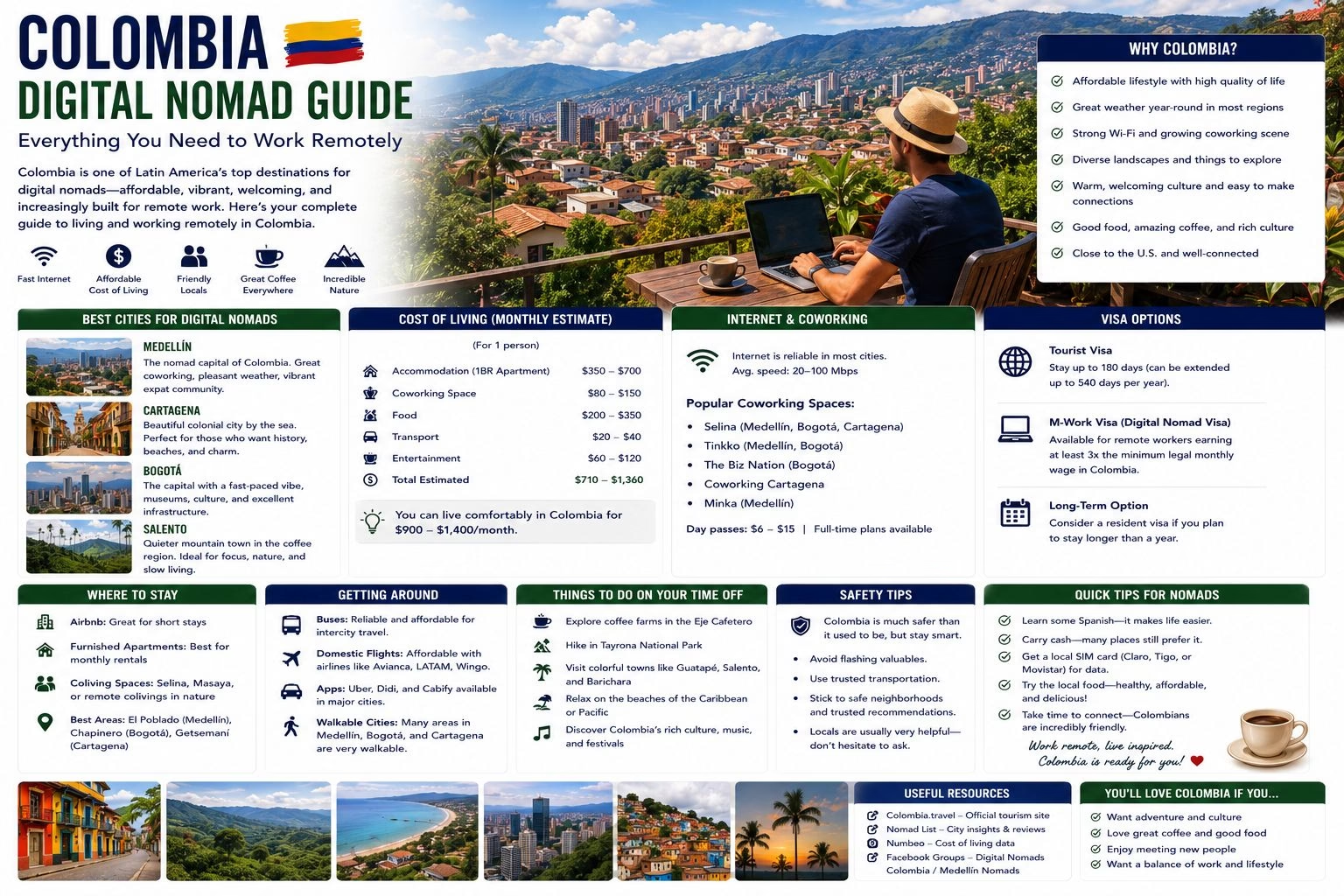
Colombia is one of the most consistently recommended digital nomad destinations in Latin America. Medellín specifically has spent the past decade building an infrastructure for remote workers that is now comparable to established nomad hubs like Chiang Mai or Lisbon, at significantly lower cost. This guide covers the complete practical picture for digital nomads considering Colombia.
The Digital Nomad Visa: Colombia’s Official Programme
Colombia introduced a specific digital nomad visa in 2022 (the Visa V, subcategory “Nómada Digital”). This allows remote workers with verifiable foreign income to stay legally in Colombia for up to 2 years. Requirements:
- Verifiable remote income of at least USD 684 per month (roughly 3 times the Colombian minimum wage; this threshold changes, so verify the current requirement).
- An employment contract or freelance contracts demonstrating remote work for foreign clients or employers.
- Health insurance covering the period of stay in Colombia.
- Proof of accommodation.
The visa application is made at a Colombian consulate before arrival or through Migración Colombia in some cases. Processing takes 2 to 6 weeks depending on the consulate.
For nomads who do not meet the income threshold or do not want to formalise their status, the 90-day tourist entry (extendable once for another 90 days) combined with periodic border crossings to Ecuador, Peru, or Panama is widely practiced and generally accepted. See the visa and residency guide for the fuller pathway comparison.
Internet and Connectivity
Medellín: Internet infrastructure in El Poblado and Laureles is generally good to excellent. Fiber connections (provided by UNE/Tigo, Claro, and other ISPs) are available in most modern apartment buildings; speeds of 100 Mbps or more are achievable. The coworking spaces in El Poblado universally have fiber with backup connections. Café internet ranges from good (specialty coffee shops with dedicated infrastructure) to adequate (traditional cafés using residential connections).
Bogotá: Similar or better connectivity to Medellín; the density of coworking infrastructure reflects the larger city size. The Chapinero area has particularly good coworking options.
Cartagena: Internet infrastructure is less reliable than in the Andean cities; the heat, humidity, and older building stock affect connection quality. The coworking scene is growing but less developed than in Medellín or Bogotá. Cartagena is a popular base for nomads who prioritise lifestyle (beach, colonial aesthetics) over work infrastructure; those who require consistently fast and reliable internet should check specific accommodation internet speeds before booking.
The Coffee Region (Salento): Good infrastructure in the town itself; variable outside it. Adequate for most remote work during stays in Salento; not a reliable base for video-call-heavy or bandwidth-intensive work.
Cost Benchmarks for Nomads
All figures in USD at current exchange rates. See the full cost of living guide for detailed monthly breakdowns.
Tight but comfortable budget (Medellín): USD 1,200 to 1,600/month
- Private room in a shared apartment in El Poblado or Laureles: USD 400 to 600
- Food (cooking at home plus eating out 3 to 4 times per week): USD 300 to 400
- Coworking or café working: USD 0 to 100
- Transport: USD 30 to 50
- Entertainment and activities: USD 100 to 200
- Miscellaneous: USD 100
Standard comfortable budget (Medellín): USD 1,800 to 2,500/month
- Private studio or one-bedroom apartment in El Poblado: USD 700 to 1,000
- Eating out most meals at good restaurants: USD 500 to 700
- Coworking membership: USD 100 to 150
- Transport: USD 50 to 80
- Entertainment, activities, occasional weekend trips: USD 300 to 400
Bogotá: Similar to Medellín; slightly higher in the Chapinero and Zona Rosa areas.
Cartagena: 20 to 40 percent higher than Medellín for equivalent quality accommodation and food, due to the tourism premium.
The Medellín Nomad Community
The nomad community in El Poblado is large enough to be essentially self-sustaining: there are always other nomads, regular social events, established cafés and coworking spaces known to the community, and a shared base of practical knowledge about how to navigate the Colombia-specific aspects of nomad life.
Access points: the Nomad List Colombia community, the Colombia Digital Nomads Facebook group, the regular meetups at Selina El Poblado and other coworking venues, and the language exchange events that mix nomads with local Colombians.
Practical Entry Checklist
Before arriving as a nomad in Colombia: verify the current visa options for your specific income and nationality situation; book initial accommodation in El Poblado or Laureles with confirmed internet speeds; get a Colombian SIM card (Claro or Movistar) at the airport; join the Colombia digital nomad Facebook communities before arrival for current intelligence; understand the banking situation (covered in the banking guide) before you need it.
Related: Cost of Living | Coworking Spaces | Visa and Residency | Banking