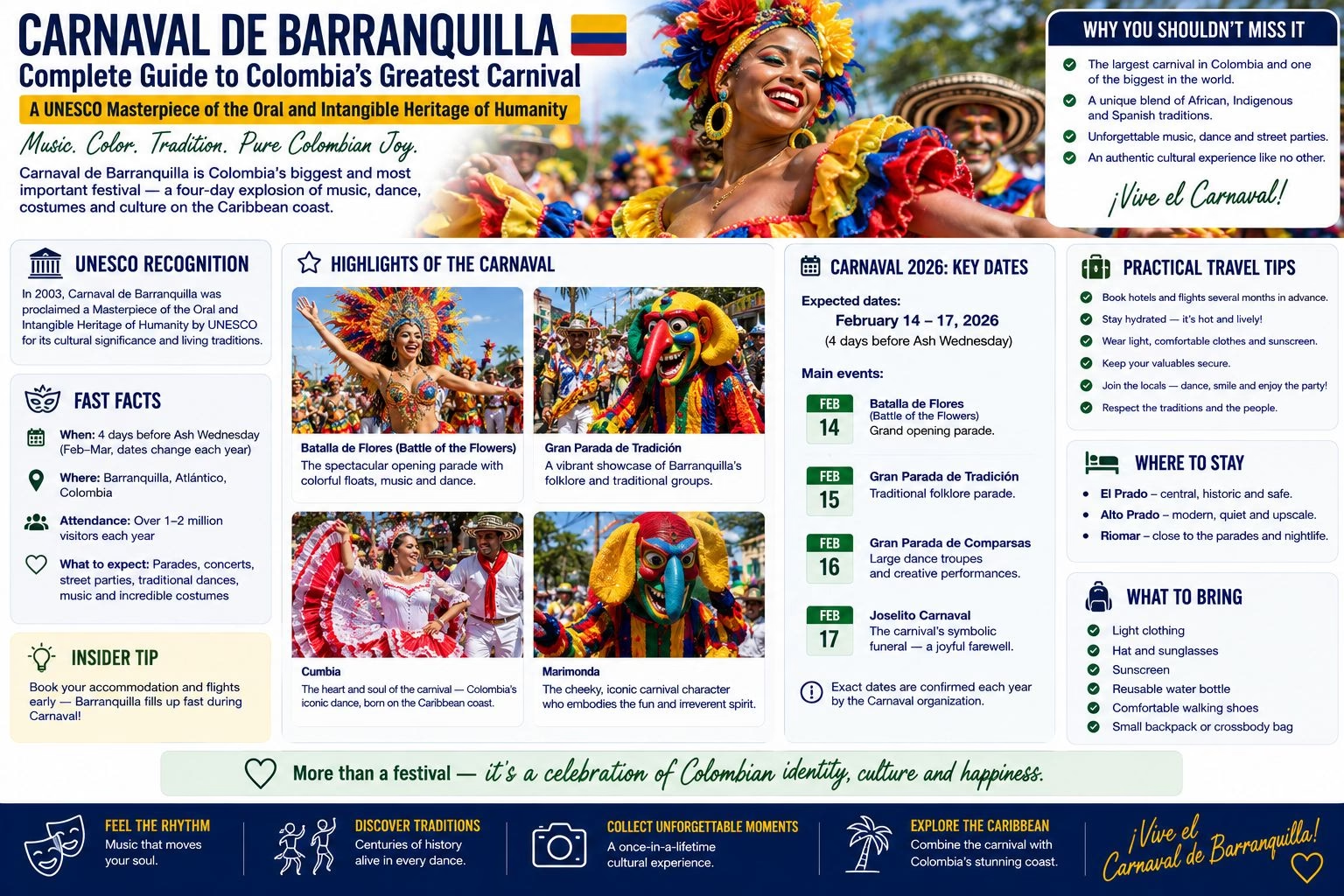
The Carnaval de Barranquilla is the largest and most internationally recognised festival in Colombia, the second-largest carnival in the Americas after Rio de Janeiro, and a UNESCO Masterpiece of the Oral and Intangible Heritage of Humanity. Taking place in the four days before Ash Wednesday (typically in February), it draws 5 million participants and visitors through a sustained explosion of cumbia, mapalé, porro, and the street culture of Colombia’s Caribbean coast.
Why Barranquilla’s Carnival Is Different
The Carnaval de Barranquilla is rooted in a different cultural tradition from the Brazilian, Trinidadian, or European carnivals with which it might be compared. The African cultural traditions of the enslaved populations who arrived through Colombia’s Caribbean ports, the indigenous musical and dance traditions of the coastal peoples, and the Spanish Catholic celebration framework of the pre-Lenten period all converge into something that is specifically Caribbean Colombian in character.
The music is not samba: the rhythms of Barranquilla’s carnival are cumbia (Colombian in origin, rooted in the interaction of African and indigenous musical traditions), mapalé (a faster, more acrobatic West African-derived rhythm), porro, and vallenato. The dances are tied to these specific rhythms; the costumed groups (comparsas, murgas, and disfraces) perform the traditional dance forms associated with each musical type.
The characters of the carnival are uniquely Colombian: the Marimonda (a figure from popular culture wearing a trunk and large ears, satirising the economic elite), the Congo (a warrior character from African traditions), the Garabato (a figure representing the struggle between life and death), and the many regional characters from the Indigenous and Afro-Colombian communities of the coast.
The Four Days: Event by Event
Saturday: Batalla de Flores (Battle of Flowers)
The opening parade and the most festive of the four main events. Floats covered in flowers, costumed groups representing all the main carnival characters, and the coronation of the Carnival Queen (a tradition that blends Spanish colonial pageantry with Caribbean celebration). The parade runs along the Via 40, Barranquilla’s main coastal road, for several hours. Ticketed bleacher seating is available along the route; standing viewing is free but crowded.
Sunday: Gran Parada de Tradición y Folclor (Grand Parade of Tradition and Folklore)
The most culturally significant parade: the traditional dance groups, indigenous representations, and the Afro-Colombian cultural traditions that are the deepest roots of the carnival. This is the parade for those specifically interested in the cultural and historical dimensions of the event rather than the pure spectacle.
Monday: Gran Parada de Fantasía (Fantasy Parade)
The most theatrical and visually extravagant parade: elaborate fantasy costumes, large-scale creative groups, and the more experimental and contemporary expressions within the carnival framework. This is the most photographed of the four days.
Tuesday: Entierro de Joselito (Burial of Joselito)
The symbolic conclusion: Joselito Carnaval, the character who represents the carnival spirit, is symbolically “buried” as the celebration ends and Lent begins. Participants dress in mourning, weeping theatrically for the carnival’s passing, in a tradition of mock grief that is itself part of the celebration.
Where to Watch
Via 40: The main carnival boulevard; the site of the major parades. Bleacher seating along the route is ticketed and sold out months in advance for the main parades.
The Carnival Headquarters (Casa del Carnaval): A museum and exhibition space dedicated to carnival history and tradition; also serves as a practical information point during the festival.
The entire city: The carnival is not confined to the parade route. The comparsas (costumed groups) parade through neighbourhoods throughout the four days; music is everywhere; street parties (fiestas de calle) operate independently of the official programme.
Planning a Visit to the Carnaval
Book accommodation 3 to 4 months in advance: Barranquilla’s hotels fill completely for Carnival; prices triple. The city’s accommodation is not particularly varied; booking a good hotel well in advance is the first and most critical planning action.
Getting to Barranquilla: Fly from Bogotá (80 minutes), Medellín (55 minutes), or Cartagena (30 minutes). Direct international flights arrive at Ernesto Cortissoz International Airport (BAQ). Buses from Cartagena (2 to 2.5 hours) are an alternative.
Tickets: Bleacher seating for the major parades is sold through official channels; check the Carnaval de Barranquilla official website (carnavaldebarranquilla.org) for current ticket information. The unofficial ticket market produces genuine and counterfeit tickets; buying through official channels is strongly advisable.
The heat: Barranquilla in February is hot (30 to 35°C) and humid. Sun protection, hydration, and realistic management of the outdoor time are all necessary.
Safety: Barranquilla’s carnival is a large public event with the typical crowd safety considerations: keep valuables secure, be aware of pickpockets in the most crowded areas, and use app-based transport rather than flagging taxis.
Beyond the Four Official Days
The Carnaval de Barranquilla is preceded by weeks of pre-carnival events: smaller neighbourhood carnivals, the coronation of the Carnival Queen, and the Calle 17 and Barrio Abajo events that warm up the city before the main four days. Arriving a few days before the official start gives access to these events, which have a more local character than the main programme.
Related: Food and Culture Hub | Festivals Guide | Cali Guide | Cartagena Guide