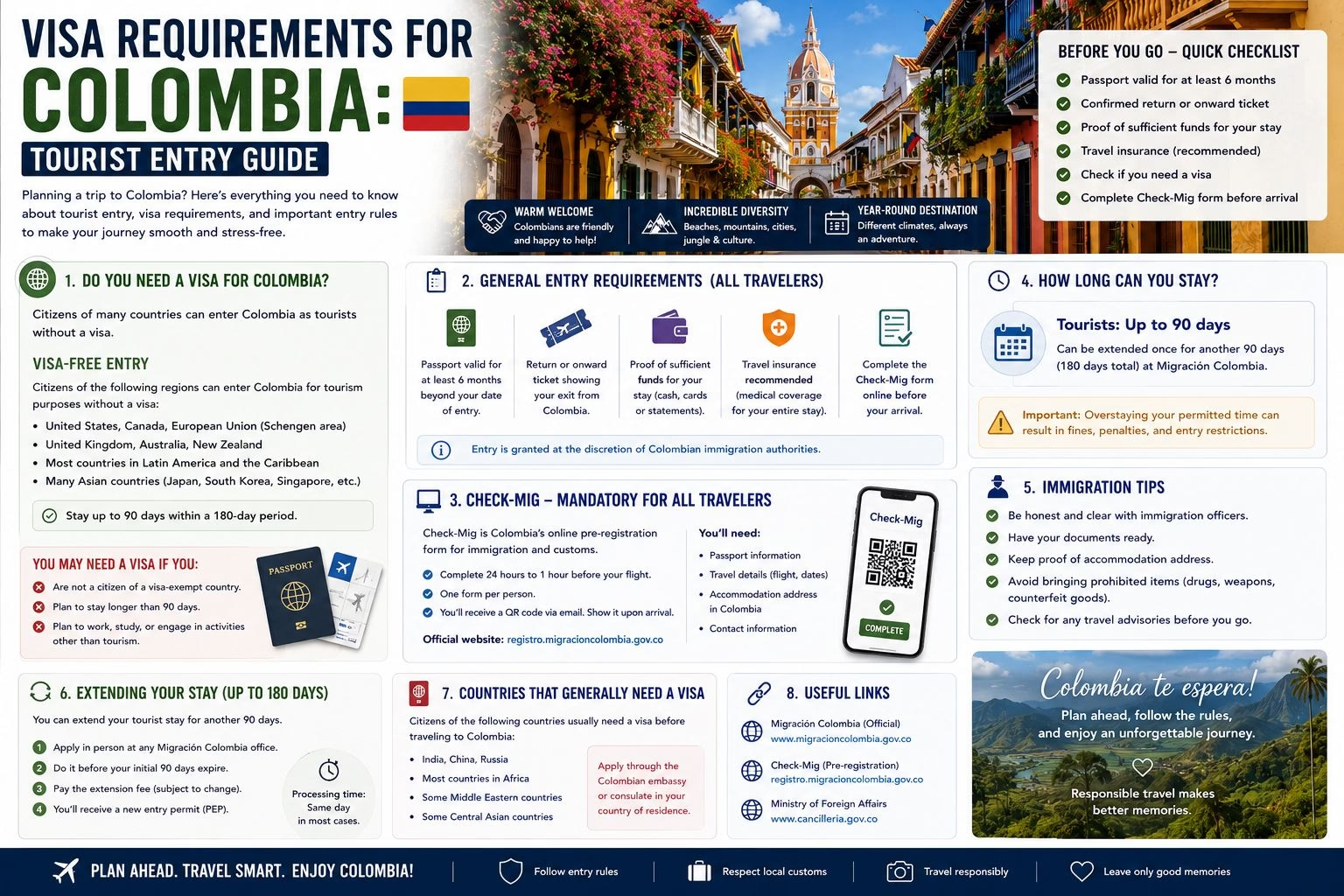
Colombia has straightforward entry requirements for most Western visitors: citizens of the majority of European, North American, and many Latin American countries can enter as tourists without a visa for up to 90 days. This guide covers the entry requirements for all major nationalities, how the system works in practice, and what to do if you want to stay longer.
Visa-Free Entry: Who Qualifies
The following nationalities can enter Colombia as tourists without a visa, for up to 90 calendar days:
All EU member state nationals: Citizens of all 27 EU countries enter Colombia visa-free.
United Kingdom: UK passport holders enter visa-free for up to 90 days.
United States: US citizens enter Colombia visa-free for up to 90 days.
Canada: Canadian nationals enter visa-free for up to 90 days.
Australia and New Zealand: Both countries have visa-free access for 90 days.
Most Latin American countries: Citizens of Brazil, Argentina, Peru, Chile, Mexico, and most other Latin American countries enter visa-free, typically under bilateral agreements.
Japan, South Korea: Visa-free for 90 days.
The Colombian immigration authority (Migración Colombia) maintains the complete and authoritative list of nationalities with visa-free access at migracioncolombia.gov.co. Check this source before travel; the list is updated and some nationalities have seen changes in recent years.
The Entry Process: What Actually Happens
At Colombian ports of entry (international airports at Bogotá, Medellín, Cartagena, Cali, and other cities), immigration operates straightforwardly:
Present your passport at the immigration desk. For visa-free nationalities, you will be asked to confirm the purpose of your visit (tourism), your intended length of stay, and in some cases your accommodation in Colombia. Having a hotel booking or at least the address of where you will be staying is useful to have available.
Your passport is stamped with your entry date. The permitted stay is typically stamped or written in the passport; ensure you can read this and know your exit date. Overstaying is taken seriously in Colombia and has consequences for future entry.
A tarjeta de turismo (tourist card) was previously required by some countries; this requirement has changed over time. Verify the current position for your nationality at the official source.
How Long Can You Stay?
Visa-free visitors are typically permitted to stay for up to 90 days in any 180-day period. The 180-day calculation means that you cannot simply leave and re-enter to reset the 90-day counter: your total time in Colombia in any given 180-day window should not exceed 90 days.
In practice, the 90-day limit for tourists can be extended in one of two ways:
Extension at Migración Colombia: You can apply for a 90-day extension (prórroga) at a Migración Colombia office in the city where you are staying. This requires completing an application, paying a fee, and providing documentation. The extension is generally granted for a first application; repeated extensions on a tourist visa without other status are viewed less favourably.
Leaving and returning: Crossing into a neighbouring country (Ecuador, Venezuela, Peru, Brazil, Panama) and returning resets your entry date. This is widely practiced and generally accepted for the first such crossing. Multiple exits and re-entries specifically for visa purposes attract more scrutiny.
Nationalities That Require a Visa
Citizens of countries not on the visa-free list must apply for a visa at a Colombian consulate or embassy before travel. The most common categories:
Colombian Visitor Visa (Visa V): For tourism purposes; issued at Colombian consulates; typically valid for 90 days and sometimes extendable.
The application typically requires: a valid passport with at least 6 months validity beyond the intended stay; completed application form; passport photographs; proof of accommodation or invitation; proof of financial means (bank statement); onward or return ticket; application fee payment.
Processing times vary by consulate; allow at least 4 to 6 weeks. For some nationalities, processing can take longer.
Requirements at Entry: What to Have Ready
For all visitors, including visa-free nationalities, Colombian immigration can ask to see:
Return or onward ticket: Evidence that you have a plan to leave Colombia. This is more commonly checked for some nationalities than others; having a return booking or at least an onward flight to another country is advisable.
Proof of sufficient funds: Evidence that you have the money to support your stay. In practice, a bank card and enough cash to demonstrate this is usually sufficient.
Accommodation details: The address of your first night’s accommodation.
Long-Stay Visas: Options for Extended Stays
For stays longer than 90 days (or 180 days with an extension), Colombia offers several visa categories for longer-term residents. These are covered in detail in the expat visa and residency guide. The main categories relevant to visitors considering longer stays include:
The Visa M (Migrante) category, which covers various sub-categories for those with Colombian family members, long-term employment, property ownership, or significant investment.
The Visa R (Residente) for permanent residents who have previously held other Colombian visa categories.
For digital nomads and remote workers: Colombia introduced a digital nomad visa (Visa V subcategory “Nómada Digital”) in 2022, allowing those with verifiable remote income to stay for up to 2 years.
Practical Notes
Passport validity: Ensure your passport is valid for at least the duration of your intended stay. While Colombia does not have a mandatory 6-month validity requirement, having at least 3 to 6 months of remaining validity avoids any potential complications.
Entry at land borders: Colombia shares land borders with Venezuela, Ecuador, Panama, Peru, and Brazil. Entry at land border crossings follows the same general rules as airports for visa-free nationalities; the land borders vary significantly in their operational status, and some have seen disruptions related to the Venezuelan migration situation. Check the current status of any land border crossing before planning to use it.
Entry stamp: Ensure your entry stamp is legible and that you understand the permitted stay noted. Keep your passport safe throughout your stay; it is technically required to carry it or a copy at all times.
Related: Plan Your Trip | Travel Budget | Vaccinations | Expat Visa Guide
Practical Entry Tips for Common Situations
The digital nomad visiting on a tourist entry: If you are working remotely while visiting Colombia on a standard tourist entry, this is widely practiced and generally not questioned. Colombia does not have the resources to investigate the remote working status of every foreign visitor. The digital nomad visa (Visa V) exists precisely for those who want legal clarity; those who prefer not to formalise typically use the standard tourist entry and extension system.
The returning visitor: Visitors who have been to Colombia before, particularly those who have done border runs to extend their stay in the past, may receive more scrutiny at entry than first-time visitors. Having evidence of a return ticket, hotel booking, and the purpose of the visit readily available is advisable.
The land border entry from Ecuador: The Rumichaca bridge crossing between Ipiales, Colombia and Tulcán, Ecuador is the main southern land crossing. It is functioning and well-used; the entry process follows the same rules as airport entry. The crossing area itself has some of the logistical complexity of any busy land border; allow extra time and be cautious about valuables in the crossing area.
Staying Longer Than the Visa Period
Overstaying a Colombian visa is taken seriously. Overstay fines are applied per day, and a history of overstaying may affect future entry applications. The correct action if you realise you will exceed your permitted stay: visit the Migración Colombia office (online appointments can be made through their website) before the expiry date to apply for an extension or regularisation. Proactive engagement with the immigration authority is always better than hoping the exit stamp officer does not notice.
The Digital Visa Application System
Colombia’s Cancillería has progressively moved visa applications online through their VEX (Visa Expedición y Cancelación) platform. For most visa categories, the application, document upload, and fee payment are all handled online. The system works but has been known to have technical issues; allowing extra time and keeping copies of all uploaded documents is advisable.