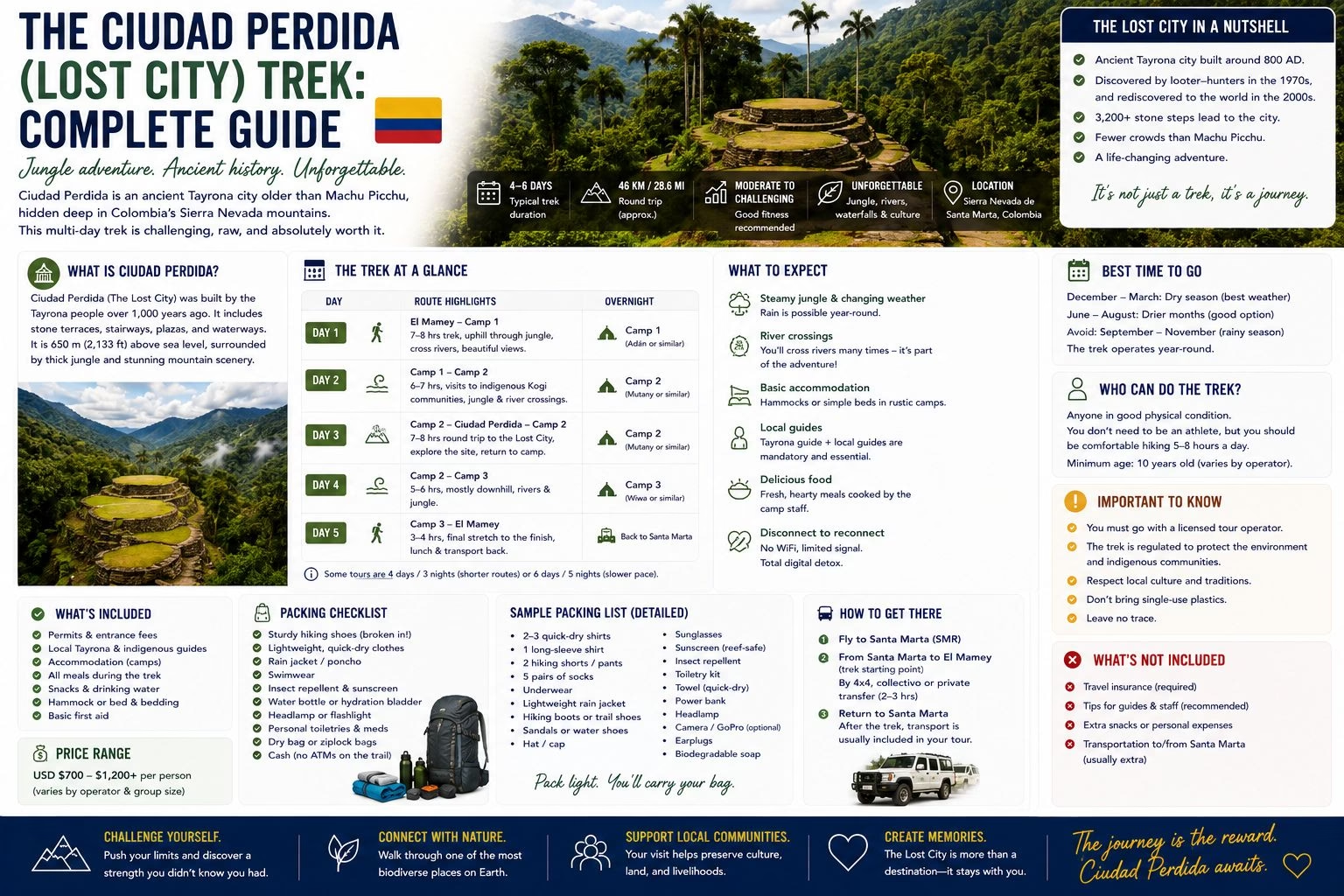
The Ciudad Perdida, known as Teyuna in the Kogi language, is a pre-Columbian city in the Sierra Nevada de Santa Marta built by the Tairona people between the 9th and 14th centuries, predating Machu Picchu by roughly 650 years. Rediscovered by looters in 1972 and opened to organised tourism in the 1980s, it remains accessible only on foot, by a 4 to 6-day guided trek through dense jungle. For visitors willing to commit the time and physical effort, it is widely considered the single most rewarding hiking experience in Colombia, and one of the most significant archaeological treks in South America.
What the Trek Actually Involves
The standard route covers approximately 46 kilometres round trip, departing from the town of El Mamey (also called Machete Pelao), about 2 hours by 4×4 from Santa Marta. The trail climbs and descends repeatedly through jungle terrain, crosses the Buritaca River multiple times (sometimes waist-deep, always on foot), and passes through territory belonging to the indigenous Kogi, Arhuaco, Wiwa, and Kankuamo peoples, whose continued presence on this land is a central part of what makes the trek significant rather than merely scenic.
The final approach to the site itself is a stone staircase of approximately 1,200 steps, steep and often slick with humidity, climbing through jungle canopy to the terraced city above. Most itineraries reach the main terraces on the morning of day 3 (on a 4-day itinerary) or day 4 (on a 5 or 6-day itinerary), spending several hours exploring before beginning the return journey.
How Many Days to Choose
4 days: The standard, most heavily booked option. Long walking days (6 to 8 hours) with less time to rest, but the most efficient use of time for visitors on a tighter Colombia itinerary.
5 days: A more comfortable pace with shorter daily walking distances and slightly more time to appreciate both the jungle and the site itself. The most commonly recommended option for visitors who are not in serious hiking condition but are reasonably fit.
6 days: The most relaxed pace, sometimes including an extra side activity or a rest day. Worth the extra cost and time for visitors prioritising the experience over efficiency.
All itineraries cost roughly the same per day; the total price scales with the number of days. Expect approximately COP 1,300,000 to 1,600,000 (roughly USD 320 to 400) for the standard package, which includes all meals, accommodation in shared-dorm jungle camps, a Spanish and English-speaking guide, and the mandatory entrance permit.
Physical Difficulty and Who Should Do This
The trek is physically demanding: consecutive days of hiking in high heat and humidity, steep and often muddy terrain, and the 1,200-step final climb. It does not require technical skill or prior trekking experience, but a reasonable baseline of fitness matters more here than on most treks marketed to general tourists. Visitors with significant joint problems, serious cardiovascular conditions, or no hiking experience at all whatsoever should honestly assess whether the 5 or 6-day option is the safer choice, since it reduces the daily physical demand meaningfully.
Heat and humidity are a bigger practical obstacle for most visitors than elevation or distance: the trek stays largely below 1,200 metres, so altitude sickness is not a concern, but the combination of jungle humidity and physical exertion causes real dehydration risk if not managed with consistent water intake.
When to Go
The trek runs year-round, but conditions vary meaningfully by season. December to March, the driest period, offers the most reliable footing and the lowest river levels, making the river crossings easier and safer. April to June and September to November bring more rain, muddier trails, and higher river levels; crossings are occasionally suspended by guides when water levels are unsafe, which can affect the itinerary. July and August see a secondary dry spell and increased visitor numbers due to Northern Hemisphere summer holidays.
Booking the Trek
The trek can only be done through one of a small number of licensed tour operators; independent trekking without a guide is not permitted, both for safety reasons and out of respect for the indigenous communities whose territory the trail crosses. Operators pool trekkers into mixed groups on a rotating departure schedule, so solo travellers and small groups will typically join a larger group of 10 to 20 people on the trail. Booking 1 to 2 weeks in advance is generally sufficient outside peak season (July, August, and the Christmas and New Year period), when booking a month ahead is safer.
What to Pack
Lightweight, quick-drying hiking clothes (cotton is a poor choice given the humidity and river crossings), a rain jacket regardless of season, broken-in hiking shoes or boots that can get wet (some trekkers use sandals for the river crossings and switch to dry shoes afterward), insect repellent with a high DEET concentration, a reusable water bottle or bladder, and cash in small denominations for any items not covered by the package (drinks, snacks, souvenirs at the halfway points). See the packing guide for the wider Colombia packing picture.
Health and Safety Considerations
Yellow fever vaccination is recommended given the jungle environment; see the vaccinations guide for the current picture. The security situation on this specific trail has improved substantially since armed groups were active in the area through the 1990s and early 2000s, including a well-known 2003 kidnapping of eight foreign trekkers by the ELN (National Liberation Army), who held them for about three months before release; today the route is patrolled and considered safe, and it would not be operated as a mainstream tourist product otherwise. The practical risks worth taking seriously are the physical demands already described, not personal security. See the Santa Marta safety guide for the wider regional picture.
Related: Santa Marta and Tayrona | Hiking in Colombia’s National Parks | Vaccinations | Packing Guide
For corrections or updates to this guide: contact@allaboutcolombia.com.