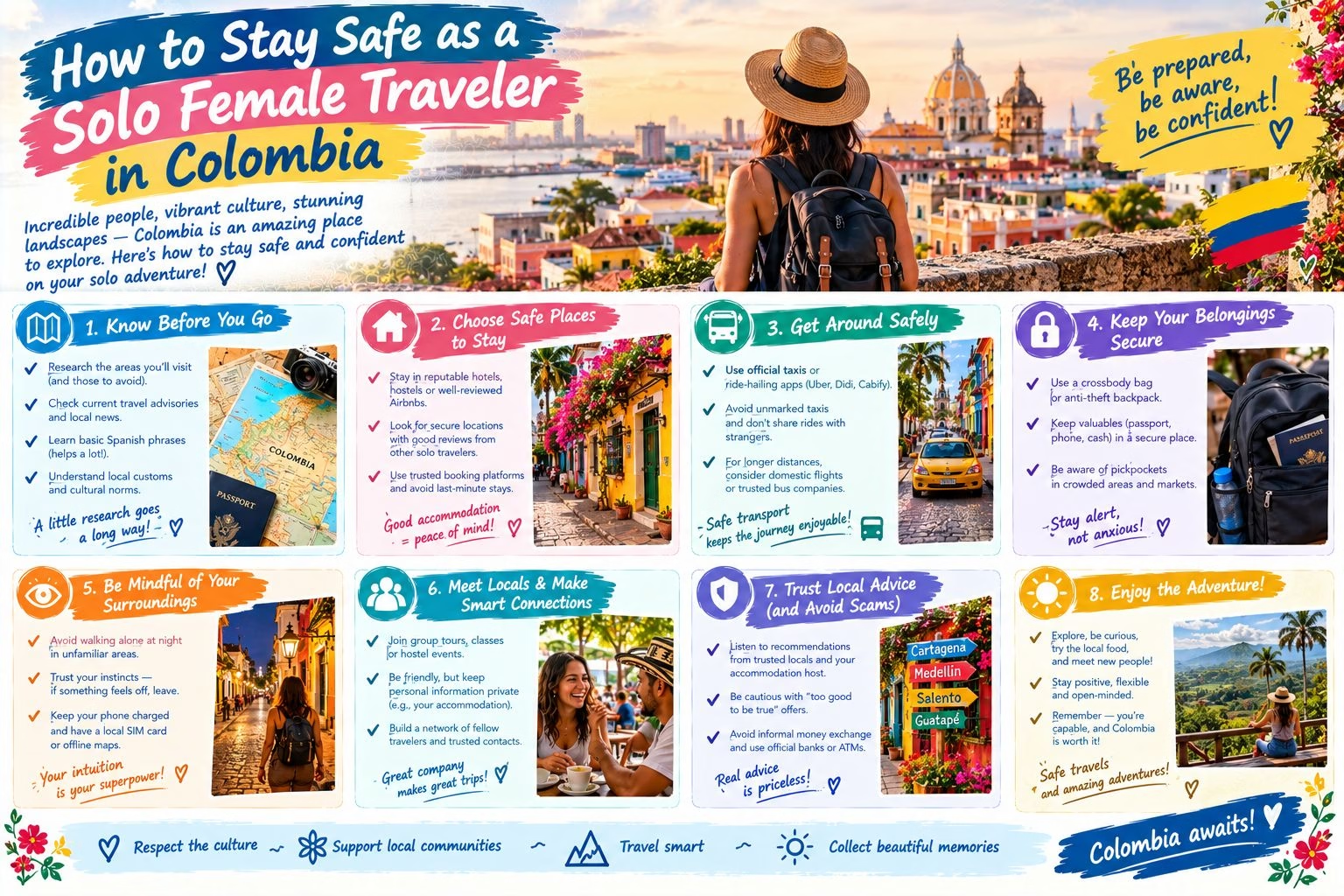
Solo female travel in Colombia is genuinely comfortable and widely done, provided you follow the same core habits that apply to any traveler in a major Latin American destination, plus a couple of considerations worth naming directly.
The Core Habits
- Use app-based transport (Uber, Cabify, InDriver) rather than hailing taxis on the street, especially at night.
- Never accept a drink you didn’t watch being poured, from anyone, in any setting, the standard precaution against drink-spiking that matters more seriously in Colombia than in most places.
- Keep your phone in a pocket or crossbody bag rather than in your hand while walking, particularly near curbs and intersections.
- Stay in the well-established neighborhoods that concentrate tourist and expat life in each city: El Poblado and Laureles in Medellín, Chapinero and Usaquén in Bogotá, the Walled City and Bocagrande in Cartagena.
- Share your live location with someone you trust when traveling between cities, and set a daily check-in routine.
“No Dar Papaya”
This Colombian expression, roughly “don’t give away a papaya,” captures the local safety philosophy better than any specific tip: walking distracted with your phone out, wearing obviously expensive jewelry, or flashing cash are all “giving papaya,” making yourself an easy target. The habits above are the practical version of this principle.
What’s Genuinely Specific to Traveling Alone as a Woman
Trust your read of a social situation over politeness; declining unwanted attention directly is normal and expected in Colombia, not rude. Dressing to broadly match local norms, especially outside the biggest cities, reduces unwanted attention without requiring you to change how you actually dress in tourist-heavy areas where a wider range is completely normal.
Solo female travelers consistently report Colombia as comfortable and welcoming, with safety varying by city and neighborhood the same way it does for any traveler, rather than presenting materially higher risk for women specifically in the areas most visitors spend time in.
Digital Security
Use a VPN on public wifi in cafés and hostels, particularly for anything involving banking or sensitive logins. Enable two-factor authentication on your accounts before you travel, and keep a portable charger on hand so your phone stays usable if you need to call for help or share your location.
Transport Between Cities
For intercity travel, reputable bus companies with assigned seating or domestic flights are both solid options; prefer daytime travel on long overland routes. Confirm the vehicle and driver details on any app-based ride before getting in, and sit with your bag on your lap or between your feet rather than in an overhead space you can’t see.
Finding Community
Women-focused expat and traveler groups exist in most major cities, particularly Medellín and Bogotá, and are worth seeking out specifically for the added comfort of a shared-experience space on top of the general expat and hostel community. Hostels with strong female dorm reviews and social common areas are also a reliable way to meet other solo travelers quickly.
To Wrap Up
Solo female travel in Colombia comes down to the same habits that make any destination work: awareness of your surroundings, app-based transport, watching your drink, and staying in the established neighborhoods this guide (and the rest of this site) points to for each city. None of this is unique to Colombia; it’s the same baseline that applies in Barcelona, Mexico City, or Rome, and Colombia rewards it the same way.
FAQ
Q: What should I do before and during my trip to maximize safety?
A: Book accommodation with strong reviews and visible security (front desk, secure entry). Buy travel insurance that covers theft and medical evacuation. Keep a photocopy and an encrypted digital copy of your passport, separate from the original. Get a local SIM or eSIM so you have reliable data, download offline maps, and save Colombia’s emergency number, 123, along with your embassy’s contact.
Q: How do I get around cities and between destinations safely?
A: Use app-based rides or hotel-arranged taxis rather than hailing on the street; confirm the plate and driver before getting in, and share your trip details with someone you trust. For longer trips, prefer reputable bus companies or domestic flights, ideally during daylight. If a situation feels off, ask to be dropped in a busy, well-lit area rather than waiting it out.
Q: How do I handle unwanted attention or a theft if it happens?
A: Set firm boundaries and move toward a busy, public space if you feel uncomfortable; this is a normal, expected response in Colombia, not something that will be read as rude. If something is stolen, prioritize your own safety over the item, get to a police station or your accommodation, and report it to local police (123) and your embassy or consulate.

I’m Luciana, a travel writer from Bogotá, Colombia, and yes, I know exactly what it’s like to be a solo female traveler in a country the world still misunderstands.
I’ve been travelling independently for 10 years, completing 50+ solo trips across Colombia, Mexico, Central America, Argentina, Peru and the United States. I write in both English and Spanish, and I also contribute to allaboutcolombia.com where I cover my home country in depth — from the coffee region to the Caribbean coast to the Andes.
My speciality is Latin America: the neighbourhoods the guidebooks skip, the buses that are actually fine to take, the hostels that feel like home, and the restaurants where locals actually eat. I’ve hitchhiked across Patagonia, navigated Medellín’s metro system at rush hour, and camped solo in the Sierra Nevada de Santa Marta. I know this region the way you only can when it’s yours.
I also cover the US for solo travelers, having spent time road-tripping through the Southwest, the Pacific Coast and the Deep South.