Cocora Valley (Salento)
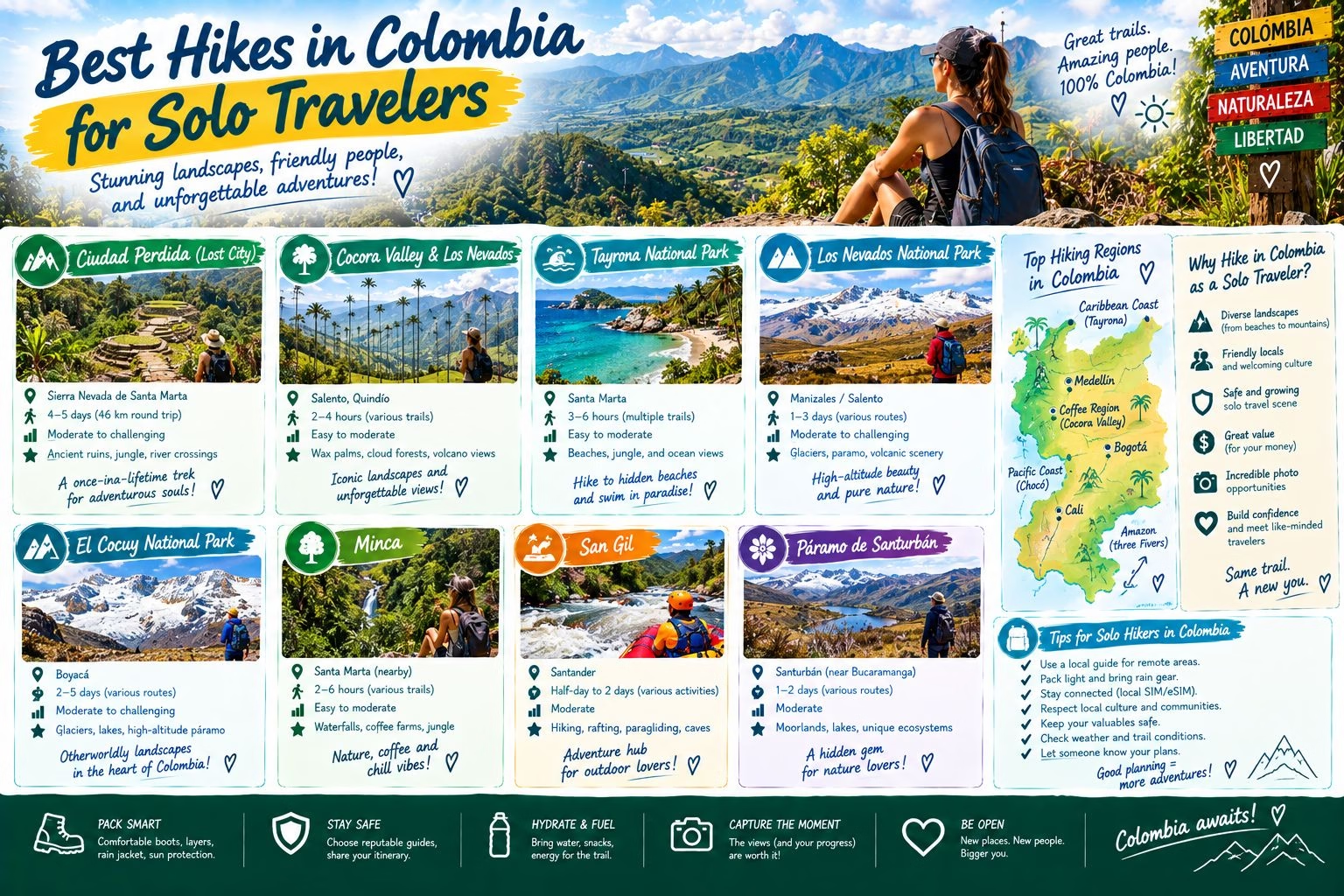
A well-marked loop through cloud forest past Colombia’s towering wax palms, the country’s national tree and some of the tallest palms in the world. Easily reached from Salento, genuinely suited to solo day hiking with no special preparation, and the trail leads to the Acaime hummingbird sanctuary if you want the longer loop. Expect mud and slippery sections regardless of season, proper footwear matters here.Tayrona National Park
Coastal jungle trails leading to beaches like Cabo San Juan and La Piscina, combining jungle hiking with a Caribbean beach payoff. Straightforward as a day hike from the El Zaino entrance; if you’re considering camping in a remote cove alone, don’t, stick to the established camping areas near the main beaches.Ciudad Perdida (Lost City)
A multi-day jungle trek through the Sierra Nevada de Santa Marta to pre-Columbian ruins, genuinely one of Colombia’s signature treks. This one requires an organized guide, access is only permitted through licensed operators, which actually makes it a good solo option: the logistics, permits, and group structure are handled for you, and you’ll be trekking alongside others even though you booked solo. Expect hot, humid conditions, river crossings, and several consecutive days of real hiking.Los Nevados National Park
High-altitude páramo routes out of Manizales, including Laguna del Otún and approaches to Nevado del Ruiz. Genuinely demanding: real elevation, cold, and altitude effects that require actual acclimatization, not just fitness. Hire a licensed guide and spend a day or two adjusting in Manizales beforehand.El Cocuy National Park
Colombia’s most technical high-altitude hiking, with snow and ice on some routes. A licensed guide isn’t optional here in any practical sense, the terrain and altitude genuinely warrant it regardless of your hiking experience elsewhere.What to Pack, By Trip Type
Day hikes (Cocora, Tayrona): comfortable hiking shoes, a light rain jacket, sun protection, 2-3 liters of water, snacks, and a headlamp as backup. Multi-day treks (Ciudad Perdida): insulated layers for cool jungle nights, a waterproof pack cover, and cash for anything not included in your tour package. High-altitude routes (Los Nevados, El Cocuy): proper insulated layers, trekking poles, and, for the more technical El Cocuy routes, gear your guide will specify, don’t assume standard hiking gear is sufficient.Safety and Permits
Ciudad Perdida, and most routes in Los Nevados and El Cocuy, require booking through licensed operators who handle permits and park fees, book in advance during high season (December-February and June-August). Share your itinerary and expected return time with your accommodation, avoid hiking alone at night anywhere, and treat a licensed guide as a genuine safety requirement rather than an optional upgrade on any route involving altitude, technical terrain, or indigenous territory.To Wrap Up
Cocora Valley for an easy, rewarding solo day hike. Tayrona for jungle-to-beach in a single day. Ciudad Perdida for a genuinely supported multi-day expedition that works well precisely because you’re required to go with a guide. Los Nevados and El Cocuy for real high-altitude hiking, worth the extra preparation and guide requirement they both genuinely demand.FAQ
Q: Which hike is best for a solo traveler with no special hiking experience?
A: Cocora Valley, a well-marked, well-trafficked loop near Salento that requires no special gear or preparation beyond decent footwear.Q: Is Ciudad Perdida a good solo option?
A: Yes, arguably one of the best, since access requires a licensed guide and group structure regardless of how you book, meaning the logistics and safety are handled for you even traveling solo.Q: Do I need a guide for Los Nevados or El Cocuy?
A: Effectively yes for both, given the altitude, terrain, and (for El Cocuy specifically) technical snow and ice sections. Treat a licensed guide as a genuine requirement on these routes, not an optional add-on.Choosing a Hike for Your Experience Level
Colombia offers everything from easy valley walks to demanding high-altitude treks. Start with shorter, well-marked routes to see how you handle altitude and humidity, and build up gradually. Be honest about your fitness and experience, and check recent trail conditions, since rain can make paths slippery or close routes entirely.
Hiking Alone Safely
- Choose popular trails, join a group or hire a local guide for remote or longer routes.
- Tell someone your route and expected return time.
- Start early to finish in daylight, as weather often turns in the afternoon.
- Carry water, snacks, a rain jacket, sun protection and a charged phone with offline maps.
- Check whether a trail requires a permit, a guide or advance booking.
Altitude and Weather
Many of Colombia’s best hikes are in the Andes, where altitude can cause headaches, nausea and fatigue. Spend a day or two acclimatizing, drink water, move slowly and descend if symptoms get worse. Conditions can change fast, with cold, wind and rain even on sunny mornings, so pack layers and avoid exposed ridges in storms.
Responsible Hiking
Many routes pass through protected areas, indigenous territories or private land, where rules and access may apply. Stay on marked trails, carry out your trash, avoid disturbing wildlife and respect local communities. Hiring local guides supports livelihoods and gives you better knowledge of the area.
Combining Hikes With a Wider Trip
Hikes fit well with visits to cities, coffee farms and beaches. For timing, read our guide to the best time to visit Colombia solo, and for gear see the packing list. Day trips from the capital are covered in our guide to day trips from Bogotá.
Packing for the Trail
Bring broken-in hiking shoes, a rain jacket, sun protection, a hat, a small first-aid kit and enough water and snacks for the day. Trekking poles help on steep or muddy sections, and a headlamp is useful if your hike runs late. Pack your phone in a waterproof bag and carry a printed copy of your route or offline maps in case you lose signal.

I’m Luciana, a travel writer from Bogotá, Colombia, and yes, I know exactly what it’s like to be a solo female traveler in a country the world still misunderstands.
I’ve been travelling independently for 10 years, completing 50+ solo trips across Colombia, Mexico, Central America, Argentina, Peru and the United States. I write in both English and Spanish, and I also contribute to allaboutcolombia.com where I cover my home country in depth — from the coffee region to the Caribbean coast to the Andes.
My speciality is Latin America: the neighbourhoods the guidebooks skip, the buses that are actually fine to take, the hostels that feel like home, and the restaurants where locals actually eat. I’ve hitchhiked across Patagonia, navigated Medellín’s metro system at rush hour, and camped solo in the Sierra Nevada de Santa Marta. I know this region the way you only can when it’s yours.
I also cover the US for solo travelers, having spent time road-tripping through the Southwest, the Pacific Coast and the Deep South.