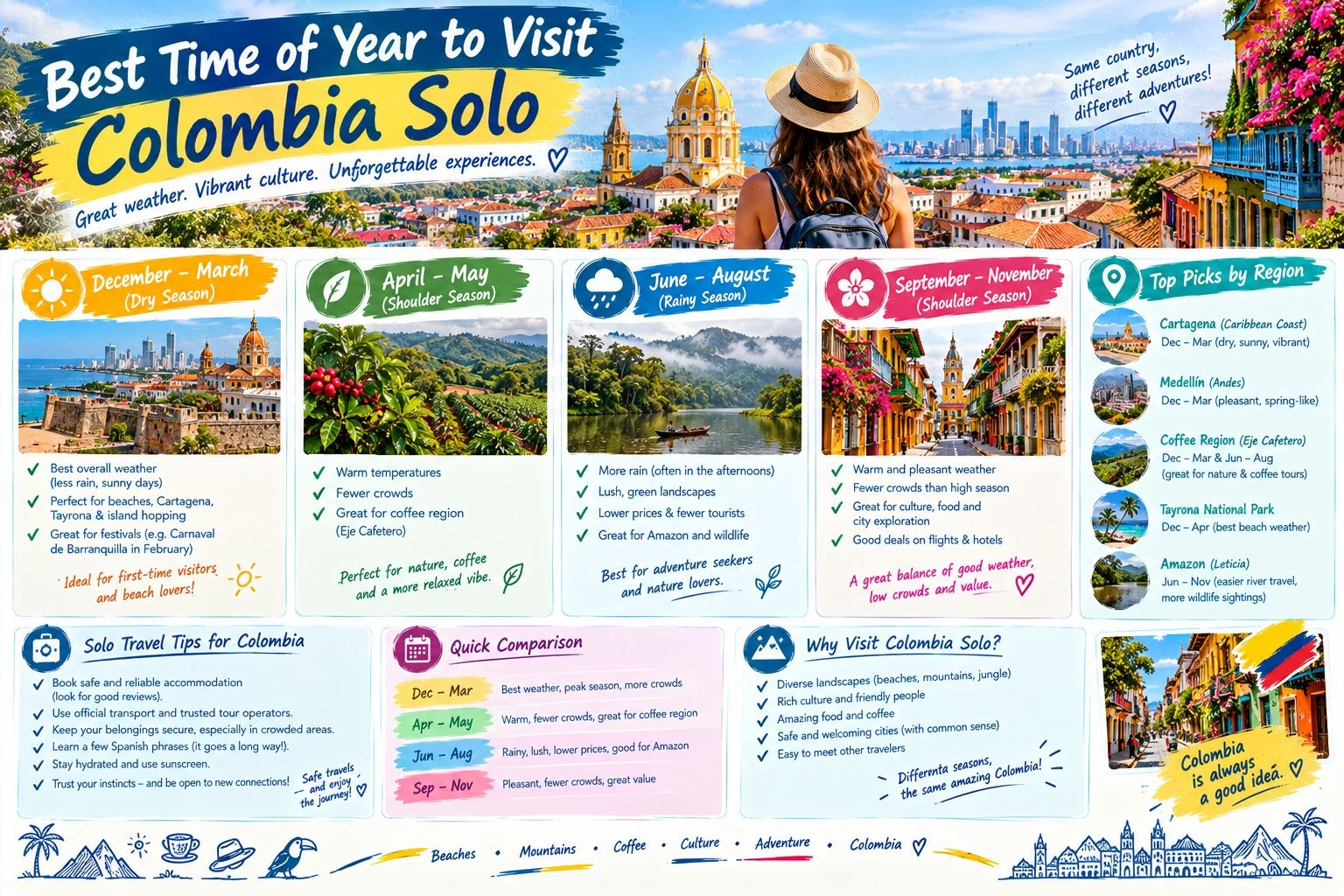
Colombia doesn’t have a single best season, it depends on which regions you’re prioritizing, but December to March is the safest default for a first solo trip: the main dry season across most of the country, and the window that keeps transport, hiking, and beach plans simplest.
The Dry Season Windows
Colombia’s climate varies more by altitude and coast than by a single national calendar. December to March is the primary dry season for the Caribbean coast and much of the Andean interior, including Medellín and the Coffee Region. July to August is a secondary, shorter dry window, particularly useful for the Coffee Region and for Amazon access, since river levels drop and jungle trails become easier to reach between roughly July and December.
Bogotá runs cooler and wetter than the rest of the country regardless of season, with its own rainier stretches around April-May and October-November; pack a warm layer and a rain jacket for the capital no matter when you visit. The Pacific coast is genuinely one of the rainiest places on Earth nearly year-round, with December to March offering the lightest rain of a wet baseline.
Shoulder Season: The Underrated Option
April-May and September-November bring fewer tourists and noticeably better prices on accommodation and tours, at the cost of more rain in some regions. If your plans lean toward city exploration, coffee farm visits, and cultural sites, activities that tolerate a shower, shoulder season is a genuinely good trade for a solo traveler watching a budget.
Festivals Worth Timing a Trip Around
Carnaval de Barranquilla (late February or early March, dates shift with the Lent calendar) is Colombia’s largest festival and worth planning a trip specifically for if the dates line up. Feria de las Flores in Medellín (early August) is the other major event, built around the Desfile de Silleteros flower parade. Both draw large crowds and push accommodation prices up meaningfully; book well ahead if you’re traveling during either.
What This Means for Your Itinerary
- Andean trekking (Los Nevados, Sierra Nevada): best during either dry window, expect altitude-related cold and rapidly shifting weather regardless of season, so pack layers.
- City culture (Bogotá, Medellín): workable year-round; Medellín’s climate stays mild essentially all year, making it the least season-dependent stop on a Colombia itinerary.
- Caribbean coast and island hopping (Cartagena, San Andrés, Providencia): best in the dry season for calmer seas and more reliable ferry schedules; book inter-island transport ahead regardless.
- Amazon: July to December offers the best access, lower water levels make jungle trails walkable rather than requiring a boat for everything.
To Wrap Up
December through March is the safest bet for a first Colombia trip: dry weather across most regions, manageable logistics, and two of the country’s biggest festivals fall within or near this window. If lower prices and fewer crowds matter more to you than guaranteed sun, the April-May and September-November shoulder seasons are a genuinely underrated alternative, just build some flexibility into activities that don’t depend on clear weather.
FAQ
Q: When is the best time to visit Colombia for good weather?
A: December through March for the Caribbean coast and most of the Andean interior. Medellín and the Coffee Region also have a secondary dry window in July-August. Bogotá stays cool and rainy-prone year-round regardless of season; pack layers for it either way.
Q: When should I go to avoid crowds and save money?
A: April-May and September-November bring fewer tourists and better prices, with more rain as the trade-off. Good months for city-focused, coffee farm, and cultural itineraries that don’t depend on clear skies.
Q: Which festivals are worth planning a trip around?
A: Carnaval de Barranquilla (late February to early March) is Colombia’s biggest festival. Feria de las Flores in Medellín (early August) is the other major one. Both mean higher prices and the need to book well ahead.

I’m Luciana, a travel writer from Bogotá, Colombia, and yes, I know exactly what it’s like to be a solo female traveler in a country the world still misunderstands.
I’ve been travelling independently for 10 years, completing 50+ solo trips across Colombia, Mexico, Central America, Argentina, Peru and the United States. I write in both English and Spanish, and I also contribute to allaboutcolombia.com where I cover my home country in depth — from the coffee region to the Caribbean coast to the Andes.
My speciality is Latin America: the neighbourhoods the guidebooks skip, the buses that are actually fine to take, the hostels that feel like home, and the restaurants where locals actually eat. I’ve hitchhiked across Patagonia, navigated Medellín’s metro system at rush hour, and camped solo in the Sierra Nevada de Santa Marta. I know this region the way you only can when it’s yours.
I also cover the US for solo travelers, having spent time road-tripping through the Southwest, the Pacific Coast and the Deep South.