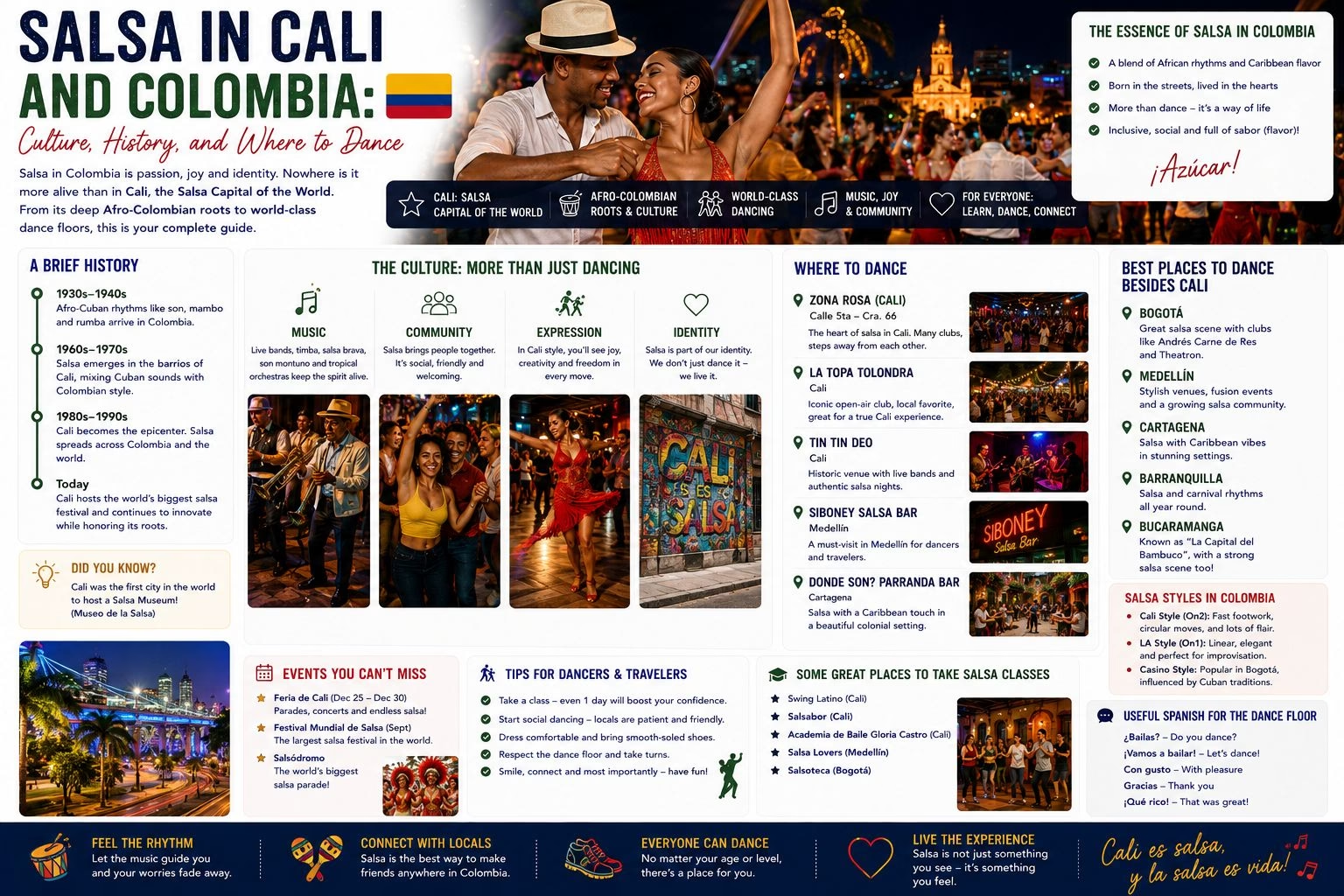
Salsa is Colombia’s most internationally recognisable contribution to global dance culture, and Cali is the city that made it so. The Cali style of salsa, characterised by its distinctive footwork pattern and the speed and precision it demands, developed in the working-class barrios of Cali in the mid-20th century and is now recognised as one of the distinct regional expressions of a global cultural form. This guide covers the history, the culture, and where to experience salsa in Colombia.
How Cali’s Salsa Culture Developed
Salsa as a global genre emerged from the interaction of Cuban son, Puerto Rican rhythms, and New York Latin music production in the 1960s and 1970s. But Cali’s relationship with the antecedents of salsa began earlier, in the 1940s and 1950s when Cuban son (the direct predecessor of salsa) was enormously popular throughout the Caribbean and Pacific coast of Latin America. Cali, as a city on the Pacific slope with Caribbean cultural connections, absorbed these rhythms deeply.
The Cali working class developed their own response to Cuban music: a dance style focused on footwork (the in-place rapid foot pattern called “caleña”) rather than the open, traveling movement of New York salsa or the hip-rolling emphasis of Cuban casino. The caleña footwork, quick and complex, became the technical signature of Cali salsa and the basis on which the city’s extraordinary dance culture was built.
The salsotecas (salsa clubs) that developed in Juanchito and in the city’s barrios from the 1960s onward created a social institution around the dance that has no equivalent anywhere else in the world: clubs where the dancers are not showing off for an audience but are deeply serious practitioners of a specific technical tradition, dancing together in a social ritual that has continued for three and four generations of Caleño families.
The Caleño Style: What Makes It Different
Cali salsa is technically distinct from other major salsa styles in several ways:
The footwork: The basic caleña step involves rapid in-place alternating foot movements that create a visual impression of the feet “shuffling” while the body remains relatively still at the hip level. This contrasts with the larger traveling steps of New York on-2 salsa and the hip emphasis of Cuban casino.
The timing: Cali salsa is danced “on the beat” in a specific 1-2-3 pattern rather than the “on the 2” timing used in New York salsa or the “on the 1” timing common in Los Angeles salsa.
The speed: Cali salsa is typically danced to faster-tempo music than other styles; the footwork becomes increasingly impressive as the tempo increases.
The partnership: The connection between partners in Cali salsa tends to be closer and the lead-follow communication more subtle than in the more theatrical North American styles.
Where to Experience Salsa in Cali
Salsotecas in Juanchito: The district of Juanchito, east of the main city, is the heart of Cali’s traditional salsa nightlife. The major venues have been operating for decades; Caney, Los Tupamaros, and La Olla Sabrosa are among the most consistently recommended. These are not tourist productions; they are where Caleños actually dance, on Thursday through Saturday nights (and sometimes mid-week), to DJs playing classic and modern salsa.
Barrio Granada and Versalles: The northern city neighbourhoods with high concentrations of salsotecas. More accessible from the tourist accommodation areas of Granada than Juanchito.
Salsa schools: For visitors who want to learn the basics before attending a salsoteca, several Cali salsa schools offer classes in the caleña style. A 60 to 90-minute lesson provides enough foundation to participate in the social dancing; booking in advance is recommended.
Salsa Beyond Cali
Medellín: Has a thriving salsa scene, though the Cali style is less dominant; the nightlife in El Poblado and Laureles includes salsa bars alongside other music.
Bogotá: The variety of salsa styles in Bogotá reflects the city’s diversity; New York, Cali, Cuban, and hybrid styles all coexist.
Cartagena: The Caribbean coast’s own dance tradition (champeta, vallenato, cumbia) is more central to Cartagena nightlife than salsa; but salsa is present and the international tourist culture has increased its visibility.
The Feria de Cali
The Feria de Cali, in the last week of December, is the most concentrated expression of Cali’s salsa culture in a single event. The Salsódromo parade (December 27) is the centerpiece: hours of choreographed performances by the major dance schools. For visitors specifically interested in salsa, planning around the Feria period (with the necessary advance accommodation booking) produces the most intense experience available.
Related: Cali Guide | Food and Culture Hub | Festivals Guide | Carnaval de Barranquilla