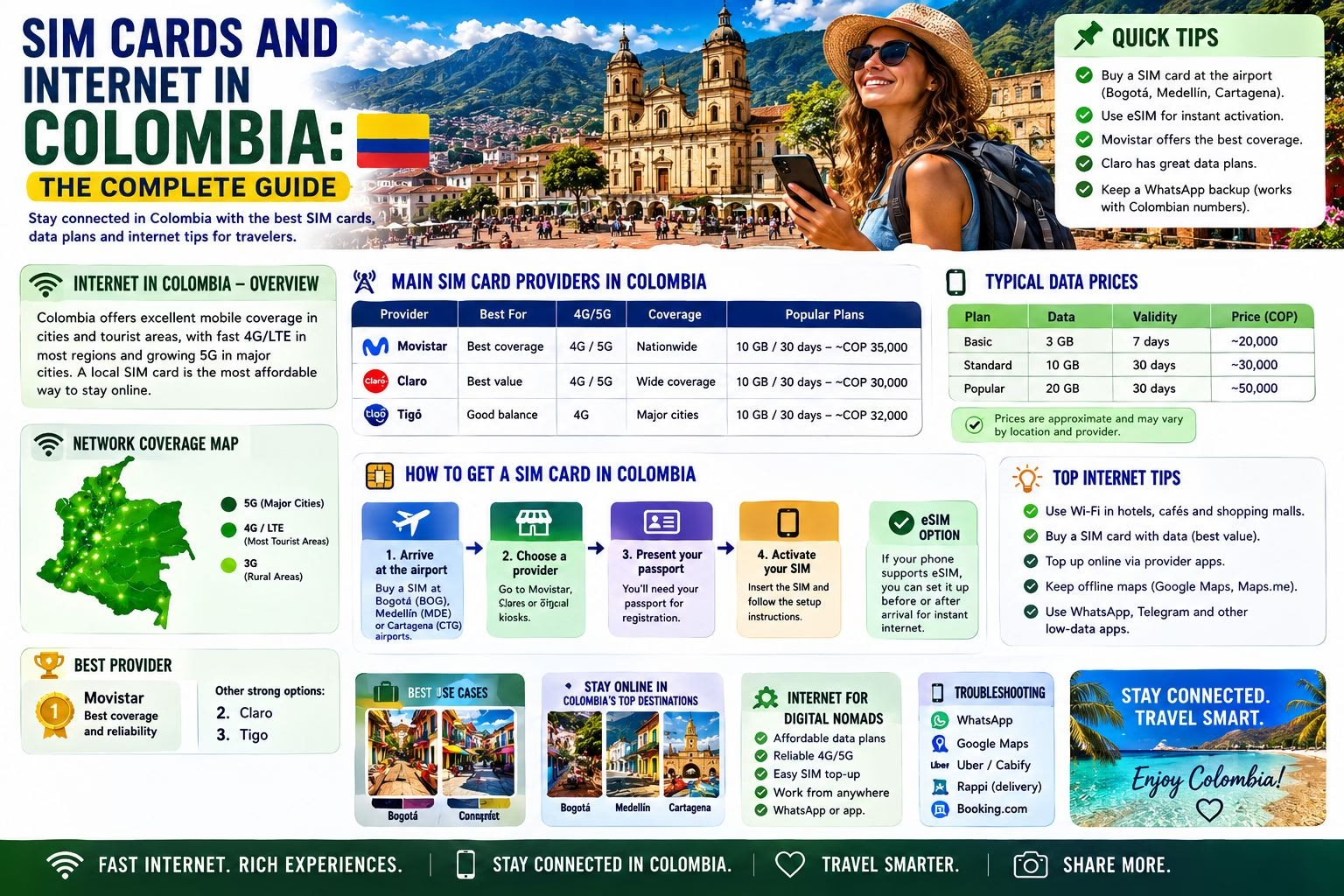
Colombia has good mobile coverage in its cities and along the main transport corridors, with acceptable coverage in most tourist areas. Internet speeds are generally adequate for work and communication in the cities; rural and jungle areas have limited or no coverage. Getting a local SIM card is the most practical solution for most visitors, and it is easy to set up on arrival.
The Three Main Mobile Operators
Claro: The largest network in Colombia, with the widest coverage including rural and smaller town coverage. The most reliable choice if you will be visiting areas outside major cities or travelling along intercity routes. Claro’s data packages are competitive.
Movistar: Good coverage in the main cities; less comprehensive outside urban areas than Claro. Similar pricing to Claro.
Tigo: The third major operator; good urban coverage, competitive data packages for heavier data users.
For most visitors, Claro provides the best combination of coverage and price. If you will be spending significant time in rural areas, the Coffee Region towns, or the Amazon, Claro specifically is worth choosing for its rural coverage advantage.
Getting a SIM Card
SIM cards are available at the operators’ own stores in the main cities and airports, and at small phone repair and accessories shops throughout the country. The airport stores at Bogotá, Medellín, and Cartagena are a convenient first stop. Registration requires a passport.
The process is simple: choose an operator and plan, register with your passport, and the SIM is activated typically within minutes to an hour.
Data plans: A 30-day data plan with 4 to 10 GB of data typically costs COP 20,000 to 60,000 (approximately USD 5 to 15). Plans with larger data allowances are available. Top-up (recarga) can be done at any tienda, supermarket, or via the operator’s app.
Mobile Coverage by Region
Major cities (Bogotá, Medellín, Cartagena, Cali): Excellent 4G and increasingly 5G coverage. No issues with internet-dependent activities.
The Coffee Region (Salento, Filandia, Armenia, Pereira): Good coverage in towns; coverage in the countryside and on hiking trails (including the Cocora Valley) is variable. The main trails have some coverage but do not rely on navigation apps without downloading offline maps first.
The Caribbean coast: Good coverage in Santa Marta, Taganga, and the main resort areas. Coverage at remote beaches is limited; Tayrona National Park interior has minimal coverage.
The Amazon (Leticia): The town of Leticia has reasonable coverage; anywhere else in the Amazon basin has minimal or no coverage. Download everything you might need offline before leaving Leticia.
The Pacific coast (Nuquí, Bahía Solano): Very limited coverage. These are areas to visit without relying on mobile connectivity for anything essential.
Wi-Fi Coverage in Colombia
Wi-Fi is ubiquitous in Medellín (particularly El Poblado) and is available in cafés, restaurants, and accommodation throughout the tourist areas of all major cities. The quality ranges from excellent (dedicated coworking infrastructure in El Poblado) to slow and unreliable (smaller guesthouses in smaller towns).
For digital nomads and remote workers, the coworking spaces guide covers the best work infrastructure by city.
International Roaming Versus a Local SIM
For visits of more than a few days, a local SIM almost always represents better value than international roaming on a home plan. The exception is if your home plan includes free international roaming in Colombia (some UK, US, and European plans do); check specifically before departing.
Related: Plan Your Trip | Digital Nomad Guide | Coworking Spaces
The WhatsApp Necessity
In Colombia, WhatsApp is not an optional messaging app; it is the primary communication infrastructure for most of the country. Restaurant reservations, tour bookings, communication with accommodation hosts, coordination with local contacts, and much of the practical daily communication that a visitor needs to manage runs through WhatsApp. Having WhatsApp active on a Colombian SIM card from the moment you arrive is the single most useful connectivity preparation.
For visitors arriving with a foreign SIM: your home WhatsApp account continues to work on the foreign number. For those buying a Colombian SIM: WhatsApp can be registered to a Colombian number if needed, but this requires deregistering from the foreign number, which many visitors prefer not to do. The practical solution is usually to keep the foreign WhatsApp active and use the Colombian SIM primarily for data.
Offline Maps: Essential Preparation
Download offline maps for Colombia (specifically for the cities and regions you are visiting) before departure or on arrival in a connected hotel. Google Maps offline functionality covers Colombia well; Maps.me is an alternative with good offline coverage including many rural roads and trails.
Having offline maps is particularly important for:
- The Cocora Valley and Coffee Region hiking trails (where coverage is variable)
- Rural driving or bus routes between cities
- Any time you arrive in a new city and need to navigate from the airport or bus terminal without immediately finding a café with WiFi
The habit of downloading offline map areas whenever connected to good WiFi, covering your planned next destination, eliminates the most common navigation crises that occur when Colombia’s mobile coverage gaps coincide with the moments you most need a map.