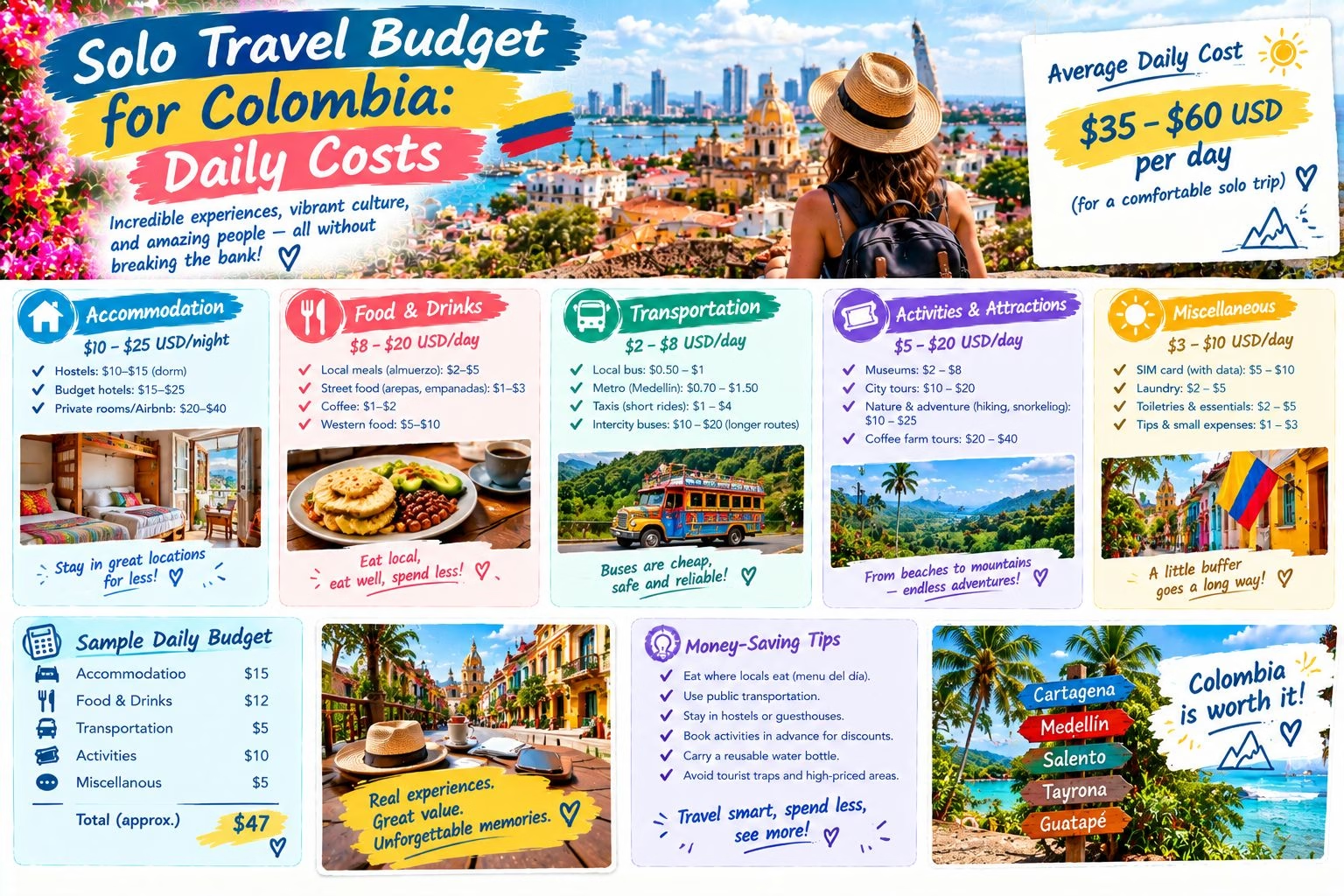
Colombia remains genuinely inexpensive for solo travelers by North American or European standards, across every travel style. Here’s what a realistic day actually costs.
Quick Daily Budget Ranges
| Style | Daily cost (USD) | What it covers |
|---|---|---|
| Backpacker | $25-40 | Hostel dorms, street food and menú del día lunches, local buses and public transport |
| Mid-range | $60-120 | Private rooms or budget hotels, restaurant meals, occasional taxis, a few paid tours |
| Comfortable | $150+ | Boutique hotels, regular restaurant dining, domestic flights or private transfers, guided excursions |
These are genuine ranges, not fixed numbers; where you land within a tier depends heavily on which city you’re in and how much you’re moving around.
Where the Money Actually Goes
Accommodation
Hostel dorms typically run $8-18 a night; private rooms or budget hotels $25-60; boutique hotels start around $80 and climb from there. Solo travelers pay a real premium for private rooms since there’s no one to split the cost with, hostels with a strong private-room option are often the best value if you want privacy without the full hotel price.
Food
The menú del día, a fixed-price lunch of soup, a main, and a drink, typically runs $3-6 and is consistently the best food value in the country. Street food and bakery snacks run under $2. A mid-range restaurant meal runs $8-15; tourist-district restaurants in Cartagena and El Poblado run noticeably higher than the same meal in Laureles or a smaller town.
Transport
City transit is cheap everywhere: Medellín’s metro and Bogotá’s TransMilenio both run under $1 a ride. Intercity buses range from a few dollars for short hops to $15-30 for longer overnight routes; domestic flights, often worth it to save a full travel day, run roughly $30-120 one-way when booked ahead. App-based rides (Uber, Cabify, InDriver) are inexpensive by international standards and the recommended default over street taxis.
Activities
Many of Colombia’s best experiences, walking through a colonial old town, a free walking tour, a plaza or park, cost nothing. Paid activities (a coffee farm tour, a guided hike, a museum with an entry fee) typically run $10-40 depending on what’s included.
The Solo Travel Premium
The real cost gap for solo travelers isn’t daily spending, it’s accommodation, since hotel rooms don’t get cheaper per person when there’s only one of you. Hostels with private-room options, or staying somewhere longer to unlock weekly rates, are the two most effective ways to reduce this specific cost without giving up comfort entirely.
Where the Regional Differences Actually Show Up
Cartagena and the Caribbean coast run 30-50% higher than Medellín or Bogotá for comparable accommodation and dining, reflecting Cartagena’s position as Colombia’s most internationally known destination. Smaller towns and the Coffee Region generally cost less across the board than any of the three major cities.
Practical Money Tips
- Carry a card with no foreign transaction fees, and withdraw larger amounts less often to reduce per-withdrawal ATM fees.
- Use ATMs inside banks or shopping malls rather than standalone street machines.
- Cards are widely accepted in cities; carry cash for smaller towns, markets, and street food.
- Build in a 10-15% buffer for unexpected costs, an extra excursion, a longer taxi ride, or a travel day that doesn’t go as planned.
FAQ
Q: How much should a solo traveler budget per day in Colombia?
A: Roughly $25-40/day backpacking (hostels, street food, local buses), $60-120/day mid-range (private rooms, restaurant meals, occasional tours), and $150+/day for a comfortable trip with boutique hotels and private transport. Cartagena runs 30-50% higher than Medellín or Bogotá for comparable spending.
Q: What’s the single biggest way to cut costs without sacrificing much?
A: Eat where locals eat. A menú del día lunch runs $3-6 and is genuinely good food, versus $10-15+ for a comparable meal at a tourist-district restaurant. Combined with hostel dorms and public transit or app-based rides over taxis, this covers most of the realistic savings available.
Q: Are cards accepted everywhere, or do I need to carry cash?
A: Cards work fine in cities, at hotels, established restaurants, and larger shops. Carry cash for smaller towns, local markets, street food, and public transport, since these are still cash-first in much of the country.

I’m Luciana, a travel writer from Bogotá, Colombia, and yes, I know exactly what it’s like to be a solo female traveler in a country the world still misunderstands.
I’ve been travelling independently for 10 years, completing 50+ solo trips across Colombia, Mexico, Central America, Argentina, Peru and the United States. I write in both English and Spanish, and I also contribute to allaboutcolombia.com where I cover my home country in depth — from the coffee region to the Caribbean coast to the Andes.
My speciality is Latin America: the neighbourhoods the guidebooks skip, the buses that are actually fine to take, the hostels that feel like home, and the restaurants where locals actually eat. I’ve hitchhiked across Patagonia, navigated Medellín’s metro system at rush hour, and camped solo in the Sierra Nevada de Santa Marta. I know this region the way you only can when it’s yours.
I also cover the US for solo travelers, having spent time road-tripping through the Southwest, the Pacific Coast and the Deep South.