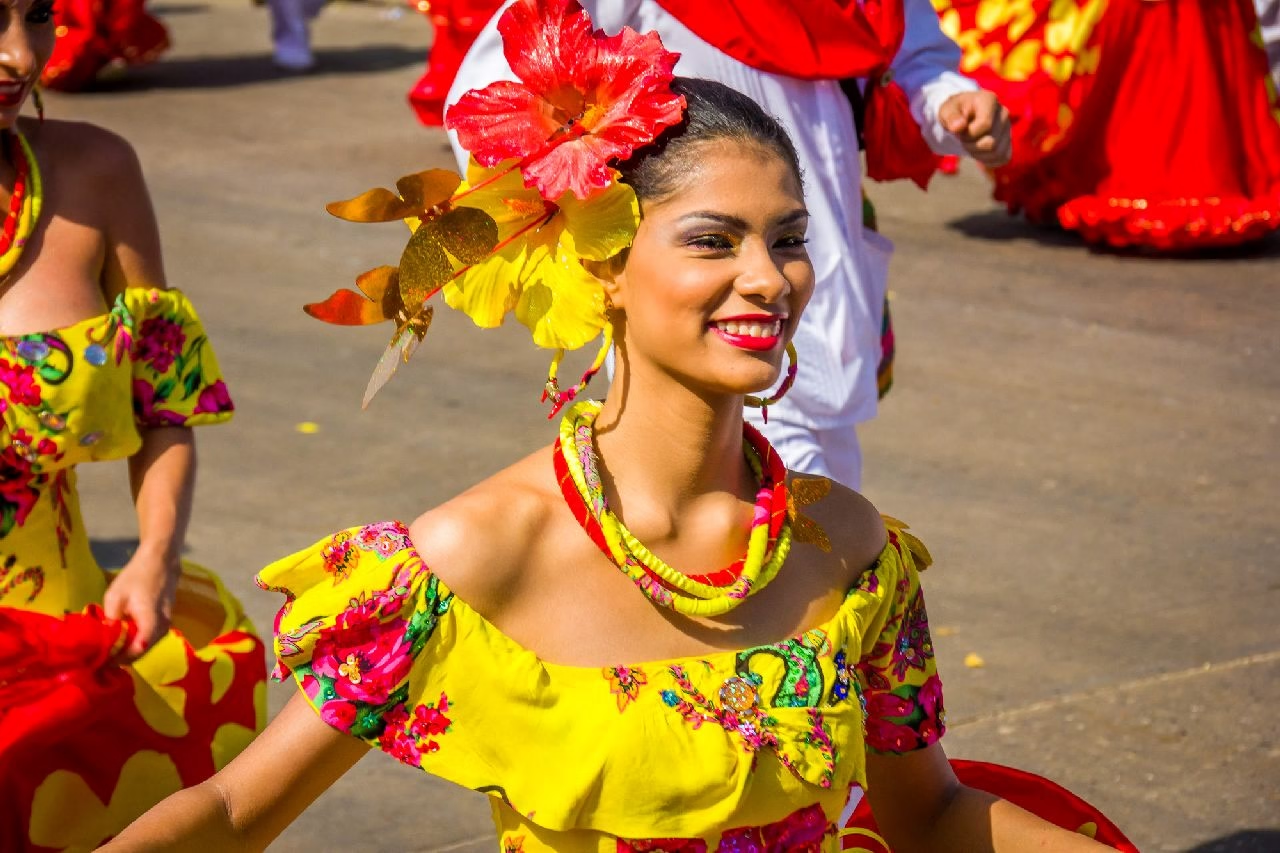
Colombia’s festival calendar is among the richest in South America, reflecting the country’s diverse cultural inheritance: the Spanish Catholic tradition, the African cultural practices that survived and transformed through the colonial period, the indigenous traditions of multiple nations across the different ecological zones, and the specific regional identities that developed over five centuries of Colombian history. This guide covers the major events with the practical information needed to plan around them.
Carnaval de Barranquilla (February)
The Carnaval de Barranquilla is UNESCO-recognised Intangible Cultural Heritage of Humanity, the second-largest carnival in the world after Rio de Janeiro, and the most significant cultural event in Caribbean Colombia.
The carnival runs for four days in the period before Ash Wednesday (timing varies by year: late January to late February depending on the Easter calendar). The format follows the pre-Lenten carnival tradition but with a specifically Colombian Caribbean character: the music is cumbia, porro, mapalé, and vallenato rather than samba; the costumes and dance forms reflect the African and indigenous heritage of the coastal population rather than the Portuguese-Brazilian tradition; and the social culture of the event is characterised by the warmth and extraversion of Caribbean Colombia.
The key events: the Batalla de Flores (Battle of Flowers, the opening parade on Saturday), the Gran Parada de Tradición y Folclor (Grand Parade of Tradition and Folklore, Sunday), and the Gran Parada de Fantasía (Fantasia Parade, Monday). The Entierro de Joselito (burial of Joselito, the carnival’s symbolic character) on Tuesday marks the end. See the complete Carnaval de Barranquilla guide for day-by-day detail and booking logistics.
Planning: Book accommodation in Barranquilla months in advance for Carnival; prices triple and availability becomes very limited within 2 to 3 months of the event. Direct flights from Bogotá and Medellín to Barranquilla operate throughout the year; increase dramatically in capacity during Carnival period.
Feria de Cali (Last Week of December)
The Feria de Cali, held in the final week of December, is the definitive expression of Cali‘s identity as the world’s salsa capital. Seven days of outdoor salsa concerts, the Salsódromo parade (in which salsa schools and dance groups perform in the streets), and the Fiesta de Blancos y Negros (from the adjacent Nariño celebrations that overlap) collectively produce one of the most joyful urban events in South America.
The Salsódromo, typically held on the evening of December 27, is the most spectacular single event: hours of choreographed salsa performance by the city’s major dance schools in what is effectively the world’s largest salsa showcase.
Planning: Book accommodation in Cali 2 to 3 months in advance for the Feria period. Hotels at all price points fill completely. The Feria overlaps with the Christmas holiday period, so transport in and out of Cali is also heavily booked.
Feria de las Flores, Medellín (First Week of August)
The Flower Festival is Medellín‘s most important annual event and one of the most visually spectacular in Colombia. The festival is centred on the silletero parade (Desfile de Silleteros): farmers from the Oriente Antioqueño, the flower-growing communities in the hills east of Medellín, carry elaborate flower arrangements (silletas) through the city streets on their backs.
The silletas range from traditional floral compositions to elaborate artistic and narrative pieces that take weeks to construct. The parade runs down Avenida Oriental and draws hundreds of thousands of spectators.
The festival week also includes orchid exhibitions, concerts, an antique car parade, horse shows, and a general atmosphere of civic celebration that makes Medellín’s culture unusually visible.
Planning: Book Medellín accommodation months in advance for the Feria de las Flores period (July and early August). Hotels in El Poblado and Laureles fill completely.
Semana Santa (Holy Week, March-April)
Colombia’s Holy Week celebrations are among the most solemn and most elaborate in Latin America; the Catholic tradition is deeply embedded in the country’s social fabric and Holy Week produces events of genuine cultural significance in many Colombian towns.
The most spectacular Semana Santa celebrations are in Mompox (whose processional tradition is the most solemn in Colombia), Popayán (whose processions have been declared Masterpieces of the Oral and Intangible Heritage of Humanity by UNESCO), and in the Coffee Region towns where the Catholic community traditions run deep. See the smaller towns guide for the Mompox and Popayán travel picture.
Festival de la Leyenda Vallenata (Last Week of April, Valledupar)
The most important festival of vallenato music, Colombia’s most internationally recognisable musical tradition (Gabriel García Márquez considered it the musical equivalent of his own literature). The Festival de la Leyenda Vallenata in Valledupar, capital of the Cesar department, brings together the best accordionists, caja drummers, and guacharaca players in the country for a week of competition and performance.
Valledupar is not a standard tourist destination but the festival, for those with a deep interest in Colombian music, is worth the trip specifically.
Carnaval de Negros y Blancos (January 5 to 6, Pasto and Nariño)
This carnival, originating in the Nariño department on the Ecuador border, involves two days of reciprocal celebration: on January 5, Blacks’ Day, participants paint themselves black; on January 6, Whites’ Day, they powder themselves white. The tradition, which has roots in the colonial emancipation of enslaved Africans for the day of celebration, is UNESCO-recognised and one of the most unusual carnival traditions in Colombia.
Related: Food and Culture Hub | Cali Guide | Cartagena Guide | Medellín Guide