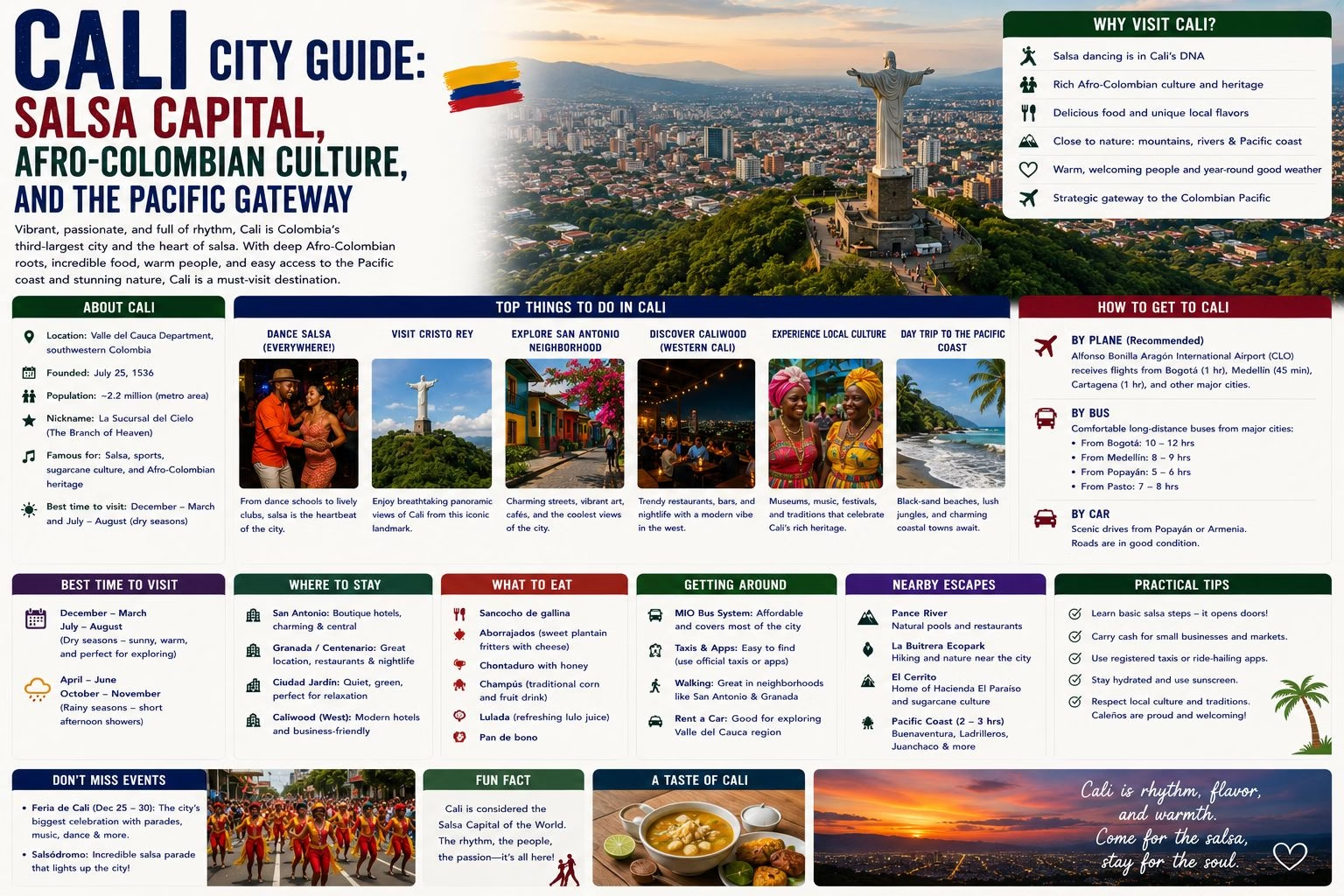
Cali is the Colombian city that most consistently surprises visitors who know it primarily by reputation. The third-largest city in Colombia (population approximately 2.4 million) has an identity built around salsa: not just as a dance form but as a defining cultural practice that runs deeper here than anywhere else in the world. The Cali style of salsa, characterised by footwork patterns that differ fundamentally from the Barranquilla, New York, and Cuban styles, developed in the city’s barrios in the mid-20th century and is now recognised as one of the distinct regional expressions of a global cultural form.
But Cali is also the country’s most diverse city in terms of Afro-Colombian cultural presence, the gateway to the Pacific coast and its extraordinary biodiversity, and a city with a food culture that is specifically and distinctly its own. Understanding what Cali actually is, rather than what it is famous for, requires spending time in the city beyond the salsa clubs.
Character and Setting
Cali sits in the Valle del Cauca, the broad flat valley between the western and central Andean ranges, at approximately 995 metres above sea level. The climate is warm (25 to 30°C) and the city spreads across the flat valley floor with hills visible on both sides. The río Cali runs through the city; the northern neighbourhoods along the river and in the foothills are the most pleasant to spend time in.
Cali has had periods of significant violence related to the drug trade and paramilitary activity; it also has a present-day crime situation that requires more active awareness than Medellín’s tourist areas. The full picture is in the is Cali safe section; the practical answer for most tourists is that the specific areas visitors frequent are manageable with appropriate awareness.
The Salsa Scene
Cali’s salsa culture is the most serious in the world, in the sense of being the most deeply embedded in the city’s everyday life. The salsotecas (salsa clubs) in Cali are not tourist attractions; they are where the city goes to dance on Thursday, Friday, and Saturday nights.
The best-known salsotecas are concentrated in Juanchito, a district east of the city, and in Barrio Granada and Versalles in the north of the city. Visiting a Cali salsoteca, even without knowing how to dance, is one of the most extraordinary cultural experiences in South America: the precision of the footwork, the communal experience of a room full of serious dancers who have been dancing since childhood, and the specific sound of Cali salsa (heavier bass, faster tempo, distinctive horn arrangements) are genuinely unlike anything else.
Most salsotecas welcome visitors who are respectful and genuinely interested; some offer brief lessons early in the evening before the main session. Arriving with a Colombian friend or a small group of committed visitors is the most practical way to experience it.
The Feria de Cali: The last week of December, the city holds the Feria de Cali: a week of parades, salsa competitions, outdoor concerts, and the most concentrated expression of Caleña culture available at any time of year. If your Colombia trip can accommodate late December, the Feria is worth specifically planning around. Book accommodation months in advance; prices triple and the city fills completely.
Things to Do Beyond Salsa
The Cristo Rey: A 26-metre statue of Christ on the Cerro de los Cristales, visible from much of the city and accessible by a short hike or taxi. The views over the Valle del Cauca and toward the western Andes are excellent.
The Zoológico de Cali: One of the better zoos in South America, with a focus on Colombian and Latin American species and genuinely good animal welfare standards by regional comparison. Worth 2 to 3 hours, particularly if visiting with children.
The historic centre and La Merced: The oldest neighbourhood in Cali, centred on the Iglesia de La Merced complex, has colonial architecture and several good museums including the Museo de Arte Colonial y Religioso.
The San Antonio neighbourhood: A bohemian neighbourhood on a hill in the western part of the city, with colonial houses, independent restaurants and cafés, and good views. The most pleasant neighbourhood to walk in Cali.
The Juanchito district: The heart of Cali’s nightlife, east of the city. Best experienced Thursday through Saturday nights.
Where to Stay
Barrio Granada: The recommended base for most visitors; a safe, pleasant neighbourhood in the north of the city with good restaurant options and easy access to the main sights.
El Peñón: A residential neighbourhood around Laguna del Peñón, pleasant for longer stays and slightly calmer than Granada.
The historic centre: Some budget accommodation; less safe at night than the northern neighbourhoods.
Getting There and Getting Around
Cali’s Alfonso Bonilla Aragón airport (CLO) is 16 kilometres northeast of the city. Direct flights connect Cali to Bogotá, Medellín, Cartagena, and some international destinations.
Within the city, the MIO (Masivo Integrado de Occidente) bus rapid transit system is the main public transport; taxis and ride-hailing apps (Uber, InDriver) are widely available.
Gateway to the Pacific
Cali is the primary departure point for Colombia’s Pacific coast: the extraordinary biodiversity of the Chocó department, the whale-watching season (July to October) around Nuquí and Bahía Solano, and some of the most remote and pristine coastline in South America. Flights from Cali to Nuquí and Bahía Solano operate several times per week. The Pacific coast is genuinely remote; plan logistics carefully and bring everything you need.
Related: Is Cali Safe? | Destinations Hub | Food and Culture: Salsa
Cali’s Place in the Colombia Circuit
Cali is the Colombian city that most English-speaking visitors skip on a first trip, and that most visitors who have been multiple times include. The explanation is that Cali’s appeal is specific rather than universally accessible: the salsa culture requires engagement to appreciate; the city does not have the dramatic urban transformation story of Medellín or the colonial visual beauty of Cartagena; and the straightforward tourist infrastructure is less developed than in the two most-visited cities.
What Cali offers that the other cities do not: the most authentic salsa culture in the world; the best Afro-Colombian cultural engagement available in any Colombian city; a gateway to the Pacific coast and its extraordinary biodiversity; and, for the right visitor, a sense of being in a less-discovered corner of Colombia where the tourist presentation has not yet replaced the actual city.
The Feria de Cali in late December transforms the calculus entirely. During the Feria, Cali is the most joyful place in Colombia; the outdoor salsa concerts, the parade, and the specific energy of a city celebrating its defining cultural identity are experiences that are genuinely difficult to replicate at any other time or in any other place. For visitors whose dates are flexible and whose interests include music and dance culture, planning a Colombia trip around the Feria de Cali is entirely justified.