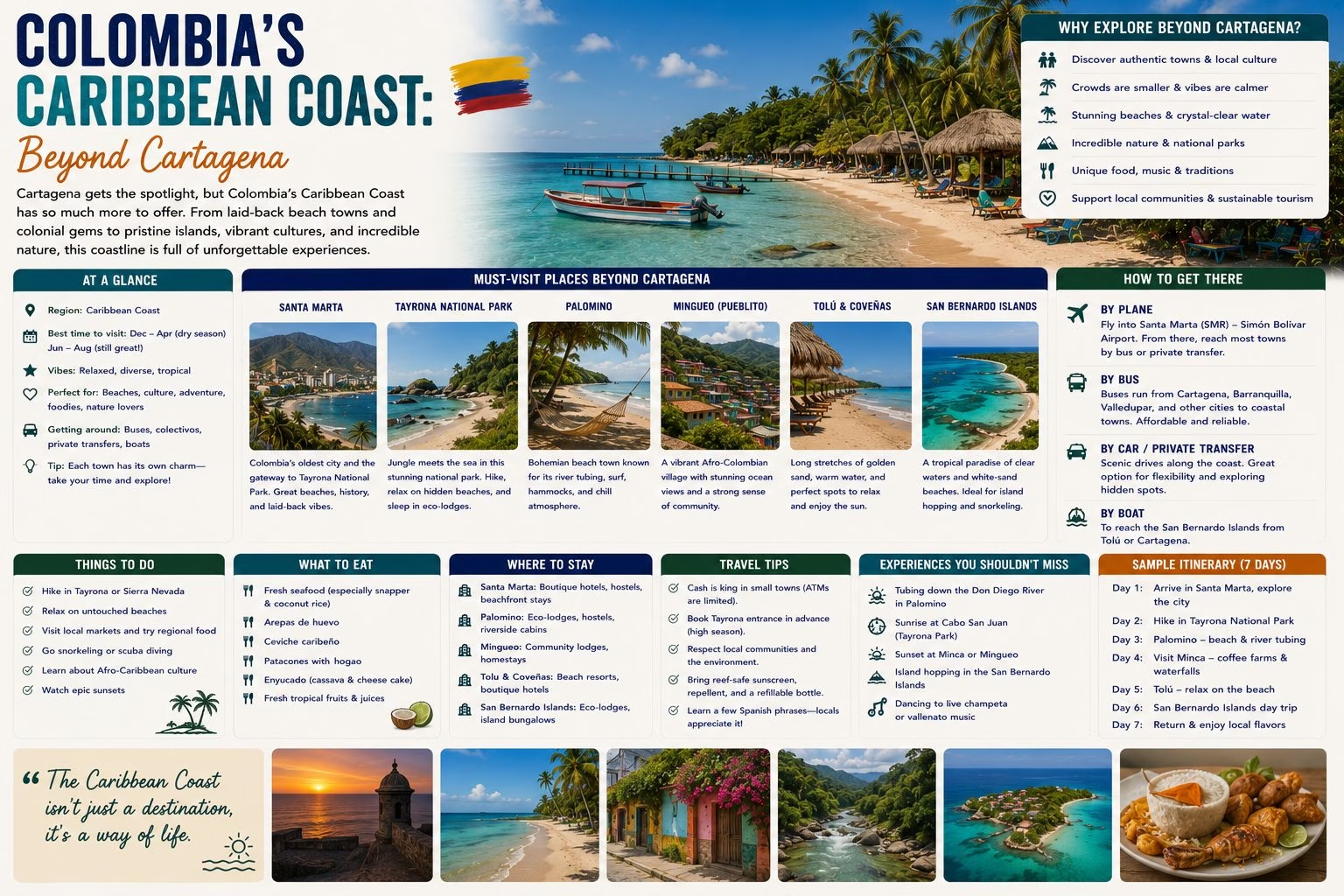
The Caribbean coast of Colombia is far larger and more diverse than the Cartagena focus of most international travel coverage suggests. Stretching from the Darién Gap at the Panama border in the west to the Venezuelan border in the east, Colombia’s Caribbean coastline encompasses colonial cities, indigenous-controlled mountains, the world’s largest river delta accessible from Colombia, the Wayuu deserts of La Guajira, and the Archipiélago de San Andrés and Providencia, islands closer to Nicaragua than to mainland Colombia.
Barranquilla
Colombia’s fourth-largest city and the primary port on the Magdalena River, Barranquilla is not primarily a tourist destination but has two specific draws. The Carnaval de Barranquilla (covered in full in the carnaval guide) is the most important festival in Colombia and the second-largest carnival in the Americas; planning a Colombia trip around the February carnival is entirely justified. The Gabriel García Márquez connection is also specific: the Nobel laureate was born in the nearby town of Aracataca (the inspiration for Macondo), grew up partly in Barranquilla, and set key works along this coast.
La Guajira: Colombia’s Desert Peninsula
The Guajira Peninsula, at the northernmost point of South America, is one of the most spectacular and most unusual landscapes in Colombia: a semi-arid desert where the Wayuu indigenous people, the largest indigenous group in Colombia with approximately 400,000 members, have maintained their cultural independence more completely than most Colombian indigenous groups.
Punta Gallinas, the northernmost point of South America, is reached via a jeep tour from the town of Uribia; the salt flats (Salinas de Manaure), the pink flamingo population of the Flamencos Sanctuary, and the extraordinary desert-meets-Caribbean coastal landscape are all specific to this region. The Wayuu people maintain their own social and legal structures and their craft tradition (particularly the hand-woven mochilas, shoulder bags that are among Colombia’s most recognisable artisan products) is both culturally significant and accessible to visitors through market purchases.
Getting to La Guajira: fly to Riohacha (RCH) from Bogotá or Barranquilla; jeep tours from Riohacha to Punta Gallinas take 2 to 3 days and should be arranged with experienced local operators who have Wayuu community relationships.
Providencia and San Andrés: Colombia in the Caribbean
The Archipiélago de San Andrés, Providencia, and Santa Catalina sit approximately 700 kilometres northwest of mainland Colombia in the Caribbean Sea. San Andrés is a free-trade zone island known for duty-free shopping and beach tourism; Providencia, smaller and less developed, is considered one of the most beautiful islands in the Caribbean with extraordinary coral reefs, clear turquoise water, and a small island character that is completely distinct from mainland Colombia.
Providencia specifically has some of the best barrier reef diving and snorkelling in the Caribbean, a tiny population (around 5,000), and the specific language and culture of the Raizal people, an English-Creole-speaking community with ancestry tracing to British colonists and enslaved Africans from the 17th and 18th centuries.
Access: flights from Bogotá and Medellín to San Andrés (ADZ); then small plane or boat to Providencia.
The Archipiélago de Islas del Rosario and Isla Barú
The most visited offshore islands from mainland Colombia (covered more briefly in the Cartagena guide) deserve mention as a Caribbean coast destination. The coral reef ecosystem of the Islas del Rosario, 35 to 45 kilometres from Cartagena, is the most accessible coral reef snorkelling experience on Colombia’s Caribbean coast. The island of Barú, connected to the mainland, has the Playa Blanca beach that is widely cited as the most beautiful beach accessible from Cartagena.
The Coastal Road: Cartagena to Santa Marta
The 220-kilometre stretch of Caribbean coastline between Cartagena and Santa Marta has several specific stops worth knowing:
Playa Blanca (Barú island): Already mentioned; beautiful beach accessible by boat from Cartagena.
El Totumo: A mud volcano 45 minutes from Cartagena, where visitors bathe in warm mud at the crater and are washed in the adjacent lagoon. A classic Cartagena day trip.
Tolú and Coveñas: Beach towns on the Gulf of Morrosquillo, popular with Colombian holiday-makers; less visited by international tourists but accessible and with their own coastal character.
The Ciénaga Grande de Santa Marta: A large lagoon complex between Barranquilla and Santa Marta, a UNESCO Biosphere Reserve, and one of the most important wetland ecosystems in Colombia. Accessible by boat tours from Santa Marta or Ciénaga town.
Related: Cartagena | Santa Marta | Destinations Hub | Safety
The Caribbean Coast as a Continuous Experience
The coastal stretch from Cartagena to Santa Marta is sometimes experienced as a collection of disconnected stops rather than as a continuous environment with its own character. Understanding the Caribbean coast as a single cultural and ecological zone, unified by the specific light, the heat, the Afro-Caribbean cultural heritage, and the relationship with the sea that shapes life along it, produces a richer engagement with each of its specific places.
The most rewarding approach to the Colombian Caribbean: choose a base (Cartagena for the colonial and social scene; Santa Marta for Tayrona and the Sierra Nevada access) and use it as the centre of a radial exploration of the surrounding coast rather than trying to cover the full stretch linearly in a single trip. From Cartagena, the Islas del Rosario, Playa Blanca, and the mud volcano at El Totumo cover the coast in the most rewarding directions. From Santa Marta, Tayrona, Minca, and Taganga cover the range of what the northern Caribbean coast offers.
The La Guajira Peninsula and the San Andrés archipelago are genuinely different experiences that require separate trips to do properly; including them in the same itinerary as Cartagena and Santa Marta produces a surface encounter with each rather than genuine engagement with any.