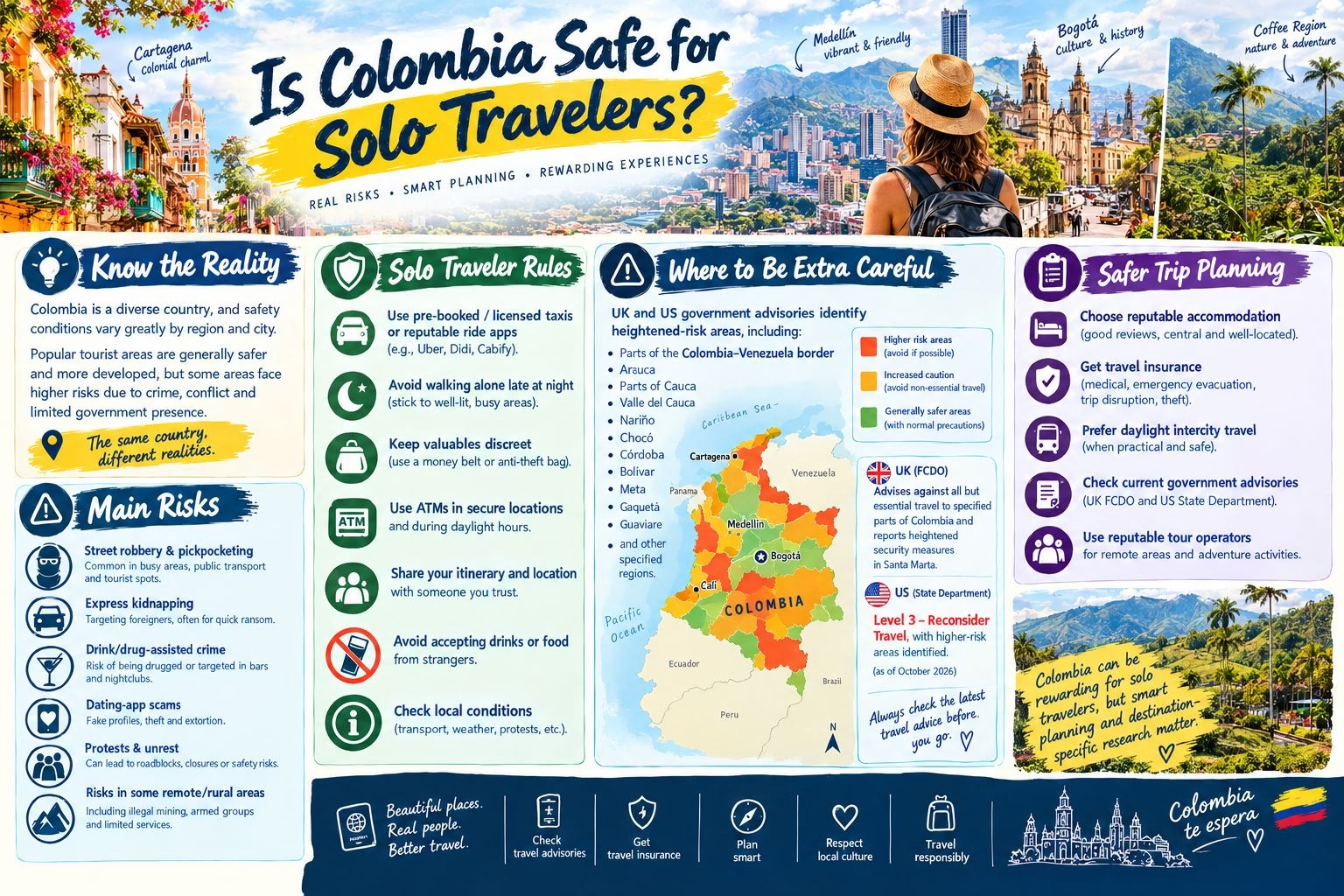
Colombia is broadly safe for solo travelers who stick to the well-established routes and cities, provided you follow the same common-sense precautions that apply in any major Latin American destination. The country’s reputation is often more severe than what most visitors experience in the main tourist areas, and understanding where risk does and does not apply is more useful than either blanket reassurance or blanket fear.
The Honest Regional Picture
Crime risk in Colombia varies enormously by region, and the areas that carry real risk are almost never the ones solo travelers visit. Governments such as the US and UK publish travel advisories that treat parts of Colombia very differently from others. The most restrictive warnings have applied to specific departments such as Arauca, Norte de Santander and Cauca, and to areas near the Venezuelan border and the Darién Gap. Advisory levels for the country as a whole and for individual regions have changed over time and can change again, so check your own government’s current advisory for Colombia and for each region you plan to visit before you book. The major tourist cities and the Coffee Region towns are the places most visitors use, but they are not risk-free, and the same standard urban awareness applies.
What the Real Risks Actually Are
For solo travelers specifically, the realistic risks are petty theft and scams, not violent crime. Phone and bag snatching (often from a motorbike, or from someone distracted looking at their phone) is the most common issue affecting visitors. The scopolamine (burundanga) drugging scam, while rare, is real enough to take seriously: never accept a drink or cigarette from someone you don’t know and trust, in any setting.
Practical Habits That Actually Matter
- Use Uber, Cabify, or InDriver rather than hailing taxis on the street, especially at night.
- Keep your phone in a front pocket or crossbody bag rather than in your hand while walking, particularly near curbs.
- Follow “no dar papaya,” the Colombian expression for not making yourself an easy target: don’t flash cash, jewelry, or an expensive phone in public.
- Withdraw cash from ATMs inside banks or shopping malls, not from street-facing machines, especially after dark.
- Stick to well-lit, populated streets after dark, and take a car rather than walk home late regardless of the neighborhood’s general reputation.
City by City
Bogotá and Medellín
Both cities have reliable public transport (Bogotá’s TransMilenio, Medellín’s metro) and well-established tourist and expat neighborhoods, Chapinero and Usaquén in Bogotá, El Poblado and Laureles in Medellín, where solo travelers concentrate and where the standard precautions above cover the realistic risk. Avoid walking alone late at night outside these areas.
Cartagena and Santa Marta
Both coastal cities feel welcoming during the day. The main risk is petty theft on beaches and scams targeting visitors who look unfamiliar with the area; use hotel safes, book excursions through official operators, and keep valuables out of sight.
Emergency Numbers, Correctly
Save 123, Colombia’s single national emergency number, free from any phone, which dispatches police, fire, or ambulance based on what you describe. It’s the number to save before you land.
To Wrap Up
Many solo travelers visit Colombia’s main destinations without serious problems, provided you apply the same awareness you’d bring to any major city: watch your belongings, use app-based transport, avoid isolated areas at night, and don’t make yourself an easy target. Buy travel insurance that covers theft and medical care, keep a digital and physical copy of your passport, and check current advisories for any region outside the well-established tourist routes before you go.
FAQ
Q: Is Colombia safe for solo travelers?
A: Many solo travelers visit without serious problems when they stick to the well-established cities and tourist routes: Bogotá, Medellín, Cartagena, Cali, Santa Marta, and the Coffee Region. The realistic risk is petty theft and scams, not violent crime. Use app-based transport, keep valuables out of sight, and avoid isolated areas at night.
Q: Which areas should solo travelers avoid?
A: Rural border departments (particularly near Venezuela, Ecuador, and the Darién Gap toward Panama), and specific interior regions still affected by illegal armed groups and drug trafficking, carry real elevated risk and aren’t part of any standard travel itinerary. Within cities, ask locally which specific neighborhoods to avoid, since this varies by city and changes over time.
Q: Are there specific safety tips for solo female travelers?
A: The core habits are the same as for any solo traveler, with a few additions: never accept a drink you didn’t watch being poured, trust your instincts over politeness when declining unwanted attention, and consider joining women-focused expat or traveler groups, common in Medellín and Bogotá, for an added layer of community and shared local knowledge.

I’m Luciana, a travel writer from Bogotá, Colombia, and yes, I know exactly what it’s like to be a solo female traveler in a country the world still misunderstands.
I’ve been travelling independently for 10 years, completing 50+ solo trips across Colombia, Mexico, Central America, Argentina, Peru and the United States. I write in both English and Spanish, and I also contribute to allaboutcolombia.com where I cover my home country in depth — from the coffee region to the Caribbean coast to the Andes.
My speciality is Latin America: the neighbourhoods the guidebooks skip, the buses that are actually fine to take, the hostels that feel like home, and the restaurants where locals actually eat. I’ve hitchhiked across Patagonia, navigated Medellín’s metro system at rush hour, and camped solo in the Sierra Nevada de Santa Marta. I know this region the way you only can when it’s yours.
I also cover the US for solo travelers, having spent time road-tripping through the Southwest, the Pacific Coast and the Deep South.