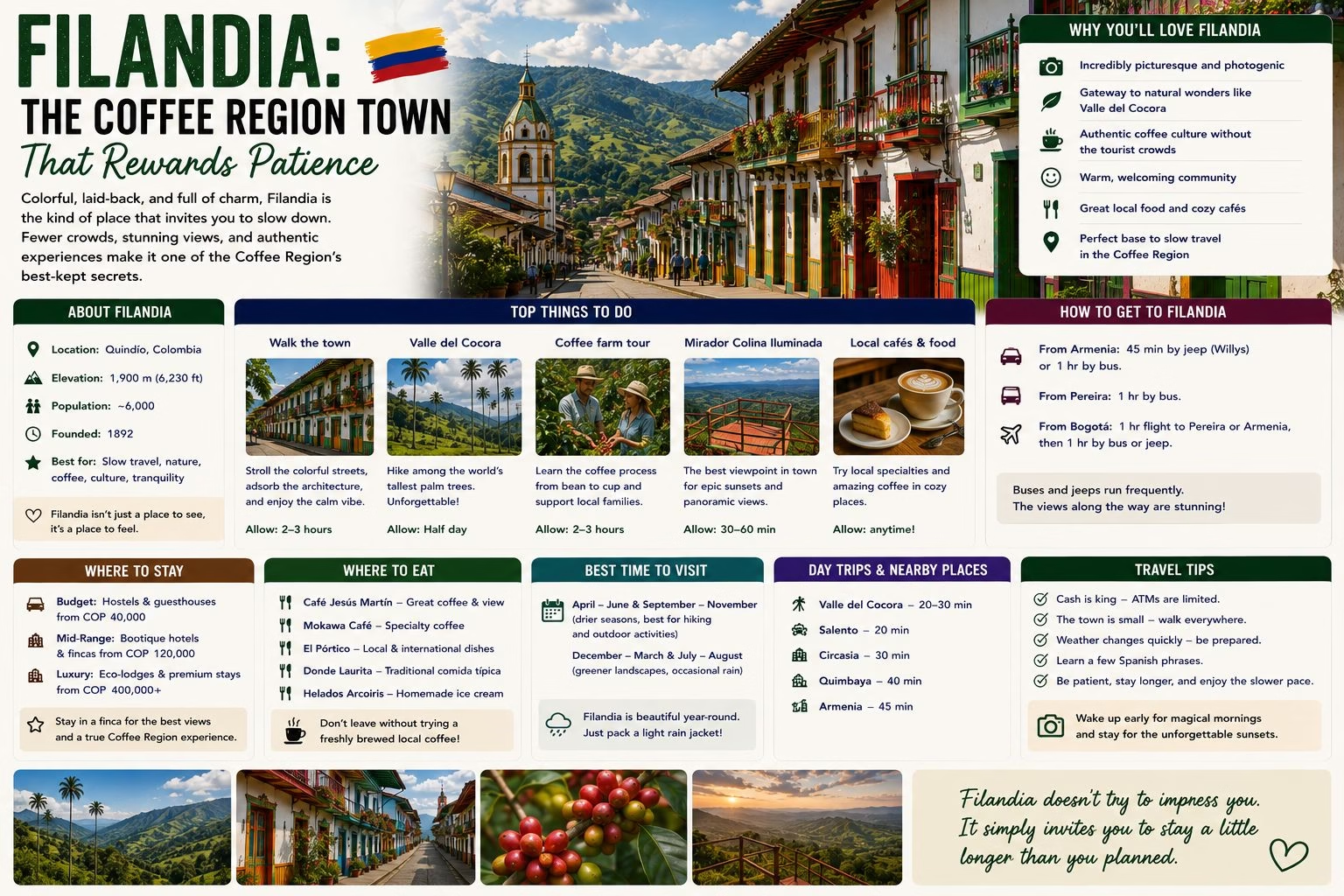
Filandia is 25 kilometres northeast of Salento, accessible by bus in 30 to 40 minutes, and it is the Coffee Region town that visitors who have been to Salento should see next. Where Salento has become the established tourist anchor of the region, Filandia remains primarily a Colombian town that happens to be exceptionally beautiful and that receives a fraction of the visitors. The contrast between the two is illuminating.
Character and Setting
Filandia was founded in 1878 and has a physical integrity that the Coffee Region’s traditional bahareque architecture gives to all its well-preserved towns: colourful facades, wooden balconies carved with regional motifs, a central square with the specific quality that comes from buildings around a plaza being built to the human scale of the 19th century rather than the automotive scale of the 20th.
The town sits at approximately 1,900 metres in the Quindío highlands, with views over the coffee-covered hills and, on clear days, toward the Nevado del Ruiz volcano to the north. The population is around 15,000; the economic life is primarily coffee farming, dairy, and the increasingly significant local artisan craft production.
The Artisan Tradition: Tejeduría de Iraca
Filandia is known throughout the Coffee Region for its woven palm goods: hats, baskets, bags, and decorative objects made from the iraca palm (Carludovica palmata), a tradition shared with several other Quindío towns. The cooperative of local weavers produces work that ranges from simple everyday objects to elaborate decorative pieces that require many weeks of work.
The market near the central plaza has weavers selling directly; the prices are significantly lower than in Salento, and the quality is equivalent or better. Buying a Filandia hat or basket is the most appropriate souvenir of the Coffee Region: it supports a local craft tradition that has existed for generations and produces an object with a direct connection to the place.
The Mirador (Viewpoint)
The main draw after the town centre itself is the mirador at the edge of the town: a viewpoint over the Quindío valley that, on a clear morning, gives a panorama of coffee farms, cloud forest, and the distant snow-capped Nevado del Ruiz. The view is most reliably clear in the early morning before the cloud builds. The walk to the mirador from the central plaza takes about 15 minutes.
Where to Eat
Filandia’s food scene is smaller than Salento’s but covers the same Coffee Region staples, usually at lower prices because there is less tourist turnover to inflate them. Trucha (trout) appears on most menus around the plaza, prepared the same way as in Salento: grilled, fried, or in a garlic sauce, and reliably fresh given the proximity to the mountain streams. Bandeja paisa and other Antioquian classics (sancocho, arepas with a range of fillings) are widely available and tend to be more generously portioned than the tourist-facing versions in Salento. A handful of cafés on the streets near the plaza serve regional coffee at prices noticeably below what the same cup costs in Salento’s more visited spots, without any drop in quality; the coffee comes from the same surrounding fincas either way.
Doing Filandia as a Day Trip from Salento
The most common approach: take the morning bus from Salento to Filandia (direct buses run several times daily; the journey takes 30 to 45 minutes), spend 3 to 4 hours in the town (central plaza and church, the artisan market, a walk to the mirador, lunch), and return by bus in the afternoon.
A full day trip to Filandia is worth doing as a complement to the Cocora Valley and finca days in Salento; the towns are sufficiently different that seeing both produces a more complete picture of the Coffee Region’s character.
Staying in Filandia
For visitors who want to escape Salento’s tourist intensity, staying a night or two in Filandia is an excellent option. The accommodation options are more limited than Salento but include a few guesthouses in traditional bahareque houses. The evenings are quieter; the mornings are early and active with the town’s actual daily life rather than the hostel culture of Salento.
Getting to Filandia
From Salento: buses and colectivos run from the Salento main square several times daily. The fare is approximately COP 5,000 to 8,000.
From Armenia: direct buses run from the Armenia main terminal to Filandia (45 to 60 minutes).
From Pereira: change in Armenia or take a colectivo via the main road.
Related: Salento | Coffee Region Hub | Coffee Farm Visits | Cocora Valley
Is Filandia Worth an Overnight Stay?
Most visitors experience Filandia as the half-day trip described above, and that is entirely valid. But staying overnight adds something the day trip cannot: the early morning before the day visitors arrive, when the town belongs to its residents and the light on the central square has the specific quality of high-altitude Andean mornings, plus the evening social life around the plaza and the unhurried pace that comes from not having a bus back to catch. If the Coffee Region itinerary allows for one extra night beyond the standard Salento base, spending it in Filandia rather than an additional Salento night is the higher-value choice for visitors who want a complete sense of the region’s character.
This hub sits within the site’s wider Destinations section, alongside guides to Safety, Food and Culture, trip planning, and expat and nomad life in Colombia. For corrections or updates to this guide: contact@allaboutcolombia.com.