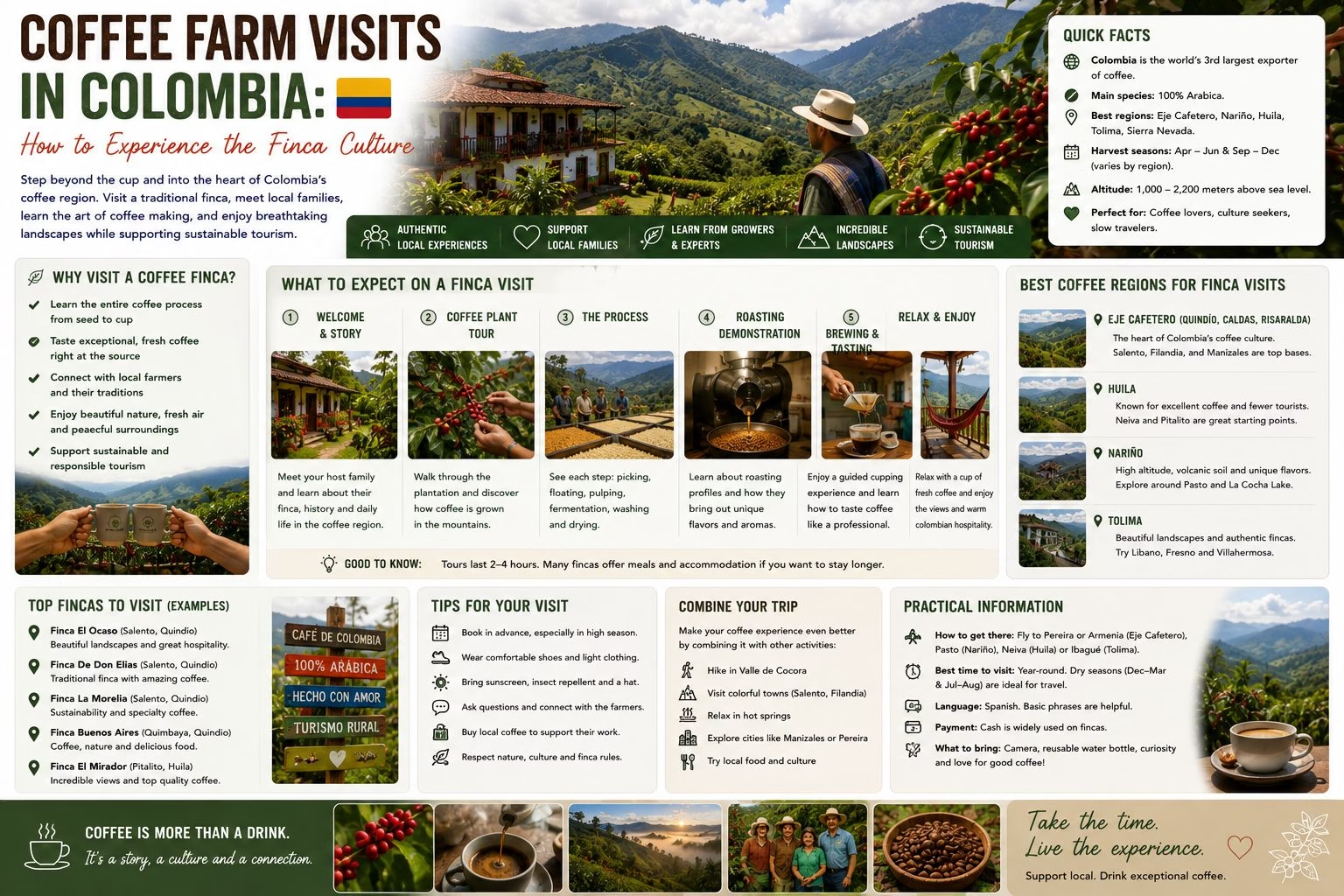
Visiting a working coffee farm (finca cafetera) in Colombia is one of the most genuinely educational and moving travel experiences available in South America. The coffee you drink, wherever you are in the world, has a specific origin: a specific altitude, a specific microclimate, a specific variety of the Coffea arabica plant, a specific harvesting method, and a specific processing approach. Visiting a Colombian finca makes this origin real in a way that changes how you understand the drink for the rest of your life.
This guide covers what a good finca visit involves, the different types of experience available, and how to find the best options. Many visitors combine a finca tour with the Cocora Valley hike on the same trip, doing one in the morning and one in the afternoon, or on consecutive days.
What a Good Finca Visit Includes
The full coffee production story, from plant to cup, is a process of six to eight distinct stages. The best finca visits walk you through all of them:
The coffee plant: Coffee grows as a shrub or small tree in Colombia’s Andean microclimates. The arabica varieties grown in the Coffee Region (principally Caturra, Colombia, Castillo, and heirloom varieties like Typica and Bourbon) are distinct in character. Understanding what makes the altitude, the volcanic soil, the temperature variation between day and night, and the rainfall patterns of this specific zone produce coffee of the quality Colombia is known for.
The cherry: Coffee is the seed of the coffee cherry, a small red fruit (occasionally yellow, orange, or pink in specific varieties). The cherry must be picked at peak ripeness, which requires selective hand-picking rather than strip picking; this is why Colombian coffee is among the most labour-intensive in the world and why the quality justifies the extra work. During the harvest season (October to December for the main harvest), visitors can pick alongside the workers.
The wet process: After picking, the cherries are pulped (the outer fruit skin removed), fermented in water tanks (typically 24 to 48 hours), and washed. This wet processing method, standard in most high-altitude Colombian production, removes the mucilage from the bean and contributes to the clean, bright acidity that characterises high-quality Colombian coffee.
Drying: After washing, the coffee (now called pergamino, still in its parchment layer) is dried on raised beds or patios. In the Coffee Region’s climate, this can take 10 to 25 days. The drying stage is where the bean develops much of its final flavour character.
Milling and sorting: The parchment layer is removed and the green bean is sorted by size and density, then quality-graded. Defective beans are separated by hand in a process that is highly labour intensive.
Roasting: Green coffee beans are roasted at temperatures between 180 and 240°C for 8 to 20 minutes, transforming the pale green bean into the brown, aromatic coffee familiar from any coffee shop. The roast profile (light, medium, dark) significantly affects the final flavour.
Cupping: The professional tasting process: ground coffee in cups, hot water poured over, the crust broken after 4 minutes, and the coffee tasted by slurping from a spoon to aerate the liquid. Good finca tours include a basic cupping session that allows you to distinguish between different processing methods, varieties, and roast levels.
Types of Finca Experience
Half-day tour (2 to 3 hours): The most common and most accessible option. Covers the main stages of production, ends with coffee tasting. Most operators run these for groups or small groups; prices range from USD 15 to 35 per person. Suitable for anyone with an interest in understanding coffee; does not require significant physical fitness.
Full-day tour (5 to 6 hours): A more complete experience, often including a farm-cooked lunch with regional food, more time in the fields, and a more detailed cupping session. Prices range from USD 40 to 80 per person.
Overnight or multi-day finca stay: Accommodation on a working finca, typically in simple but comfortable rooms, with meals and farm activities included in the rate. The most immersive experience; you wake up in the coffee zone, participate in morning farm activity, and have the landscape to yourself before the day visitors arrive. Prices range from USD 60 to 150 per person per night including meals.
The Best Fincas Near Salento
Several fincas near Salento offer consistently well-regarded tours:
Finca El Ocaso: One of the most-visited finca tour operators in the Salento area, offering a half-day tour that covers the production process comprehensively. Located 3 kilometres from Salento; tours depart multiple times daily. The staff are experienced with international visitors and the tour is available in Spanish and English.
Finca Villa Nora: Offers a deeper experience including the full processing stages and an extensive cupping session. Smaller groups than El Ocaso; somewhat more expensive. Book directly in advance.
Finca La Victoria (near Calarcá, 30 minutes from Armenia): One of the most historic fincas in the Coffee Region, producing coffee since the early 20th century. The scale of the operation and the preserved infrastructure from the classical coffee-farming era give the visit historical depth beyond the production tour. Worth the extra transport from Salento.
Seasonal Considerations
The most vivid finca experience occurs during the main harvest (cosecha principal), from October to December. During this period, the cherries are red on the plants, the picking teams are in the fields, the processing infrastructure is at full capacity, and the entire finca is operating at maximum intensity.
Outside the harvest period, tours are still valuable and informative; the processing and cupping components remain fully available. The plants and landscape are still present and beautiful. But the specific experience of picking cherries alongside the workers and seeing the full operation in motion is harvest-specific.
What to Ask When Booking
Before booking a finca tour, it is worth asking:
- What stage of the production process does the tour cover?
- Is cupping included?
- Are tours available in English?
- What is the maximum group size?
- Is advance booking required?
Related: Salento | Cocora Valley | Coffee Region Hub | Best Time to Visit
Finca Visits vs Finca Stays: Choosing Your Depth of Experience
The spectrum of coffee farm experiences runs from a 90-minute group tour to a multi-day residential stay on a working finca. The right choice depends on your interest level, available time, and how central the coffee experience is to your Colombia trip.
For visitors who want to understand coffee but are not specifically coffee-focused: A half-day group tour at one of the Salento-area fincas covers the essential story with enough depth to change how you think about the drink. Two to three hours is enough for this purpose.
For visitors for whom coffee is a central interest: An overnight or multi-day finca stay, specifically on a farm that is genuinely working rather than primarily oriented toward tourism, produces an immersive experience of the coffee-growing culture. Waking up on a finca in the early morning, hearing the birds and the sounds of the farm, and having the landscape to yourself before the day visitors arrive is qualitatively different from a group tour.
The harvest timing factor: If visiting during the October to December main harvest, the finca experience is at its most vivid regardless of which format you choose. The processing infrastructure is active, the cherries are red on the plants, and the human activity of harvest is visible everywhere. Outside harvest periods, the production tour still works but the sensory experience is less complete.
Finca visits are one piece of a Coffee Region trip; see the Coffee Region hub for the full picture, including Salento and the Cocora Valley. For corrections or updates to this guide: contact@allaboutcolombia.com.
Colombia is one of the most rewarding travel destinations in South America for visitors who come prepared. The preparation this site provides is the foundation; the country itself provides the experience.