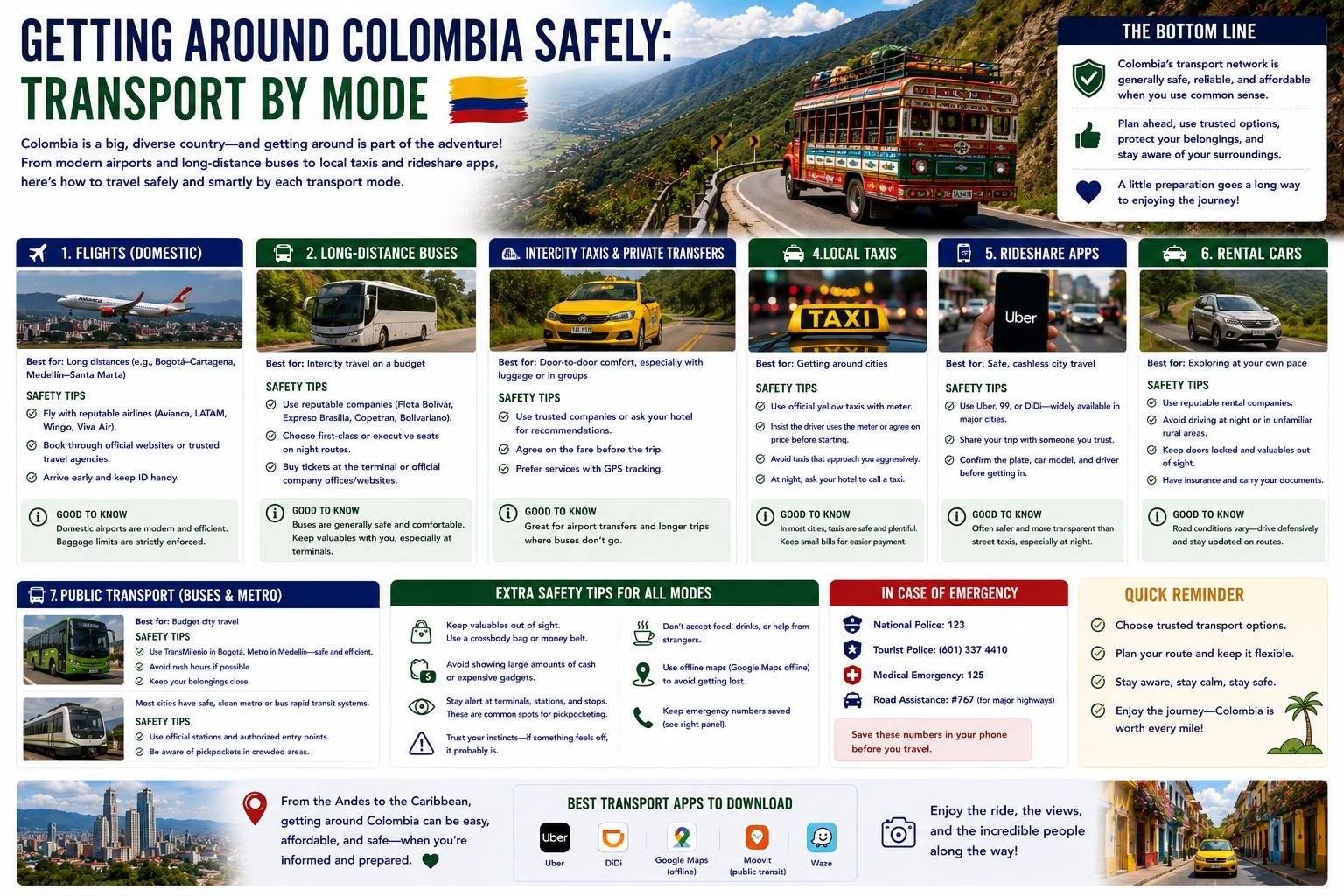
Transport safety in Colombia is primarily about making the right choices by mode: the risks associated with unofficial taxis, night driving on rural roads, and some border-area bus routes are specific and avoidable, while the mainstream transport options (app-based ride services, domestic flights, reputable bus companies) are generally safe. This guide covers the safety picture for each mode.
City Transport: The Single Most Important Rule
Use app-based ride services (Uber, InDriver, Cabify) for all urban transport, especially at night. This is the most consistently impactful single safety practice for Colombia travel.
The documented risk of “pirate taxis” (unmarked or unofficial vehicles used to commit express kidnapping and robbery) exists in all major Colombian cities and is highest in Bogotá. The app-based services eliminate this risk by providing driver accountability, route tracking, and transparent pricing. The driver’s identity and vehicle details are logged before you enter; the fare is agreed in advance; your route is visible in the app.
For visitors who must use street taxis: use official taxi companies called by phone (a radio taxi service) rather than flagging from the street. In Bogotá specifically, flagging a street taxi is the highest-risk transport scenario a tourist faces.
The Medellín metro and the Bogotá TransMilenio are safe during normal hours. Use them as the primary daytime transport for their respective cities; they are cheap, efficient, and well-monitored.
Intercity Bus: Safe Routes vs Caution Required
Colombia’s intercity bus system is well-developed and used by millions of Colombians daily. The safety picture varies by route:
Safe routes (major carrier, daytime, main road):
Bogotá to Medellín (8 hours via Autopista): well-trafficked, major carriers (Flota Magdalena, Copetran, and others), good road quality.
Medellín to Pereira and Armenia (Coffee Region, 3 to 4 hours): safe, scenic, standard tourist route. See the getting to the Coffee Region guide for the full route breakdown.
Bogotá to Cartagena (22+ hours): a long journey; overnight buses on this route operate but night driving on Colombian highways carries more risk than daytime.
Cali to Bogotá (8 to 9 hours): major route, safe during daylight.
Routes requiring more care:
Routes through departments with ongoing security situations (Arauca, Norte de Santander, parts of Nariño, Chocó coast road): check current security advisories before travelling.
Night buses generally: bus crime (armed robbery) on Colombian intercity routes is not common on the major tourist routes but does occur. Taking daytime buses on unfamiliar routes or in regions with security concerns is consistently the safer choice.
Never drive at night on unfamiliar rural roads: This is the most important rule for any road-based travel in Colombia. Road conditions, livestock on roads, and the concentration of armed group activity in some rural areas after dark all make night driving on secondary roads significantly more risky than daytime.
Domestic Flights: Very Safe
Colombia’s domestic air network is safe, well-regulated, and the recommended option for covering large distances efficiently. The main carriers (Avianca, LATAM, JetSmart, Wingo) all operate to Colombian aviation authority standards. Weather at mountain airports (particularly Pereira/EJE and some smaller regional airports) can cause delays; building time buffers around important connections is advisable.
Driving in Colombia
Driving in Colombia as a tourist is not recommended except for specific purposes (accessing rural fincas, the Llanos, or remote areas not served by public transport). The challenges: aggressive driving culture in cities, unclear road conditions in secondary areas, risk of encountering road blockades or security situations in rural areas, and the complexity of Colombian driving regulations for foreign license holders.
For those who do drive: an international driving permit is required in addition to a home license. Driving during daylight only on secondary roads. Do not stop if approached by strangers signalling to stop on a rural road at night. Have the car rental company’s emergency number saved. Keep the vehicle locked and windows up in urban areas.
Walking: Urban Awareness by City
Walking is safe in the main tourist areas of all Colombian cities during daylight hours. General practices:
Keep your phone in your pocket, not in your hand. Phone snatching while the phone is visible is the most common walking-related crime in all Colombian cities.
Be aware of your surroundings in crowded areas: markets, bus stations, busy pedestrian streets. These are the concentration points for pickpockets.
Avoid walking in unfamiliar areas after dark without local guidance.
In Cartagena, maintain awareness of the “friendly stranger” approach in tourist areas.
Related: Safety Hub | Is Colombia Safe? | Scams Guide | Plan Your Trip