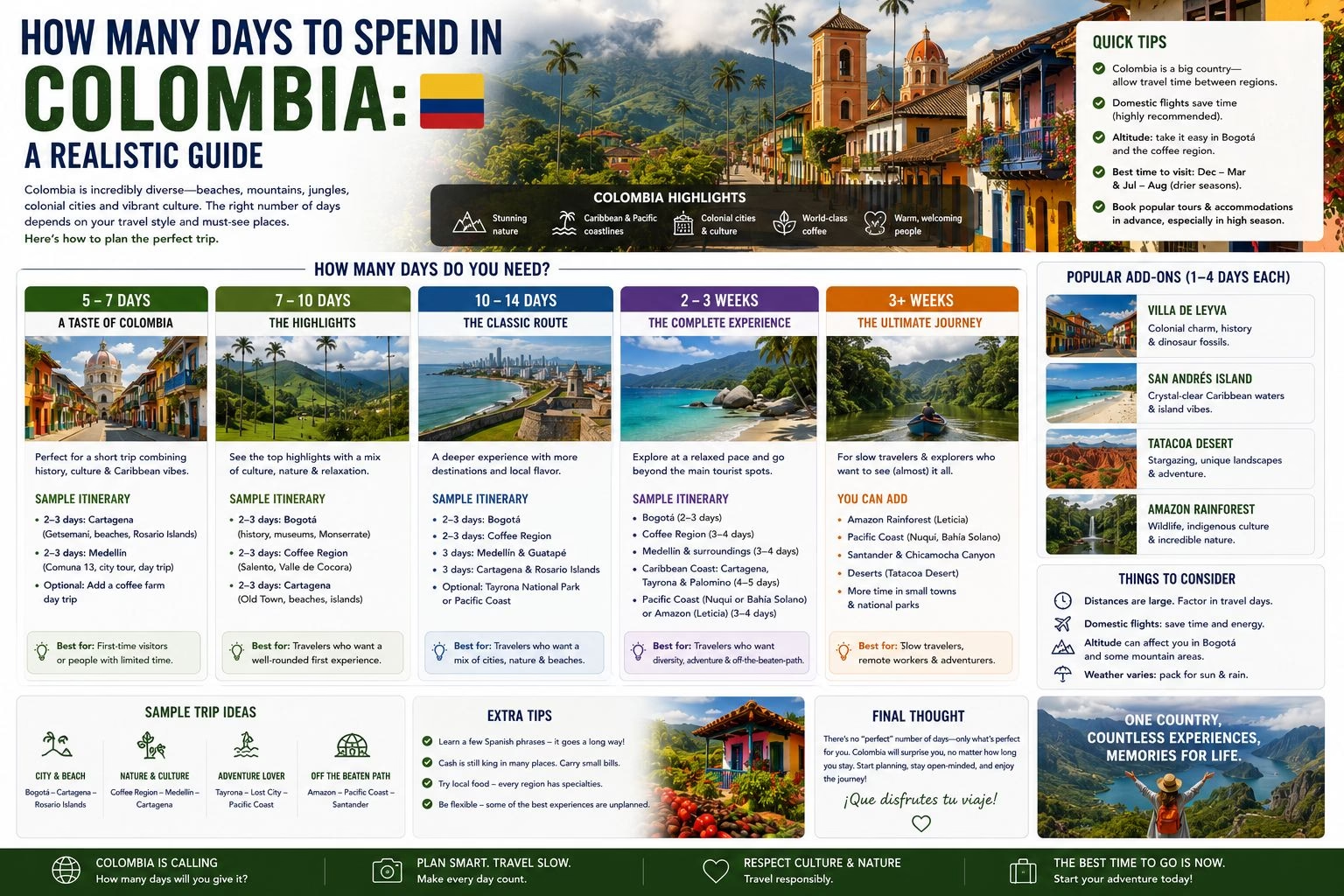
Colombia is the kind of country where the more time you have, the better, and where the difference between one week and two weeks is more significant than in smaller or more uniform destinations. The country’s geographical range means that covering it comprehensively requires substantial time; but even a week well-spent in one region produces a genuinely rich experience.
The Honest Assessment by Trip Length
One week: Choose one region and do it properly
One week is enough for one Colombian region done well. The most rewarding single-region options for a first visit:
Medellín and surroundings (7 days): The city itself takes 3 to 4 days to experience properly: El Poblado and Laureles for daily life, a full day for the cable car circuit up to Santo Domingo and across to Parque Arví, an afternoon at Plaza Botero, a morning in the Botanical Garden, a visit to the Museo Casa de la Memoria. Day trips or overnight options include Guatapé (the Piedra del Peñol rock and colourful town, 2 hours from the city), Jardín (colonial coffee-growing town, 4 hours), and the river towns of the Cauca valley.
Cartagena and the Caribbean coast (7 days): Cartagena city (Walled City, Getsemaní neighbourhood, Bocagrande) takes 2 to 3 days. A day trip to the Islas del Rosario (coral reef archipelago 45 minutes by boat). The Volcán de Lodo El Totumo, a mud volcano 45 minutes from Cartagena. A few days in Taganga or near Santa Marta at the end, or a night on one of the islands.
The Coffee Region (6 to 7 days): Salento as a base (3 to 4 nights), with day trips to the Cocora Valley (half day), coffee farm visits (half day to full day), the town of Filandia, and the hot springs near Santa Rosa. Armenia or Pereira as arrival/departure cities; both are connected to Bogotá, Medellín, and Cali by frequent flights and buses.
Two weeks: The standard first visit
Two weeks allows for two or three Colombian regions without feeling rushed. The most commonly recommended two-week circuit for first-timers:
Medellín (4 days) + Coffee Region (4 days) + Cartagena (4 days) + Bogotá (2 days)
This circuit covers the three most visited cities alongside the country’s most distinctive regional experience. Internal connections are straightforward: Medellín to the Coffee Region by bus (3 to 4 hours to Armenia or Pereira); Coffee Region to Cartagena by domestic flight from Pereira; Cartagena to Bogotá by domestic flight for the return leg.
Alternatively: Bogotá (2 to 3 days) + Coffee Region (4 days) + Medellín (3 days) + Santa Marta and Tayrona (4 days)
This route adds Tayrona National Park, one of the most spectacular natural destinations in Colombia, at the cost of Cartagena. The combination of the Andean interior and the Caribbean coast is particularly rewarding.
Three weeks or more: Beginning to understand the country
Three weeks allows for the two-week circuit plus at least one additional destination, or allows each destination to receive more time. The additions that most reward longer visits:
Cali: Colombia’s third city is quite different from Medellín; its culture is more Black and Pacific-influenced, the salsa scene is the best in the world, and the surrounding Valle del Cauca has excellent scenery and colonial towns. See the Cali guide for the full picture. Cali deserves 2 to 3 days minimum.
The Pacific coast (Nuquí, Bahía Solano): Remote, very wet, and extraordinary. The most biodiverse section of Colombia’s coastline. Whale watching season (July to October) makes this a specifically timed destination. Flights from Medellín are cheap.
The Sierra Nevada de Santa Marta and Ciudad Perdida: The Lost City trek, a 4 to 6 day hike through the jungle to the ruins of a pre-Columbian city that predates Machu Picchu, is one of Colombia’s most demanding and most rewarding experiences. Only feasible with adequate time and physical fitness.
The Amazon (Leticia): A day’s flight from Bogotá in terms of distance, genuinely different world in terms of experience. See the Amazon guide for the practical picture. Leticia, the Colombian Amazon town, is the access point for the river, the jungle, and the communities of the Brazilian-Peruvian border region.
The stay-put approach
An alternative to circuit travel is choosing one Colombian city as a base and spending the entire visit there. Medellín particularly rewards this approach: it is large enough to provide a different experience every day, has excellent transport connections for day trips, and is the best city in Colombia for getting beneath the tourist surface. A week in El Poblado is a tourist experience; a week in Laureles or Envigado, eating where the locals eat and using the transport the locals use, is a different and arguably more valuable one.
Planning Around Specific Interests
Coffee culture: Minimum 4 days in the Coffee Region; ideally 5 to 6 with multiple finca visits and time in Salento and Filandia.
Wildlife and nature: The Pacific coast (whale season July to October), the Amazon (year-round but plan properly), Tayrona, and Parque Nacional Natural Serranía de la Macarena (Caño Cristales, the “river of five colours”) each require dedicated planning and minimum stays of 2 to 4 days each.
Trekking: Ciudad Perdida trek (4 to 6 days from Santa Marta), the Cocora Valley circuit (1 to 2 days, Salento), and various options in the highlands around Bogotá and in the National Parks.
Salsa and nightlife: Cali is the primary destination; 2 to 3 nights minimum to experience the nightlife properly, ideally during the Feria de Cali in late December.
History and art: Bogotá has the best museums (Museo del Oro, Museo Botero) and the richest colonial heritage. Cartagena has the most visually impressive colonial architecture. Both reward 2 to 3 days specifically for their cultural and historical content.
A Note on Travel Pace
Colombia rewards a slower pace than its geography might suggest. The country’s greatest pleasures are often unhurried: long lunches in a finca, an afternoon watching the world from a café balcony in Salento, evenings that start at 10pm and last until the early hours. Building slack into the itinerary, some afternoons with no plan, produces a better Colombia experience than one that tries to see everything.
Related: Best Time to Visit | Plan Your Trip | Destinations | Safety
Day-Count Logic by Interest Type
The frameworks above apply to the standard mix-of-everything Colombia trip. Different interest profiles produce different optimal day counts:
Nature and wildlife focus: More days, not fewer. Tayrona requires 2 to 3 days minimum to experience properly. The Amazon is a minimum 3 days from Leticia. The Ciudad Perdida trek is 4 to 6 days non-negotiable. The Pacific coast whale watching season is worth a dedicated 3 to 5 day trip. Any Colombia trip built around nature rather than urban exploration requires more total time.
City culture and gastronomy: 3 days per city minimum; 4 to 5 for Bogotá specifically, which requires more time to reveal itself. A city-focused trip covering Medellín, Bogotá, and Cartagena properly needs 12 to 14 days minimum.
Coffee and rural Colombia: The Coffee Region rewards time rather than efficiency. A 4 to 5 day Coffee Region stay, covering Salento, a finca visit, the Cocora Valley, Filandia, and some unhurried time in the small towns, is significantly better than a 2-night transit.
The Rhythm of Colombian Travel
Colombian travel rewards a different rhythm from European city-hopping. The distances between Colombian cities are significant; the experiences within each destination are not exhausted quickly if you are genuinely engaging rather than just photographing. The pace of Colombian social life, particularly the late evenings and the long lunches that stretch into afternoon conversation, does not fit well with a schedule that requires being on a bus or at an airport by 8am.
Building in one or two “nothing planned” mornings or afternoons over a two-week trip produces better experiences than filling every slot. The best Colombia stories tend to come from the afternoon with no agenda that turned into a finca visit, the evening that started as dinner and became a four-hour conversation about Colombian history, the day when the plan changed and the new plan was better.