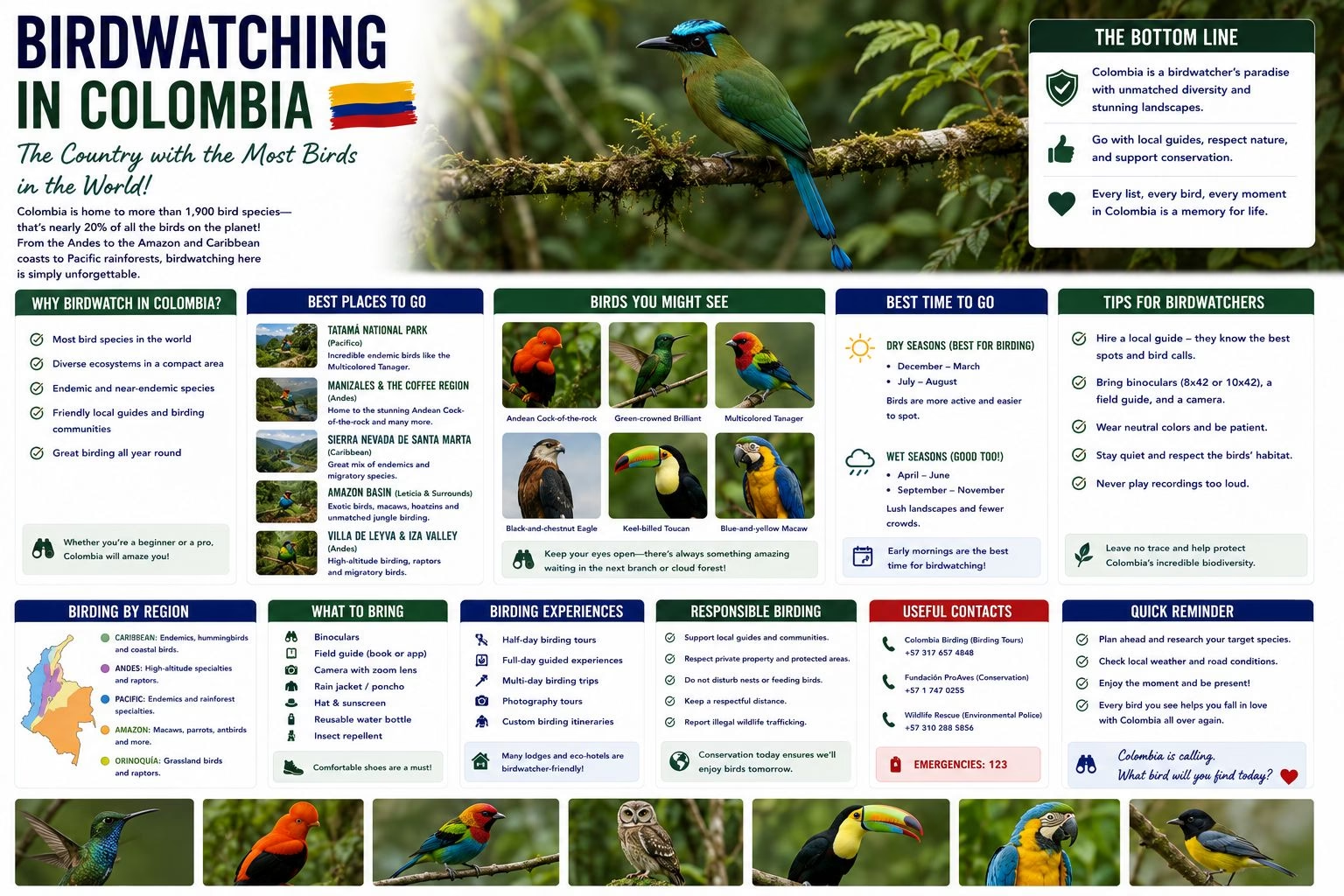
Colombia has more recorded bird species than any other country on earth: over 1,950 species, roughly 20 percent of all bird species known to exist, packed into a country that spans two oceans, three Andean mountain ranges, Amazon rainforest, Caribbean coastline, and everything in between. For serious birders, Colombia is not a secondary destination; it is one of a small handful of essential countries to visit, and a growing number of visitors now plan their entire Colombia itinerary around birding specifically rather than treating it as an add-on to a general trip.
Why Colombia Specifically
The species count is a direct consequence of geography: Colombia sits at the point where North and South American bird populations meet, and its dramatic elevation range, from sea level to over 5,000 metres across three separate Andean cordilleras, creates an enormous number of distinct ecological zones in close proximity to each other. A birder can realistically go from lowland Amazon species to high-altitude páramo species and Caribbean coastal species within a single well- planned two-week trip, something that is not possible in most other mega-diverse countries without much longer distances between sites.
The Coffee Region
The Coffee Region, and Salento specifically, sits within one of Colombia’s richest birding zones: the transition between Andean cloud forest and coffee-growing zones creates an unusually high concentration of species in accessible terrain. Several specialist lodges and reserves near Salento and in the surrounding hills cater specifically to birders, and hummingbird feeders at various fincas and lodges draw a striking range of species that are easy to observe up close, a good entry point for visitors newer to birding.
Manizales and the Los Nevados Region
Higher-altitude birding around Manizales and Los Nevados National Natural Park offers a different set of species adapted to cloud forest and páramo ecosystems, including several high-altitude hummingbird species not found at Salento’s lower elevation. The Recinto del Pensamiento reserve near Manizales is a specific, well-regarded site for this kind of high-altitude birding.
The Sierra Nevada de Santa Marta
The Sierra Nevada de Santa Marta, the world’s highest coastal mountain range, rising from Caribbean beaches to snow-capped peaks within a remarkably short distance, is one of the most important sites in the world for bird endemism: a significant number of species exist nowhere else on earth. The area around Santa Marta and the Minca cloud forest above it is the most accessible base for this specific birding, drawing dedicated birders from around the world specifically for the Sierra Nevada endemics.
Jardín and Southern Antioquia
Jardín, the coffee-growing colonial town in southern Antioquia, is a globally recognised birding destination in its own right, home to several endemic and near-endemic hummingbird species specific to this part of the Andes. Multiple specialist lodges and guides in the area cater specifically to birding visitors, and Jardín’s relatively low tourist profile compared to Salento makes it appealing to birders who also want a quieter, less crowded base.
The Amazon
The Colombian Amazon, accessible from Leticia, offers lowland Amazonian species entirely distinct from anything found in the Andean regions: macaws, toucans, and a wide range of Amazon basin specialists. This is a further, more logistically involved addition for birders who have the time to add a fourth or fifth ecological zone to their trip.
Planning a Birding Trip
Serious birders typically hire a specialist local guide, either for a single site or for a multi-region itinerary, since the difference in species seen and identified between a guided and unguided visit is substantial in Colombia’s dense, high-diversity habitats. Several Colombia-specific birding tour operators and local guide networks have developed specifically to serve this market over the past decade, reflecting the country’s rapid growth as a birding destination since the security situation improved enough for rural travel to become viable again.
How much time to allow: A single-region trip (Coffee Region alone, or Santa Marta and the Sierra Nevada alone) can be done well in 4 to 6 days. A proper multi-region Colombia birding trip, covering 2 or 3 of the zones described above, generally takes 10 days to 2 weeks to do without excessive rushing between sites.
Best time to go: Colombia’s equatorial location means birding is good year-round, without the strong seasonal migration patterns that drive timing decisions in temperate-zone birding destinations. The main practical consideration is regional rainfall patterns rather than bird presence; see the best time to visit guide for the general climate picture by region.
Related: Coffee Region Hub | Salento | Jardín | Santa Marta and Tayrona
For corrections or updates to this guide: contact@allaboutcolombia.com.