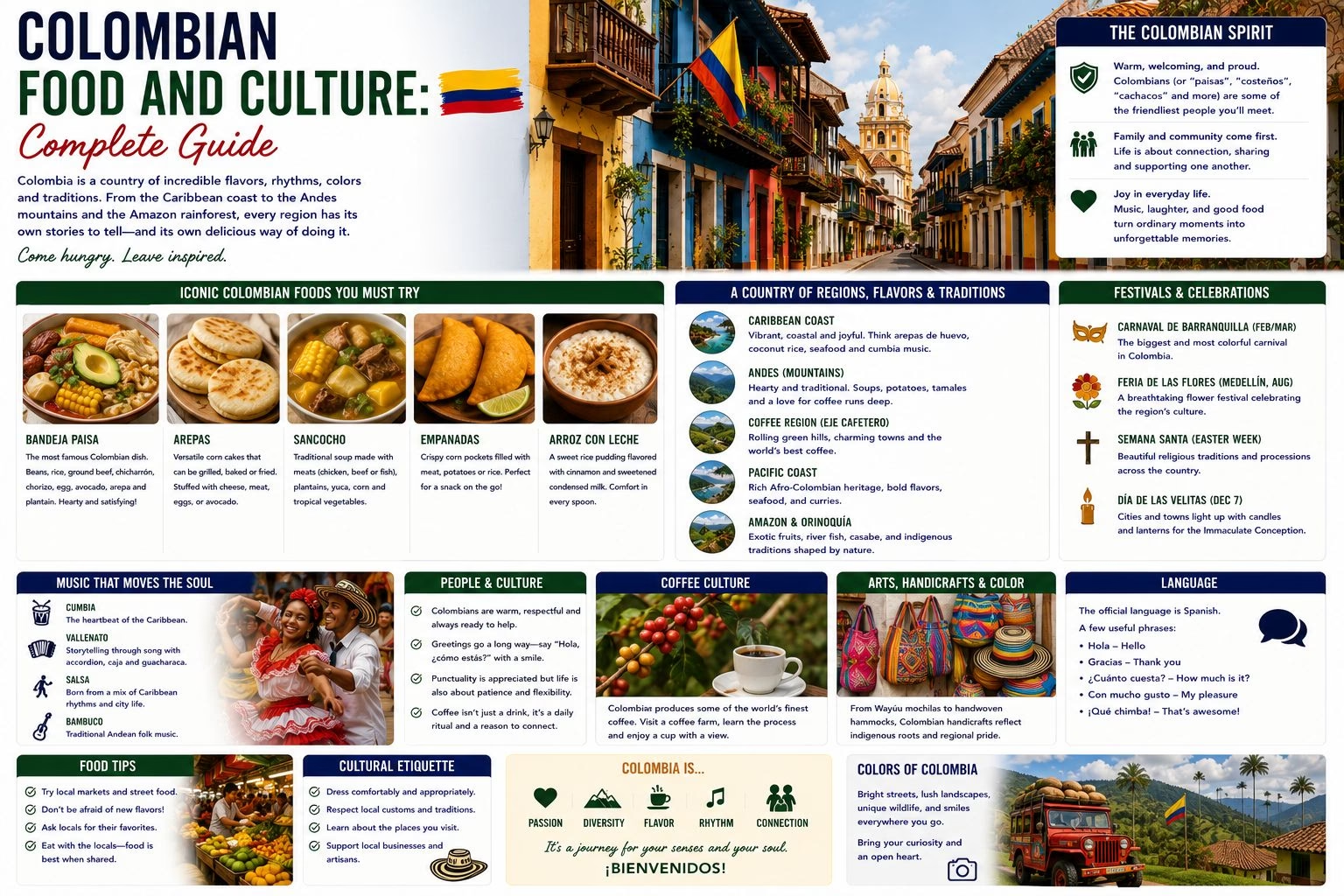
Colombian food and culture are inseparable from the geography that produces them. A country with two oceans, three Andean ranges, the Amazon basin, and the Caribbean coast develops culinary and cultural traditions that reflect these different landscapes, climates, and the populations that have inhabited each zone for generations. Understanding Colombian food and culture means understanding that there is no single Colombian cuisine any more than there is a single Colombian climate; what you eat in Cartagena is different from what you eat in Medellín, which is different from what you eat in the Coffee Region, which is different from what you find in the Llanos.
This hub covers the food, the coffee culture (the most internationally recognisable element of Colombian identity), the festivals, and the cultural traditions that give Colombia its specific character.
Colombian Food: The Regional Overview
The diversity of Colombian cooking reflects the country’s ecological and cultural range.
The Andean interior (Medellín, Bogotá, the Coffee Region): The heartland of traditional Colombian cooking. Bandeja paisa is the definitive Antioquian dish: a plate that includes red beans, white rice, ground beef, chicharrón (fried pork belly), morcilla (blood sausage), avocado, a fried egg, and an arepa (corn cake). It is enormous, caloric, and delicious in the way that traditional working-class food from high-altitude farming communities tends to be. Ajiaco, a thick potato and chicken soup with guasca herb (endemic to the Andes), is the definitive Bogotá dish and one of the most distinctively flavoured soups in South America. Sancocho, a hearty soup made with various combinations of meat, yuca, plantain, and corn, appears throughout the country in regional variations.
The Caribbean coast (Cartagena, Barranquilla, Santa Marta): Seafood-dominant cooking with African and indigenous influences. Arroz de posta negra (rice with slow-cooked beef brisket), fresh ceviche made with whatever fish came in that morning, patacones (twice-fried green plantain), coconut rice, and the extraordinary variety of fresh tropical fruits that make the coastal markets so visually overwhelming. Suero (a fermented dairy product similar to sour cream) appears throughout the coastal cooking.
The Coffee Region: Trout (trucha) from the cold mountain streams; beans and rice in the Antioquian tradition; the tamales of the Tolima region; the empanadas de pipián (with pumpkin seed sauce) that are specific to the zone between the Andes and the Pacific. The café tinto, a small, strong, black coffee made with freshly roasted beans, is ubiquitous and excellent.
Cali and the Pacific-facing interior: African-Colombian and indigenous culinary traditions are strongest here. Sancocho de gallina (hen soup), arroz con coco (coconut rice), and the extraordinary variety of fish from the Pacific coast are all part of the Caleña food identity. The Pacific coast cuisine, from Tumaco, Buenaventura, and the Chocó department, is one of the least-known internationally but among the most interesting regionally.
Colombian Coffee
Colombia’s coffee is among the world’s most recognised and most respected. The arabica varieties grown in the high-altitude volcanic soils of the Coffee Region, under the specific microclimate conditions of the Central Andes, produce a coffee characterised by its mild acidity, clean flavour, and sweetness compared to the robusta coffees of West Africa or the earthier profiles of some Central American origins.
Understanding Colombian coffee, however, means understanding a paradox: the best Colombian coffee, for most of the country’s coffee history, has been exported rather than consumed locally. The domestic coffee culture was built around tinto, a weak, sweet black coffee made from low-grade beans. The shift to a specialty coffee culture, which began in the Coffee Region and has spread to Medellín and Bogotá, has produced a generation of Colombian baristas and roasters who are now applying the same rigour to the domestic consumption of Colombian coffee that international buyers have long applied to export selection.
The coffee culture guide covers the full picture of Colombian coffee: where to drink good coffee in each city, what to understand about the different varieties and regions, and how to experience the coffee culture in the Coffee Region itself.
Festivals: Colombia’s Cultural Calendar
Colombia’s festival calendar is one of the richest in South America. The combination of the Catholic tradition brought by the Spanish, the African and indigenous cultural practices that survived the colonial period in various forms, and the specific regional identities of each part of the country produces a calendar of events that is genuinely diverse in character.
The festivals guide covers the major events in detail. Three deserve specific mention:
Carnaval de Barranquilla (four days before Ash Wednesday, typically February): UNESCO-recognised Intangible Cultural Heritage of Humanity. The second-largest carnival in the world after Rio de Janeiro, with 5 million participants and visitors over four days of parades, cumbia music, costumed dancers, and the specific traditions of the Caribbean coast popular culture.
Feria de Cali (last week of December): The salsa capital’s defining annual event; one week of outdoor salsa concerts, competitions, and parades that embodies what Cali is as a city.
Feria de las Flores, Medellín (first week of August): The flower festival and silletero parade, in which farmers from the surrounding hillsides carry elaborate flower arrangements (silletas) through the city streets.
Music and Dance
Colombia’s musical traditions are as diverse as its food traditions. The full guide is at traditional music and dance, with a dedicated deep dive on salsa specifically; a brief overview:
Cumbia, vallenato, porro, and mapale are the primary musical traditions of the Caribbean coast; vallenato (accordion, caja drum, and guacharaca) is the most internationally recognised and was given UNESCO recognition.
Salsa in Cali is as much a dance form as a musical one; the Cali style (characterised by its footwork pattern, known as caleña) is distinct from the Caribbean, New York, and Cuban styles and is the most technically developed of the regional salsa traditions.
The Pacific coast has its own musical tradition, rooted in African origins, that is distinct from all the above; marimba music from the Chocó region was awarded UNESCO Intangible Cultural Heritage status in 2015.
What Is in This Section
- Colombian food guide: regional overview, dishes to try, restaurant culture
- Street food guide: what to eat from carts and stalls, and how to spot a good one
- Afro-Colombian and Indigenous cultures: the peoples and traditions behind Colombia’s regional identity
- Colombian coffee guide: varieties, regions, where to drink it well
- Festivals and cultural events: the full calendar with practical planning information
- Traditional music and dance: cumbia, vallenato, bambuco, joropo, and currulao by region
- Salsa and dance culture: Cali’s salsa tradition and where to experience it
- Carnaval de Barranquilla : the complete guide to Colombia’s greatest carnival
- Vegetarian and vegan options: the improving picture for plant-based visitors
- Tipping in Colombia: when, how much, and the propina system
\n \t
\n \t
\n \t
\n \t
\n \t
Related: Destinations | Safety | Plan Your Trip | Expat Hub